
White Men Can't Jump (1992 film)
1992 sports comedy-drama about two streetball hustlers in Los Angeles, starring Wesley Snipes and Woody Harrelson; explores race, friendship and the pickup-basketball scene.
Overview
White Men Can't Jump is a 1992 American comedy-drama that blends sports action with sharp character work and humor. Written and directed by Ron Shelton, the film follows two hustlers who team up on the Los Angeles streetball circuit. It became notable for its energetic basketball scenes, playful banter, and an examination of competitive small-time hustling.
Image gallery
1 Image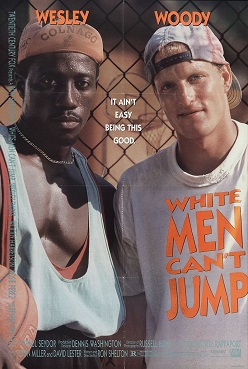
Cast and characters
The film centers on a partnership between two very different players:
- Wesley Snipes as Sidney Deane, a confident and charismatic streetball star who hustles opponents for money.
- Woody Harrelson as Billy Hoyle, a white former college basketball player who uses perceived weakness to con opponents.
- Rosie Perez as Gloria, Billy’s sharp-tongued girlfriend who brings emotional stakes to the story.
Plot and setting
Set against the backdrop of pickup games and neighborhood courts, the plot follows the uneasy alliance that forms between Sidney and Billy as they combine skills and showmanship to win bets. The film foregrounds the rough rhythms of street basketball—its improvisation, trash talk, and local rivalries—while exploring how personal ambition, money and pride shape relationships. The sport itself functions as both a literal contest and a metaphor; see how the movie stages basketball to reveal character and tension in urban spaces like Los Angeles.
Production, reception and legacy
Produced and released in the early 1990s, the picture was praised for its performances, chemistry between the leads, and lively depiction of street-level competition. Critics often highlighted the film’s balance of comedy and drama and its attention to the subculture of pickup games. Over time it has been cited as an influential sports film that mixes authentic on-court sequences with off-court character moments.
Themes and notable facts
- Deals with race and identity indirectly through the partnership and banter between characters.
- Mixes genre elements: sports movie, buddy comedy, and drama about personal choices.
- Memorable for its dialogue, hustle-oriented plot, and the chemistry of its two leads.
- Has continued cultural recognition among films about basketball and urban sport culture.
For further reading on aspects of the film—its making, performances, and cultural impact—consult dedicated film and sports resources or archival interviews with the cast and crew: genre overview, lead actor profiles, and contemporary reviews and retrospectives available through film reference sites and periodicals.
Related articles
Author
AlegsaOnline.com White Men Can't Jump (1992 film) Leandro Alegsa
URL: https://en.alegsaonline.com/art/107830