
Wild in the Country (1961 film)
Wild in the Country (1961) is an American musical drama starring Elvis Presley, directed by Philip Dunne and adapted from J. R. Salamanca's novel The Lost Country. It blends drama and song with a notable supporting cast.
Wild in the Country is a 1961 American musical drama directed by Philip Dunne and distributed by 20th Century Fox. The screenplay adapts J. R. Salamanca's 1958 novel The Lost Country for the screen, reshaping the source material to accommodate a leading role for Elvis Presley. Released at a time when Presley was balancing popular musical films with efforts at more serious acting, the picture combines a character-driven story with several musical performances.
Image gallery
1 Image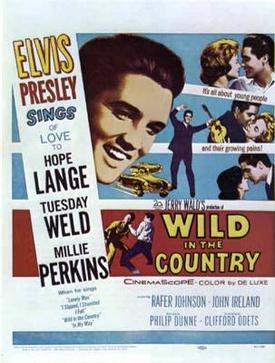
Overview and themes
The film follows a troubled young man whose talent and temperament create conflict in a small community. While the original novel has been altered in places for cinematic effect, the movie explores themes of alienation, family tension, and the search for belonging. It positions its star between earnest dramatic scenes and staged musical numbers, reflecting the era's tendency to market films around popular singers while attempting to address adult themes.
Cast and performances
- Elvis Presley – the film's central figure, combining spoken drama with vocal performances.
- Hope Lange – co-star and one of the principal dramatic presences.
- Tuesday Weld – appears in a significant supporting role.
- Millie Perkins – rounds out the principal quartet of lead actors.
- Other credited performers include Gary Lockwood, Christina Crawford and Rafer Johnson in supporting parts.
Contemporary viewers and later commentators have noted variations in critical response: some reviewers appreciated Presley’s attempt at a more serious part, while others felt the musical elements and studio expectations limited the dramatic potential of the story.
Production, music and legacy
Philip Dunne, known primarily as a screenwriter and producer before taking the director's chair, guided the adaptation through a production shaped by studio needs and Presley's screen persona. The film includes several songs performed by the star, integrated into the narrative rather than presented as standalone set pieces. Although not universally hailed as a high point in Presley’s filmography, Wild in the Country is often cited as an example of his transitional work—an effort to be taken seriously as an actor while retaining his musical identity.
For readers interested in background on the source novel and further production details, contemporary reviews and retrospective essays provide context about how literary works were adapted for mid-20th century American studio films and how popular music figures were incorporated into mainstream cinema. The movie remains part of the broader cultural record of Elvis Presley’s film career and of early 1960s Hollywood practices.
Questions and answers
Q: When was the movie Wild in the Country released?
A: The movie Wild in the Country was released in 1961.
Q: Who directed Wild in the Country movie?
A: The movie Wild in the Country was directed by Philip Dunne.
Q: What is the source material for the movie Wild in the Country?
A: The movie Wild in the Country is based on the 1958 book The Lost Country by J. R. Salamanca.
Q: Who are the actors featured in Wild in the Country?
A: The actors featured in Wild in the Country include Elvis Presley, Hope Lange, Tuesday Weld, Millie Perkins, Gary Lockwood, Christina Crawford, and Rafer Johnson.
Q: Which studio distributed Wild in the Country?
A: Wild in the Country was distributed by 20th Century Fox.
Q: What genre is Wild in the Country?
A: Wild in the Country is a musical drama movie.
Q: Who wrote the book that serves as the source material for Wild in the Country?
A: The book that serves as the source material for Wild in the Country was written by J. R. Salamanca.
Related articles
Author
AlegsaOnline.com Wild in the Country (1961 film) Leandro Alegsa
URL: https://en.alegsaonline.com/art/108068