
Wild at Heart (1990 film)
David Lynch's 1990 crime‑thriller road movie blending surrealism, romance and violence. Adapted from Barry Gifford's novel, it stars Nicolas Cage and Laura Dern and won the Palme d'Or at Cannes.
Overview
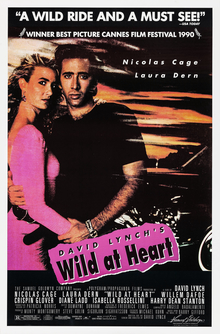
Wild at Heart is a 1990 American crime thriller film directed by David Lynch. The movie blends road‑movie conventions with surreal imagery, black comedy and moments of sudden, stylized violence. Adapted from a novel by Barry Gifford, it follows a young couple who flee dangerous forces while traversing a mythic, often menacing version of the American South.
Image gallery
3 Images
Plot and principal characters
The central story follows Sailor and Lula, lovers who go on the run after traumatic events linked to Lula's family. Nicolas Cage plays Sailor (Nicolas Cage) and Laura Dern plays Lula (Laura Dern). The film presents their relationship as a force that both endures and provokes violence, alternating scenes of tender intimacy with abrupt, dreamlike interludes. Supporting roles include Marietta, played by Diane Ladd, and Perdita, played by Isabella Rossellini.
Production and style
Lynch applied a deliberately heightened cinematic language: bold color, abrupt tonal shifts and imagery that evokes fairy tales and nightmares. The production mixes an original score and carefully chosen popular recordings to shape mood and period atmosphere; the soundtrack and sound design play an important role in the film's emotional texture (soundtrack).
Themes and influences
Commonly discussed themes include love as a form of escape, the undercurrent of American violence, fate versus free will, and the collision of the ordinary with the uncanny. Lynch's approach reframes pulp and noir ingredients into something closer to modern myth, and the setting—evoked as a threatening, dreamlike version of small‑town America—reinforces those themes (Cape Fear as an example of place invoked in the story).
Release, reception and legacy
Released in August 1990, the film prompted polarized reviews: some critics praised its energy, audacity and style, while others objected to its explicit imagery and narrative detours. The picture nonetheless achieved notable recognition at international festivals, winning the Palme d'Or at the 1990 Cannes Film Festival, and has remained a frequently discussed work in David Lynch's filmography. Over time it has inspired a range of critical interpretations and scholarly attention.
Cast, crew and notable facts
- Director: David Lynch
- Leads: Nicolas Cage (Sailor), Laura Dern (Lula)
- Supporting: Diane Ladd, Isabella Rossellini
- Source material: novel by Barry Gifford
- Soundtrack and design: mixes original scoring and period songs to shape tone (soundtrack)
- Real‑life connection: Diane Ladd is the real‑life mother of Laura Dern; both actors appear in the film.
For readers seeking deeper analysis, film studies essays and contemporary reviews provide context on the film's production, critical debates and influence on 1990s cinema. The film continues to be cited in discussions of Lynch's cinematic techniques and his treatment of genre material.
Related articles
Author
AlegsaOnline.com Wild at Heart (1990 film) Leandro Alegsa
URL: https://en.alegsaonline.com/art/108060