
Whorl (spiral form in nature, art, and science)
A whorl is a circular or spiral arrangement of parts around a central axis. Found in biology, shells, fingerprints, textiles and ornament, the term describes recurring turning forms and their uses.
A whorl is a rounded or spiral pattern in which elements turn around a common center or axis. In general usage it denotes any ringlike or coiling arrangement, from the turn of a snail shell to the looped pattern found in a fingerprint. The word often appears alongside spiral when describing shapes that radiate or repeat in a curling sequence.
Image gallery
8 Images


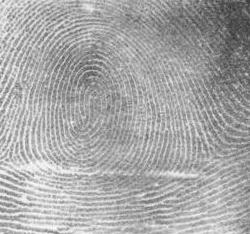
Characteristics and common forms
Whorls may be planar or three‑dimensional, symmetric or slightly irregular. In natural growth they frequently approximate logarithmic spirals, a form that preserves shape during growth. A botanical whorl consists of three or more leaves or flower parts emerging from the same node; in shells each complete turn of the shell is called a whorl.
Where whorls occur
- Botany: leaf and flower arrangements at a single node.
- Malacology: successive turns of a gastropod shell.
- Forensics and biometrics: fingerprint whorl patterns used in classification.
- Textiles: the weighted ring on a drop spindle is called a whorl.
- Decorative arts: ornamental spirals and circular motifs.
These occurrences share the visual idea of rotation and repetition, though their scales and functions differ widely.
History, terminology and significance
The term has Germanic roots associated with turning or rotation and has been applied in different fields over centuries. Its importance ranges from practical (a spindle whorl affects yarn twist) to analytical (shell whorl counts help classify species) and forensic (recognizing fingerprint whorls aids identification).
Notable distinctions include the difference between a whorl and a simple coil or ring: a whorl emphasizes an ordered, often growth‑related succession of turns. Because whorls appear so frequently in biology and design, they are also cited in studies of pattern formation and biomimetic engineering.
Questions and answers
Q: What is a whorl?
A: A whorl is a type of spiral pattern.
Q: What other meanings does whorl have?
A: Whorl has other meanings besides a spiral pattern.
Q: Can you give an example of another meaning of whorl?
A: Unfortunately, the text does not provide any examples of the other meanings of whorl.
Q: Is whorl a scientific term?
A: Whorl is a term used in science to describe certain types of patterns.
Q: Is whorl used in everyday language?
A: It is possible that some people may use the word whorl in everyday language, although it is not a very common word.
Q: What are some examples of objects that may have a whorl pattern?
A: Objects that could have a whorl pattern include the ridges on fingerprints, certain types of seashells or plant leaves, and the rings on a tree trunk.
Q: Can whorl patterns be found in nature?
A: Yes, whorl patterns can be found in nature. Examples include the whorls on certain types of shells or the patterns on tree trunks.
Related articles
Author
AlegsaOnline.com Whorl (spiral form in nature, art, and science) Leandro Alegsa
URL: https://en.alegsaonline.com/art/107909