
Werner von Blomberg — German soldier and minister (1878–1946)
German field marshal and Minister of War who oversaw early Wehrmacht rearmament, rose through Kaiserreich and Reichswehr ranks, and was removed in the 1938 Blomberg–Fritsch affair.
Werner von Blomberg (born 2 September 1878 in Stargard — died 14 March 1946 in Nuremberg) was a senior German officer and politician who served as Minister of War and the senior military leader in the 1930s until 1938. He is best known for helping to transform the interwar Reichswehr into the rearmed Wehrmacht and for his forced resignation that opened the way for Adolf Hitler to assert direct control over the armed forces.
Image gallery
6 Images



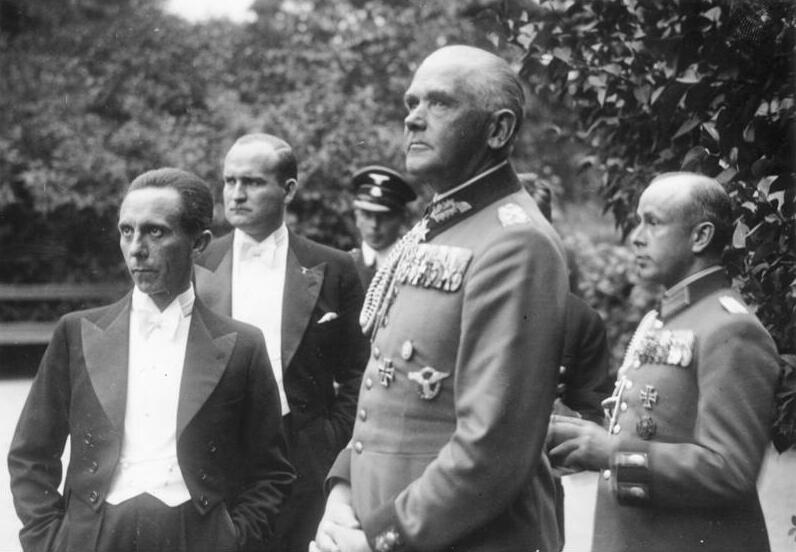
Early life and military career
Born into a Prussian military milieu, Blomberg built a professional officer’s career in the Imperial German Army. He served in the First World War and was awarded the Iron Cross for his service. In the interwar period he remained a senior figure in the Reichswehr, adapting to the limits imposed by the Versailles system while helping to preserve its core officer corps and institutions.
Role under the Nazi government
After the Nazi seizure of power he accepted a ministerial post and became a member of Hitler's cabinet, cooperating closely with the new regime. As the regime abandoned Versailles restrictions, Blomberg played a prominent part in rearmament, expansion of Germany’s armed forces, and the formal renaming and reorganization into the Wehrmacht. He worked with civilian and party leaders to coordinate military policy, while remaining a career officer rather than a party ideologue.
Blomberg–Fritsch affair and removal
Blomberg’s tenure ended abruptly in 1938 when revelations about his private life and a concurrent scandal involving the army’s senior commander (the Blomberg–Fritsch affair) were used by rivals in the Nazi leadership. His dismissal cleared the way for Adolf Hitler to restructure military command and concentrate authority, a turning point in the subordination of the armed forces to Nazi political control.
Offices and significance
- Senior minister and commander in the transition from Reichswehr to Wehrmacht/military.
- Instrumental in early rearmament and conscription policies of the 1930s.
- His fall reshaped civil–military relations and helped consolidate Hitler’s personal control.
Blomberg’s life illustrates the complicated relationship between Germany’s professional officer class and the Nazi state: he facilitated rearmament and cooperation with Hitler while ultimately becoming expendable in internecine power struggles. After his ouster he withdrew from public command and died in 1946, leaving a contested legacy tied to the army’s role in the Third Reich. For basic reference entries see links on his birthplace, offices and honors: biographical overview, birthplace, place of death, and other archival references military records, government files, awards.
Related articles
Author
AlegsaOnline.com Werner von Blomberg — German soldier and minister (1878–1946) Leandro Alegsa
URL: https://en.alegsaonline.com/art/107299