
Vogelkop bowerbird (Amblyornis inornata)
A medium-sized bowerbird from the Vogelkop Peninsula of Western New Guinea, known for elaborate male-built display courts adorned with natural objects to attract mates.
The Vogelkop bowerbird (Amblyornis inornata), also called the Vogelkop gardener bowerbird, is a passerine native to the highland and montane forests of the Vogelkop (Bird's Head) Peninsula in western New Guinea, Indonesia. It is a localized species whose familiar behavior — construction and decoration of a court or "bower" by males — has made it a subject of study in animal behavior and sexual selection.
Image gallery
3 Images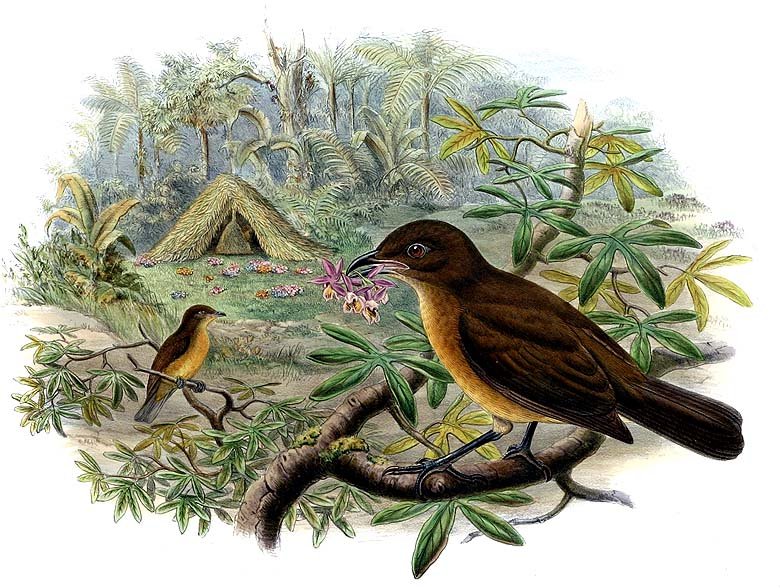


Identification and physical characteristics
These birds are medium-sized, typically ranging roughly 21–35 cm in length, with females usually a bit smaller than males. Plumage is generally subdued compared with some other bowerbirds: tones of brown, gray and olive that provide camouflage in dense forest. Like many bowerbird species, sexes differ mainly in size and behavior rather than striking coloration.
Habitat and distribution
The Vogelkop bowerbird is restricted to the mountain forests of the Vogelkop Peninsula. It favors montane and foothill rainforest where tall trees, dense understory and a supply of fruiting trees and invertebrates provide food and materials for display. For a regional overview see Vogelkop Peninsula and for broader context see Indonesia.
Behavior, courtship and diet
Males build and maintain display sites — bowers or decorated courts — that they arrange and embellish with collected objects. Decorations can include berries, flowers, leaves, cones and other natural items chosen for color, size or contrast. Females visit these displays to evaluate potential mates; the complexity and presentation of the court are important factors in female choice. The species feeds largely on fruit and arthropods and may show vocalizations and mimicry during display, traits common among bowerbirds (Amblyornis and relatives).
Reproduction, research importance and conservation
After mating the female is responsible for nest building and care of the young. The Vogelkop bowerbird has been of interest to ethologists because its courtship behavior illustrates how non‑nest structures and object arrangement can evolve as sexual signals. Although local populations may be affected by habitat loss and fragmentation, assessments of status vary; conservation attention focuses on protecting montane forest habitat and monitoring populations where land use is changing.
Notable distinctions
- Often called a "gardener" because males tend and arrange a cleared display area and an attractive collection of objects.
- Restricted geographic range makes it an example of island‑peninsula endemism within New Guinea.
- Its behavior contributes to broader understanding of sexual selection, signaling and animal aesthetics.
Related articles
Author
AlegsaOnline.com Vogelkop bowerbird (Amblyornis inornata) Leandro Alegsa
URL: https://en.alegsaonline.com/art/105779
Sources
- iucnredlist.org : "Amblyornis inornata"
- educatedearth.net : Video of a Vogelkop Bowerbird preparing its display