
Wallaby — Small macropod species native to Australia and nearby islands
Wallabies are small- to medium-sized marsupials in the macropod family. Found mainly in Australia, Tasmania and New Guinea, they occupy diverse habitats and play key ecological and cultural roles.
Overview
Wallabies are members of the macropod family (Macropodidae), a group of marsupials that also includes kangaroos and wallaroos. Typically smaller than kangaroos, wallabies comprise about thirty distinct species and subspecies that vary in size, color and behaviour. Many general guides treat wallabies as the smaller and more compact macropods; the family resemblance is evident in their long hind legs, strong tail and hopping gait. See general information on marsupials: marsupials.
Image gallery
7 Images



Physical characteristics
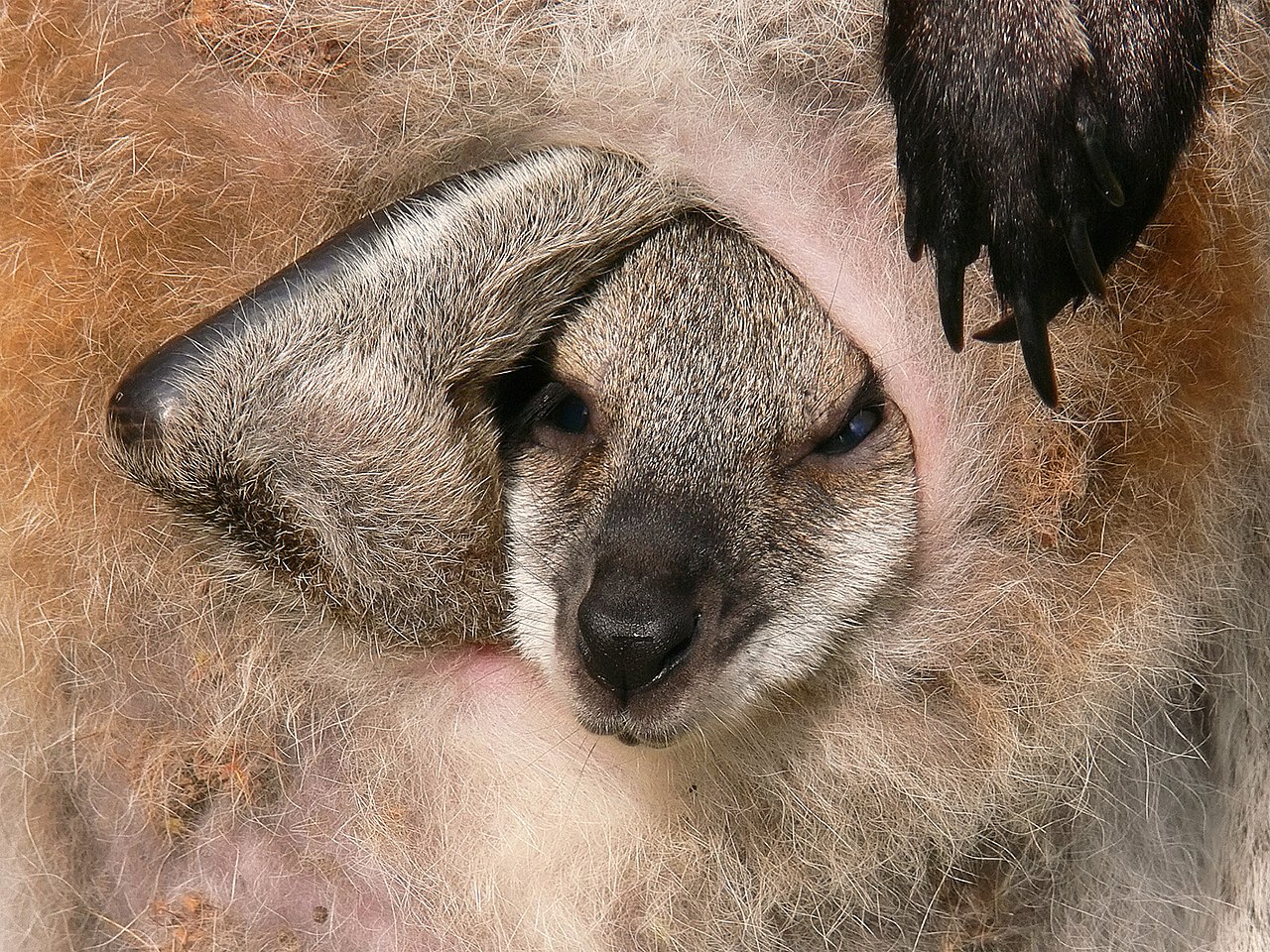
Most wallabies have powerful hind limbs adapted for saltatory locomotion, a long muscular tail for balance and short forelimbs used for feeding and grooming. Adult size ranges from small, rabbit-sized species to those approaching the size of small kangaroos. Like all marsupials, female wallabies have a pouch (marsupium) in which the undeveloped young, called a joey, continue to grow after a short gestation.
Distribution and habitat
Wallabies occur across mainland Australia and the island of Tasmania and in parts of New Guinea. Some populations have become established outside their native range through human introduction; there are known occurrences in New Zealand and on some offshore islands. They exploit a wide variety of habitats, including woodlands, grasslands, scrub, rocky outcrops and wetlands. Regional examples and guides can be found at local wildlife resources: Australia, Tasmania, New Zealand.
Ecology, behavior and reproduction
Wallabies are primarily herbivores, feeding on grasses, leaves and shoots. Many species are crepuscular or nocturnal to avoid heat and predators. Reproductive strategies reflect typical marsupial patterns: short gestation, birth of tiny young, and extended development in the pouch. Social organization ranges from solitary to small groups depending on species and habitat. For comparison within the macropods see: kangaroos.
Human interactions and conservation
Wallabies have cultural significance for Indigenous peoples and are important as grazers in many ecosystems. Some species are common and adapt well to modified landscapes, while others face pressures from habitat loss, introduced predators and vehicle collisions. Conservation status varies by species; protective measures include habitat management, predator control and research into population trends.
Notable distinctions
- Size: wallabies are generally smaller than kangaroos.
- Habitat: many species specialize on rocky or forested terrain where smaller body size is advantageous.
- Variety: coloration and coat texture differ widely between species, aiding identification.
Questions and answers
Q: What are wallabies?
A: Wallabies are marsupials that are native to the islands of Australia, Tasmania, New Zealand and New Guinea.
Q: How big are wallabies?
A: Wallabies are small to medium-sized kangaroos.
Q: How many different types of wallabies are there?
A: There are 30 different types of wallabies.
Q: Where do wallabies live?
A: Wallabies live in many different types of habitats, including rocky areas, grasslands, forests and swamps.
Q: Are wallabies unique to Australia?
A: No, wallabies are also native to Tasmania, New Zealand and New Guinea.
Q: How do wallabies differ from kangaroos?
A: Wallabies are smaller than kangaroos and have different physical characteristics, such as shorter tails and a different shaped head.
Q: What types of habitats do wallabies live in?
A: Wallabies can live in rocky areas, grasslands, forests and swamps, among other habitats.
Related articles
Author
AlegsaOnline.com Wallaby — Small macropod species native to Australia and nearby islands Leandro Alegsa
URL: https://en.alegsaonline.com/art/106274