
Visconti–Sforza tarot deck
A group of mid-15th-century hand-painted playing cards commissioned in Milan for the Visconti and Sforza courts; among the earliest surviving tarot packs and a key source for Renaissance iconography.
Overview
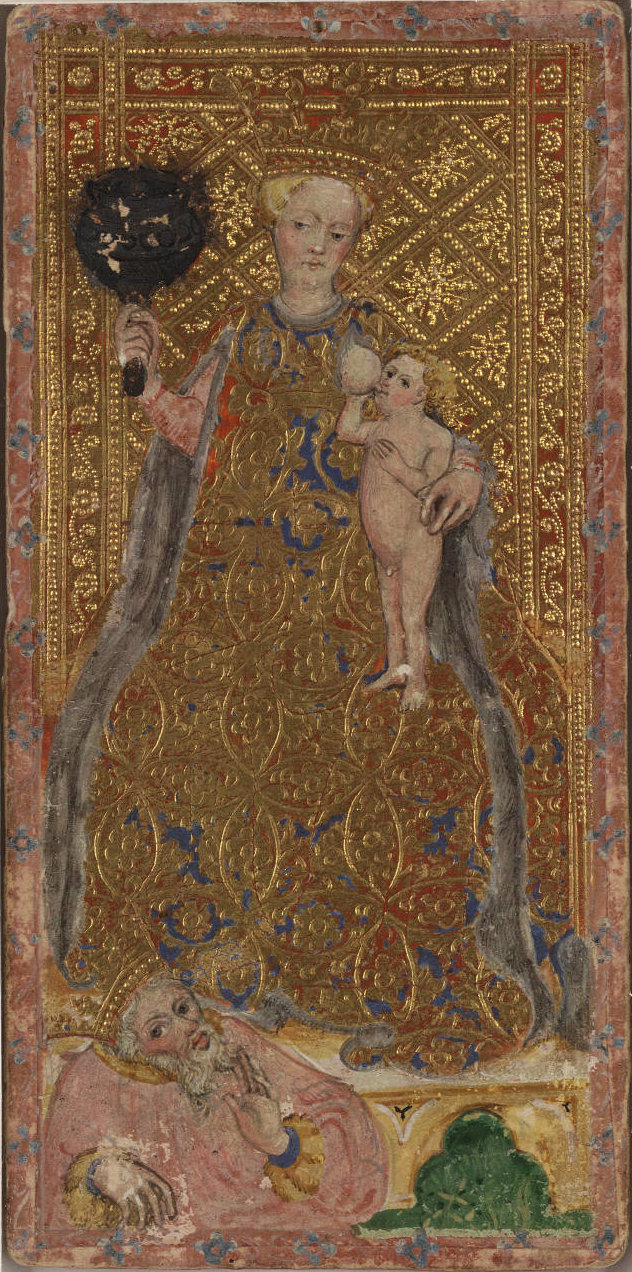
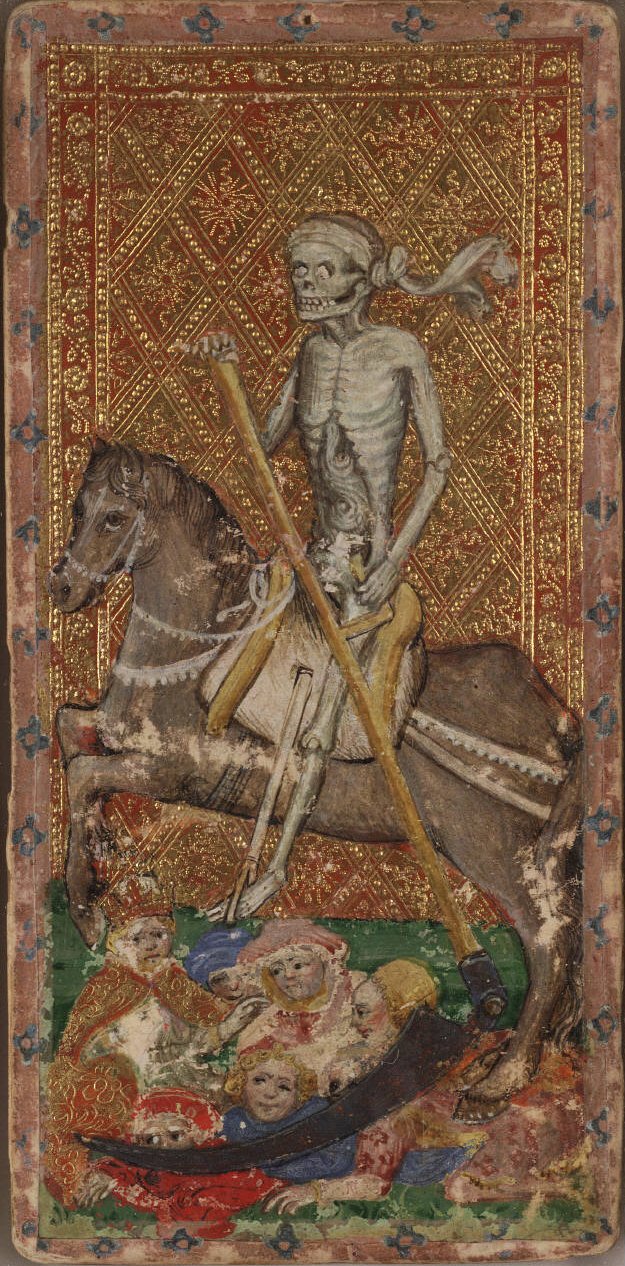
The Visconti–Sforza tarot designates a group of luxury playing cards produced in mid-15th-century Milan for the ruling Visconti family and later associated with the Sforza household. Rather than a single intact pack, the name applies to several closely related, partially surviving sets. Executed as hand-painted cards with gold leaf and elaborate borders, these works combine the functions of gaming cards with the techniques and imagery of manuscript illumination and panel painting.
Image gallery
10 Images





Origins and patrons
The decks were commissioned within the court culture of the Duchy of Milan. Filippo Maria Visconti is commonly credited with initiating production of bespoke "trionfi" cards during his rule; subsequent Sforza patrons sustained the practice. Production was a courtly enterprise: painters and workshop specialists employed pigments, gilding and fine brushwork to create sets intended for noble use and display.
Production, materials and artists
Surviving cards show techniques typical of high-status objects of the period: tempera or gouache on card or heavy paper, extensive application of gold leaf, and decorative borders often bearing heraldic emblems. Art-historical study has attributed work on different surviving cards to various Milanese artists and illuminators; some scholars suggest names such as Bonifacio Bembo among possible contributors, though authorship is rarely certain.
Surviving material and distribution
No single complete Visconti–Sforza deck survives. What remains consists of individual cards, small groups and fragmentary suites preserved in several public and private collections across Europe and beyond. These dispersed relics permit partial reconstruction of original programs and permit close study of style, composition and the sequence of trumps.
Iconography and influence
The trumps and suit cards combine allegorical figures, personifications of virtues, classical motifs and courtly types. Heraldic devices and rulers’ insignia occur frequently, underlining the cards’ role as status objects. The imagery of these early sets shaped later tarot iconography and continues to inform modern historic reproductions and scholarly accounts of the tarot’s development from gaming instrument to subject of symbolic and esoteric interest.
Significance
- The Visconti–Sforza group is among the earliest substantial evidence for the tarot/trionfi tradition in Renaissance Italy.
- As hand-painted luxury objects, the cards bridge traditions of illumination and secular decorative art.
- Surviving cards are important resources for historians of games, art historians studying the Italian Renaissance, and researchers tracing the later cultural transformations of tarot imagery.
Together, the fragments and reconstructed sequences of the Visconti–Sforza material illuminate connections between leisure, political display and pictorial culture in 15th-century Milan and remain central to the study of early European playing cards.
Related articles
Author
AlegsaOnline.com Visconti–Sforza tarot deck Leandro Alegsa
URL: https://en.alegsaonline.com/art/105601