
Visual system
The visual system is the sensory network that detects and interprets light to produce sight, enabling perception of color, form, motion and depth and supporting behavior, cognition, and communication.
The visual system is the collection of cells, pathways and brain regions that enable sight. It begins with light entering the eye and ends with patterns of neural activity that the brain interprets as images, motion, color and spatial relationships. As a sensory subsystem of the nervous system, its function is both physiological — converting photons into electrical signals — and cognitive, giving rise to visual perception.
Image gallery
10 Images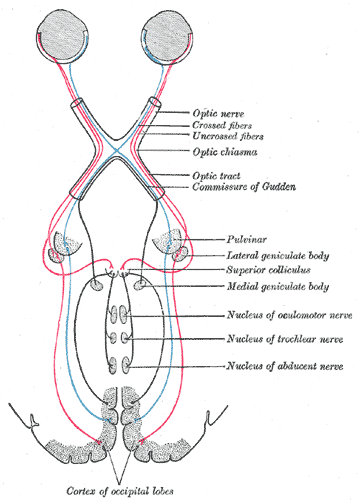





Core components
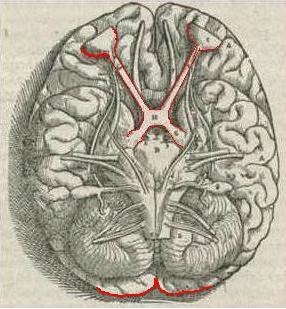
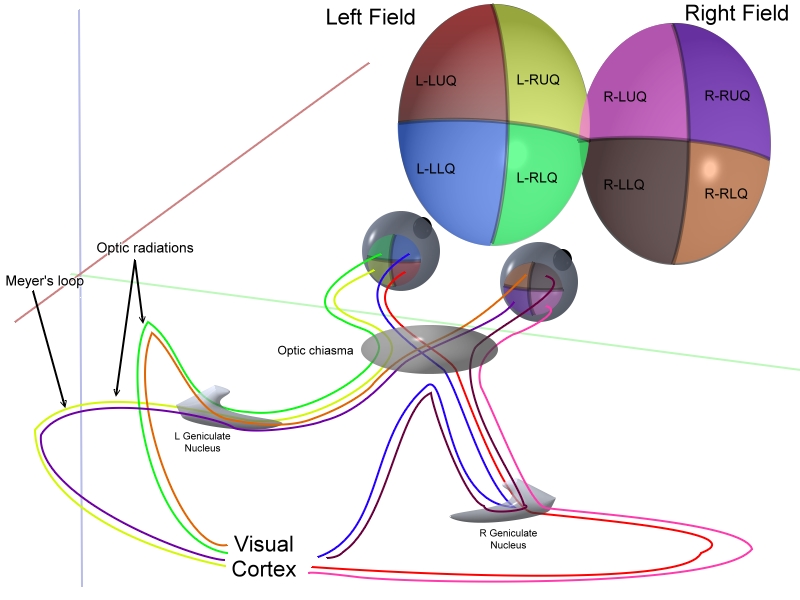
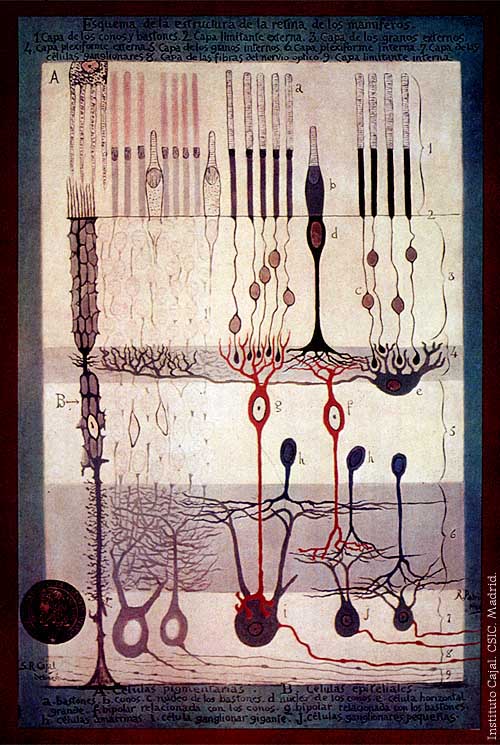
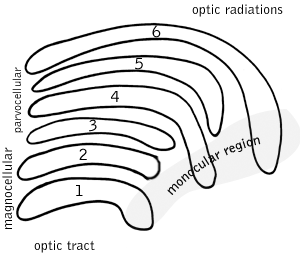
Key anatomical parts include the eye (cornea, lens, retina), photoreceptor cells (rods and cones), the optic nerve, subcortical relays such as the lateral geniculate nucleus, and multiple cortical areas in the occipital and temporal lobes. Together these elements transform a two-dimensional light pattern on the retina into representations that support recognition and action.
Functions and processing
- Image formation: focusing and light detection.
- Feature extraction: edges, contrast, color and motion are computed early.
- Integration: combining local features into coherent objects and scenes.
- Depth perception: binocular disparity, motion parallax and other cues help infer three-dimensional structure from a two-dimensional projection.
These operations occur through parallel pathways: some channels specialize in high-resolution detail and color, others in motion and broad spatial layout. Higher cortical areas link visual inputs with memory, attention and decision-making.
Development, evolution and significance
Visual systems have evolved independently in diverse animal groups and show adaptations to ecological needs (for example, nocturnal versus diurnal lifestyles). In humans, visual capacities develop rapidly after birth and depend on both genetic programs and visual experience. Vision is central to navigating the environment, recognizing faces and objects, reading social cues, and learning.
Disorders and distinctions
Clinical conditions affecting the visual system range from refractive errors and retinal disease to damage of central pathways and cortical visual impairment; these can impact acuity, color vision, field of view or motion perception. Distinct research fields study perception, neural coding, computational models of vision, and applied areas such as computer vision and visual prostheses.
Understanding the visual system requires bridging scales from molecules and cells to circuits and behavior. Its study informs neuroscience, psychology, ophthalmology and artificial intelligence, and remains an active area of interdisciplinary research.
Questions and answers
Q: What is the visual system?
A: The visual system is the part of the nervous system that enables organisms to see.
Q: What is the task of the visual system?
A: The visual system has the complex task of (re)constructing a three dimensional world from a two dimensional projection of that world.
Q: What is the function of the visual system?
A: The visual system interprets the information from visible light to build a representation of the world surrounding the body.
Q: What is the purpose of visual perception?
A: The purpose of visual perception is to create a psychological manifestation of visual information.
Q: What is the role of visible light in the visual system?
A: Visible light is the source of information that is interpreted by the visual system to create a representation of the surrounding world.
Q: What is the importance of the visual system?
A: The visual system is important because it allows organisms to navigate and interact with their environment.
Q: What is the definition of the visual system?
A: The visual system is the part of the nervous system that allows organisms to see and interpret visual information to build a representation of the world around them.
Related articles
Author
AlegsaOnline.com Visual system Leandro Alegsa
URL: https://en.alegsaonline.com/art/105640
Sources
- webvision.med.utah.edu : Matthew Schmolesky, The Primary Visual Cortex