
Vinca (Periwinkle): a temperate groundcover genus
Vinca is a small genus of evergreen, trailing subshrubs in the Apocynaceae family, native to Europe, northwest Africa and southwest Asia, widely used as ornamental groundcover and sometimes invasive.
Overview
Vinca, commonly called periwinkle, is a genus of about five species in the dogbane family Apocynaceae. The botanical name recalls the Latin vincire, "to bind," a reference to the plant's flexible, spreading stems. Native to parts of Europe, northwest Africa and southwest Asia, Vinca species are valued in horticulture for their glossy foliage and trumpet-shaped flowers.
Image gallery
7 Images


Characteristics
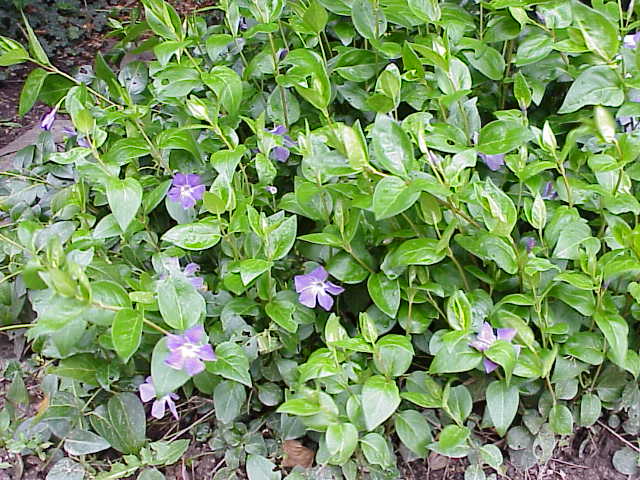
Vinca are low, often evergreen subshrubs with slender trailing stems that can be long but keep the plant low to the ground. Individual stems may reach a metre or more in length while the plant typically rises only 20–70 cm above the soil, and the runners commonly root at the nodes to form dense mats. Leaves are opposite, simple and usually glossy; flowers are solitary or few, with a five-lobed corolla in blue, purple, white or pink shades. The fruits follow the dry-fruit pattern seen in Apocynaceae.
Species and distinction
- Vinca minor — the small periwinkle, widely used as groundcover.
- Vinca major — larger leaves and flowers, also cultivated.
- Other species include the smaller-leaved Vinca herbacea and Vinca difformis, together comprising the genus of five species.
Vinca is related to, and shares the common name with, the genus Catharanthus (Madagascar periwinkle), but the two groups differ in origin, chemistry and horticultural use.
Uses, cultivation and ecology
Vinca species are popular as low-maintenance groundcovers in shaded or woodland gardens because they tolerate a range of soils, spread readily by layering and can suppress weeds. Common propagation methods include division, softwood cuttings and layering. Garden cultivars include variegated-leaf forms and a range of flower colors.
Benefits and concerns
- Benefits: attractive evergreen cover, erosion control, low care.
- Concerns: Vinca can become invasive outside its native range, forming dense carpets that displace native plants; like many Apocynaceae members, plants contain bioactive compounds and are considered toxic if eaten by people or pets.
Further reading
For botanical details and region-specific information see resources on the genus and family: name origin, Apocynaceae family traits, distribution in Europe, northwest Africa and southwest Asia. See also notes on growth form as a subshrub and the plant's trailing stems.
Related articles
Author
AlegsaOnline.com Vinca (Periwinkle): a temperate groundcover genus Leandro Alegsa
URL: https://en.alegsaonline.com/art/105379