
Anatomical terms of location
Standardized Latin and Greek–derived words used to describe positions, directions, planes and relationships in animal and human anatomy for clear medical and scientific communication.
Overview
Anatomical terms of location are a standardized vocabulary used to describe where structures are located on or within an organism. These terms reduce ambiguity when clinicians, anatomists and veterinarians discuss anatomy. They are typically derived from Latin and Greek roots and are applied across species with adjustments for posture and orientation. See anatomy for broader context.
Image gallery
10 Images





Standard anatomical position and usage
The definitions usually assume a named neutral posture called the standard anatomical position. For humans this means standing erect, facing forward, arms at the sides with palms facing forward. Using that reference makes directional terms consistent: directions such as "above" or "in front of" have precise technical names.
Common directional and relational terms
- Anterior (front) and posterior (back).
- Superior (toward the head) and inferior (toward the feet).
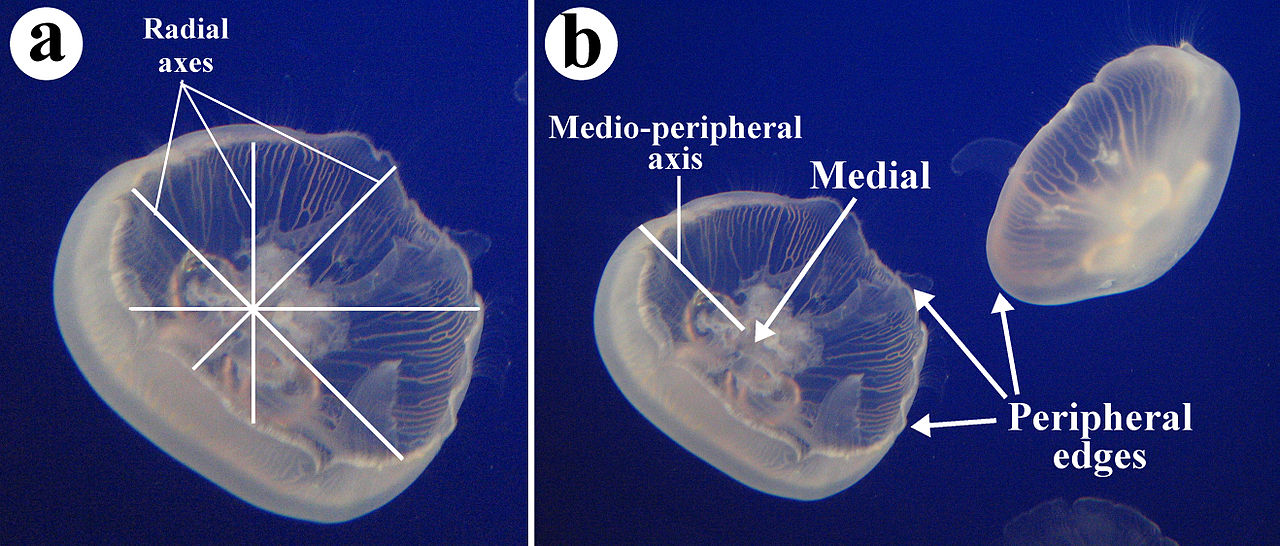
- Medial (toward the midline) and lateral (away from the midline).
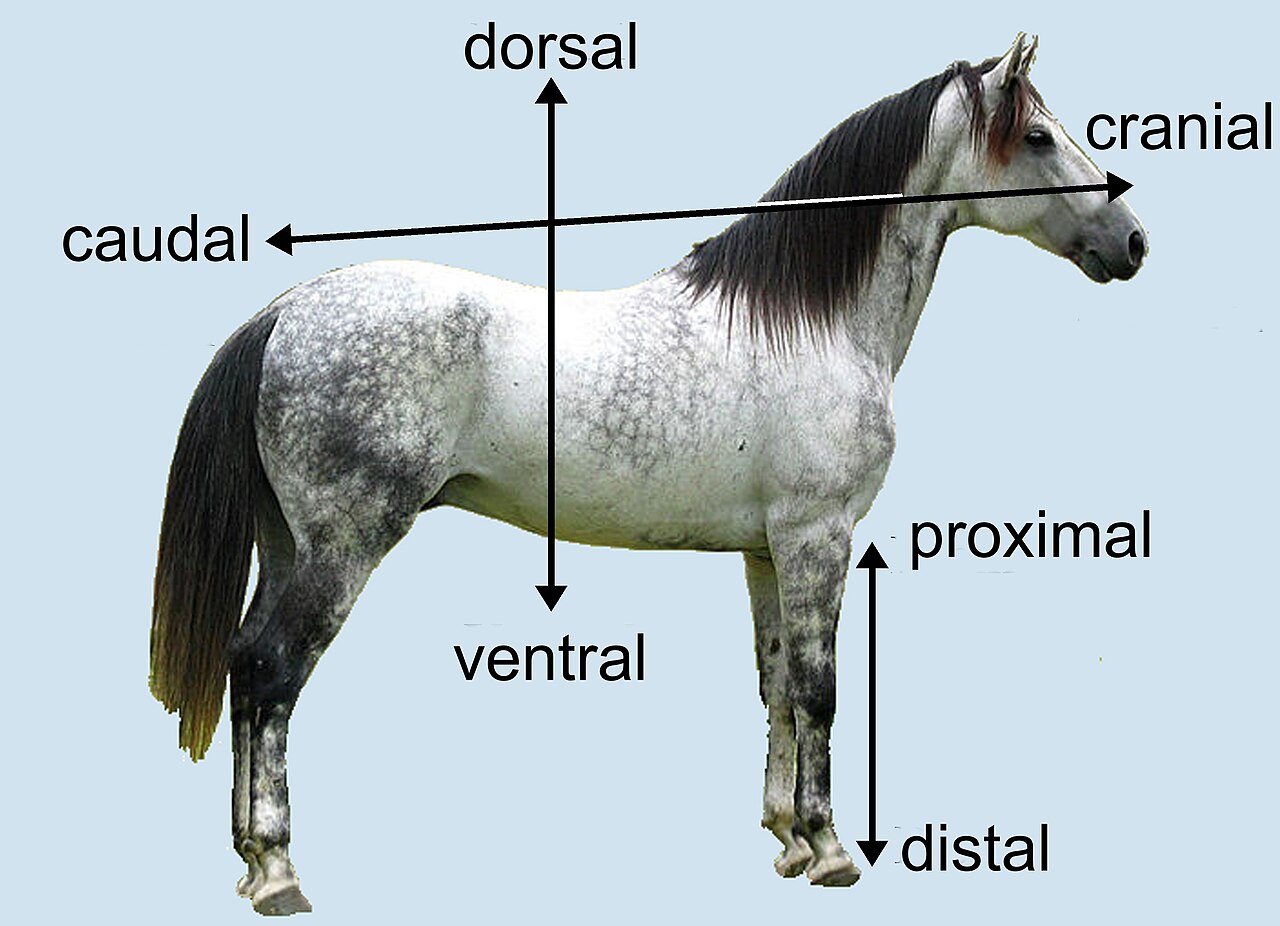
- Proximal (closer to the trunk or origin) and distal (farther from the trunk).
- Superficial (near the surface) and deep (away from the surface).
Planes and sections
To describe orientations of cuts or imaging, three principal planes are used: the sagittal plane divides left and right; the frontal (or coronal) plane divides anterior and posterior; the transverse (or horizontal) plane divides superior and inferior. Precise language helps describe the location of lesions, surgical approaches and imaging slices.
History, roots and adaptations
Many terms trace to classical Latin and Greek. Because those roots are concise and internationally recognized, they became the lingua franca of anatomy and medicine. Usage has evolved to accommodate different postures: for quadrupedal animals "cranial" and "caudal" often replace "superior" and "inferior." For clarity, some texts explain both sets of terms together; see classical word origins at Latin/Greek sources.
Uses and notable distinctions
These terms are essential in medical records, anatomy teaching, surgical planning and comparative anatomy. They allow professionals to locate findings without relying on relative descriptors like "left of" or "near." Important distinctions include differences between human bipedal orientation and quadruped orientation, and the additional context provided by descriptors such as "prone" and "supine" that indicate posture when describing a position.
Related articles
Author
AlegsaOnline.com Anatomical terms of location Leandro Alegsa
URL: https://en.alegsaonline.com/art/104587