
Ventricular fibrillation (VF)
A life‑threatening cardiac arrhythmia in which the ventricles quiver ineffectively, causing sudden loss of circulation; requires immediate CPR and usually defibrillation to restore a pulse.
Overview. Ventricular fibrillation (VF or V‑fib) is a chaotic, disorganized electrical rhythm of the heart’s ventricles that produces no effective contraction and no palpable pulse. It is one form of arrhythmia that commonly causes sudden cardiac arrest and must be treated as a medical emergency.
Image gallery
4 Images


Mechanism and common causes
In VF the normal coordinated pathway of ventricular depolarization breaks down into rapid, irregular wavelets. The ventricles quiver rather than pump, so blood flow to the brain and organs stops. Typical precipitants include acute myocardial ischemia or infarction, cardiomyopathy, electrolyte disturbances (for example, low potassium or magnesium), drug toxicity, and electrical injury.
Recognition and diagnosis
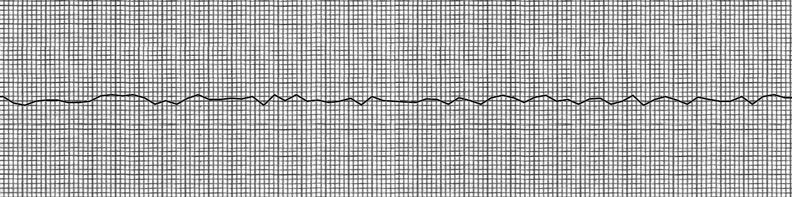
Clinically, VF presents with sudden collapse, loss of consciousness, absent breathing or agonal gasps, and no detectable pulse. On an electrocardiogram it appears as irregular, high‑frequency fibrillatory waves without identifiable QRS complexes. Differentiation from pulseless ventricular tachycardia, asystole, and pulseless electrical activity guides immediate management decisions.
Treatment and immediate response
Prompt action is decisive. The priority sequence is early recognition, activation of emergency services, immediate high‑quality cardiopulmonary resuscitation (CPR), and rapid defibrillation with an automated external defibrillator (AED) or manual shock. Advanced cardiac life support (ACLS) adds airway support, intravenous drugs such as epinephrine and antiarrhythmics (for example amiodarone), and treatment of reversible causes. Post‑resuscitation care may include coronary reperfusion and targeted temperature management.
Prognosis, prevention, and notable facts
Survival from VF depends largely on how quickly CPR and defibrillation begin; each minute without defibrillation reduces survival substantially. Implantable cardioverter‑defibrillators (ICDs) can prevent recurrent episodes in high‑risk patients. VF can appear as coarse or fine fibrillation on ECG and may degenerate into asystole if untreated.
Quick response checklist
- Check responsiveness and breathing; if absent, call for help.
- Start chest compressions immediately and use an AED as soon as available.
- Follow ACLS protocols when professional rescuers arrive; address reversible causes.
Related articles
Author
AlegsaOnline.com Ventricular fibrillation (VF) Leandro Alegsa
URL: https://en.alegsaonline.com/art/104589