
Vesicle (cellular membrane-bound sac)
A vesicle is a small, membrane-bound compartment in cells that stores and moves molecules. Vesicles form from lipid bilayers and mediate endocytosis, exocytosis, trafficking, secretion and signalling.
Overview
A vesicle is a small, membrane-enclosed compartment that cells use to carry, store or isolate molecules. Vesicles are ubiquitous in eukaryotic cells and also occur in many prokaryotic contexts; they arise from the physical properties of biological membranes and the cell's trafficking machinery. They provide a means to move cargo between intracellular locations, to the cell surface, or to the extracellular environment without exposing the rest of the cytoplasm to the vesicle contents.
Image gallery
2 Images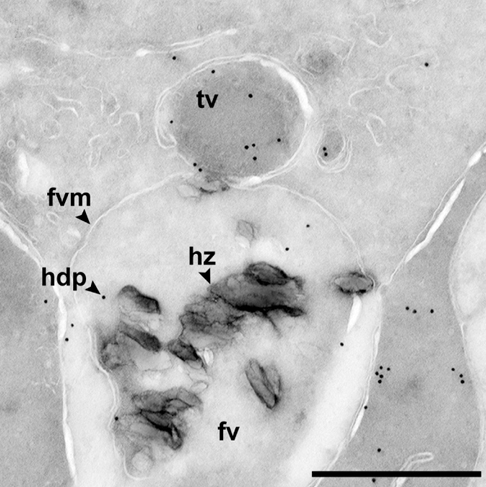

Structure and formation
Vesicles are bounded by a lipid bilayer similar in composition to the plasma membrane. The bilayer is formed from amphipathic molecules such as phospholipids and associated proteins; this membrane both contains soluble cargo and controls interactions with other membranes. Biogenesis commonly involves budding from an existing membrane, scission to release the bud, and targeted movement — processes driven by coat proteins, adaptor complexes and cytoskeletal motors. Vesicle membranes often contain specific proteins and lipids that determine their identity and destination. For more on the chemistry of component molecules see lipid and membrane resources.
Common types and functions
- Transport vesicles: shuttle proteins and lipids between the endoplasmic reticulum, Golgi apparatus and other compartments.
- Secretory vesicles: carry hormones, enzymes or other secreted molecules to the plasma membrane for release.
- Endocytic vesicles: internalize extracellular material and membrane proteins following endocytosis.
- Synaptic vesicles: specialised in neurons for rapid neurotransmitter release at synapses.
- Autophagic and lysosomal vesicles: participate in degradation and recycling of cellular components.
Mechanisms and molecular machinery
Vesicle trafficking is controlled by conserved protein families. Coat proteins such as clathrin, COPI and COPII sculpt budding vesicles; small GTPases (for example Rab proteins) guide targeting; and SNARE proteins mediate membrane fusion by bringing vesicle and target membranes together. Mechanical events like membrane scission can involve proteins such as dynamin. Fusion and fission events are tightly regulated so cargo is delivered specifically and at the right time.
Physiological importance and examples
Vesicles are central to many biological processes: neurons depend on synaptic vesicles for communication; endocrine cells use secretory vesicles to release hormones; immune cells present antigens using vesicular pathways; and cells use endocytic vesicles to regulate nutrient uptake and receptor signalling. Dysregulation of vesicle trafficking is implicated in diseases ranging from neurodegeneration to immune disorders and metabolic syndromes.
History, research and notable distinctions
The study of vesicles developed alongside advances in microscopy and cell fractionation in the 20th century. Modern cell biology has mapped many molecular players and pathways, but research continues into how membrane composition, curvature and mechanics influence vesicle behaviour. Vesicles should not be confused with larger organelles such as vacuoles or the nuclear envelope; they are distinct membrane compartments whose size and dynamics vary with cell type and function. For summaries of subcellular components and organelle interactions see organelles.
Note: Vesicles are a broad category: their exact definition, size range and composition depend on the biological context and the techniques used to study them.
Related articles
Author
AlegsaOnline.com Vesicle (cellular membrane-bound sac) Leandro Alegsa
URL: https://en.alegsaonline.com/art/104778