
Valdir “Didi” Pereira — Brazilian playmaker and two-time World Cup winner
Valdir “Didi” Pereira (1928–2001), Brazilian midfield playmaker famed for the folha seca free kick; key creative presence in Brazil’s 1958 and 1962 World Cup-winning teams.
Valdir Pereira (8 October 1928 – 12 May 2001), widely known by his nickname Didi, was a celebrated Brazilian football midfielder and playmaker. Renowned for his passing range, calm control and set‑piece skill, he was a central figure for the Brazil national team during the period in which Brazil won the FIFA World Cups of 1958 and 1962. In those tournaments he combined with forwards and teammates such as Pelé, Vavá, Garrincha and Mário Zagallo to form an attack that became widely admired for creativity and effectiveness.
Image gallery
2 Images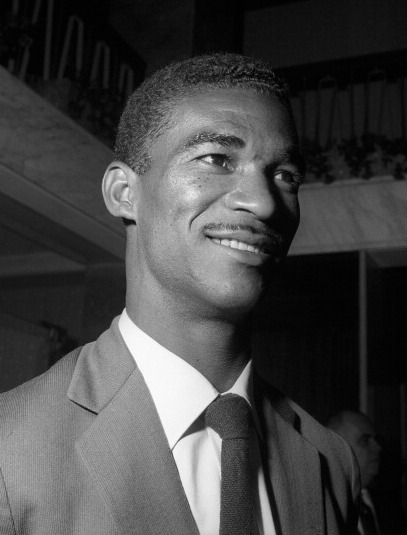

Playing style and the folha seca
Didi was a classic deep‑lying and advancing playmaker who could control matches through his vision and timing. He excelled at switching play with long, accurate passes and at finding forwards with through balls that opened defences. Calm under pressure and comfortable carrying the ball, he balanced creative instincts with strong tactical awareness.
He is particularly remembered for his association with the folha seca — literally “dry leaf” — a free‑kick technique that produced a dramatic, dipping trajectory. The striking method gave the ball a sudden drop and unpredictable movement in flight, making it difficult for goalkeepers to judge. Didi is commonly credited with inventing or popularising this effect; the folha seca became part of his footballing legacy and an enduring point of reference when discussing curved or dipping set‑piece strikes.
International impact and World Cup role
At international level Didi was valued as the creative fulcrum between midfield and attack. His ability to control tempo, choose incisive long passes and assume responsibility for set pieces made him a natural organiser in front of the defence. During the 1958 World Cup he helped Brazil combine individual flair with collective balance; four years later he remained an influential presence in the squad that successfully defended the title.
His teammates and opponents often singled out his intelligence on the pitch: not merely as a passer but as a playmaker who read the game and anticipated spaces. While forwards received much of the attention for goals, Didi’s contribution lay in the structure and supply that allowed attacking teammates to flourish.
Club career and later life
Didi enjoyed a substantial club career in Brazil and also had spells abroad. He played for several well‑known sides and remained a respected figure after his days as a regular player. Following retirement he worked in coaching and football development, taking on roles at club level and contributing his experience to younger players. His longevity in the game — as player and coach — helped transmit aspects of Brazilian midfield technique and set‑piece practice to later generations.
Characteristics and recognition
- Position: Central/attacking midfielder, deep‑lying playmaker.
- Key traits: Vision, range of passing, composure, tactical intelligence.
- Set pieces: Associated with the folha seca free‑kick technique.
- Honours: Member of Brazil’s 1958 and 1962 World Cup squads; widely remembered among the great midfield technicians of his era.
Legacy
Didi is frequently cited by historians, coaches and former players as one of the most technically gifted midfielders of his generation. Beyond trophies, his legacy rests on the way he combined creative distribution with set‑piece innovation. The folha seca remains a touchstone when commentators and coaches discuss unusual ball trajectories and the art of free kicks. His influence is also visible in the evolution of creative midfield roles: players expected not only to make short combinations but to unlock play with long passes and to contribute moments of improvisation that can decide important matches.
Although the passage of time has blurred some club‑level details in public memory, his international achievements, technical innovations and recorded performances ensure that Didi’s place in football history is secure. Contemporary footage, match reports of the era and the testimony of peers continue to underline his importance to Brazil’s early world champions and to the broader story of midfield craftsmanship in the twentieth century.
Related articles
Author
AlegsaOnline.com Valdir “Didi” Pereira — Brazilian playmaker and two-time World Cup winner Leandro Alegsa
URL: https://en.alegsaonline.com/art/103945
Sources
- national-football-teams.com : "Didi"
- rsssf.com : "Waldir Pereira "Didi" - International Appearances and Goals"