
Valentin Kozmich Ivanov
Soviet-era football forward for Torpedo Moscow and the USSR national team, Olympic and European champion, later coach. Remembered as one of the era's leading attackers (1934–2011).
Valentin Kozmich Ivanov (born November 19, 1934 – died November 8, 2011) was a prominent Soviet footballer best known for his time at Torpedo Moscow and for representing the USSR at major international tournaments. He was widely regarded in his era as an accomplished forward, combining technical skill with a knack for finding scoring opportunities. Contemporary sources record his birth on November 19 and his year of birth as 1934.
Image gallery
3 Images

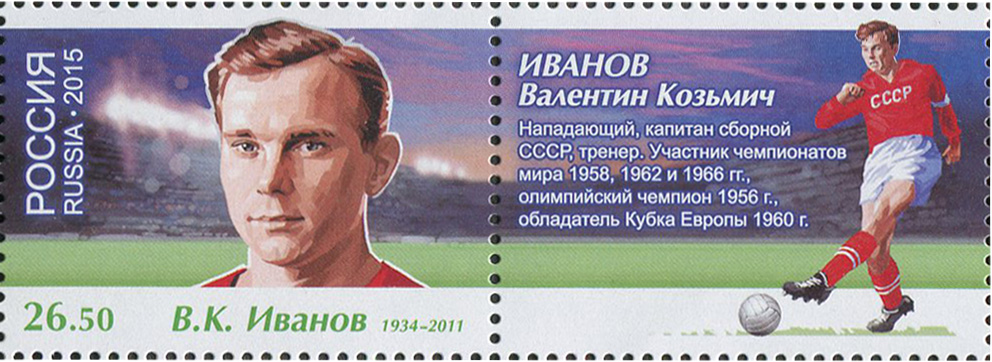
Club career and playing style
Ivanov spent most of his club career with Torpedo Moscow, where he developed a reputation for intelligent movement, accurate finishing and an ability to link play. He operated primarily as an inside forward or striker, contributing both goals and assists and acting as a focal point of his team's attack. His technical control and calmness in the penalty area made him a reliable scorer in domestic competitions and a respected opponent in European fixtures.
International highlights
On the international stage Ivanov was a regular member of the Soviet national side through the late 1950s and early 1960s. He took part in World Cup tournaments and was a member of squads that achieved success in multi‑nation events: he helped the USSR win the Olympic football tournament and was part of the team that won the inaugural European Nations' Cup. His role with the national team demonstrated his value at the highest level of competition.
Achievements and legacy
- Olympic and continental honours as part of Soviet national squads
- Long-serving club career with Torpedo Moscow and recognition as a leading forward of his generation
- Later work in coaching and football administration, passing on experience to younger players
Beyond statistics, Ivanov is remembered for the composed, technical approach he brought to attacking play. His contributions helped shape Soviet football during a period when the national team was among Europe's strongest. Accounts of his nationality and sport identify him as a Russian football figure whose name remains in historical discussions of the era.
After retiring from playing he remained involved in football through coaching and mentoring roles. He died on November 8, 2011; contemporary obituaries and notices recorded the passing and reflected on his career in the press. His family and public statements attributed his death to Alzheimer's disease, a fact noted in multiple remembrances.
Ivanov's career is often cited in histories of Soviet sport as an example of technical forward play and professional longevity. Further reading and archival materials are available from period reports and dedicated football histories that examine his matches, goals and later contributions as a coach and elder statesman of the game.
Related articles
Author
AlegsaOnline.com Valentin Kozmich Ivanov Leandro Alegsa
URL: https://en.alegsaonline.com/art/103986
Sources
- uk.sports.yahoo.com : "Yahoo UK & Ireland - Sports News - Live Scores - Results"
- national-football-teams.com : "Valentin Ivanov"
- rsssf.com : "Soviet Union/CIS - Record International Players"