
USS Nimitz (CVN-68) aircraft carrier
USS Nimitz (CVN-68) is the lead ship of the Nimitz-class nuclear-powered supercarriers of the U.S. Navy, commissioned in 1975. It serves as a seagoing airbase and power-projection platform with a large carrier air wing.
The USS Nimitz (CVN-68) is a nuclear-powered aircraft carrier that serves as a mobile airbase for the United States Navy. As the lead ship of her class she has been a central element of U.S. carrier strike groups since the 1970s. Named for Fleet Admiral Chester W. Nimitz, the ship was designed to carry a full carrier air wing, sustain high speeds for long periods, and operate worldwide in a variety of missions from combat operations to humanitarian assistance.
Image gallery
10 Images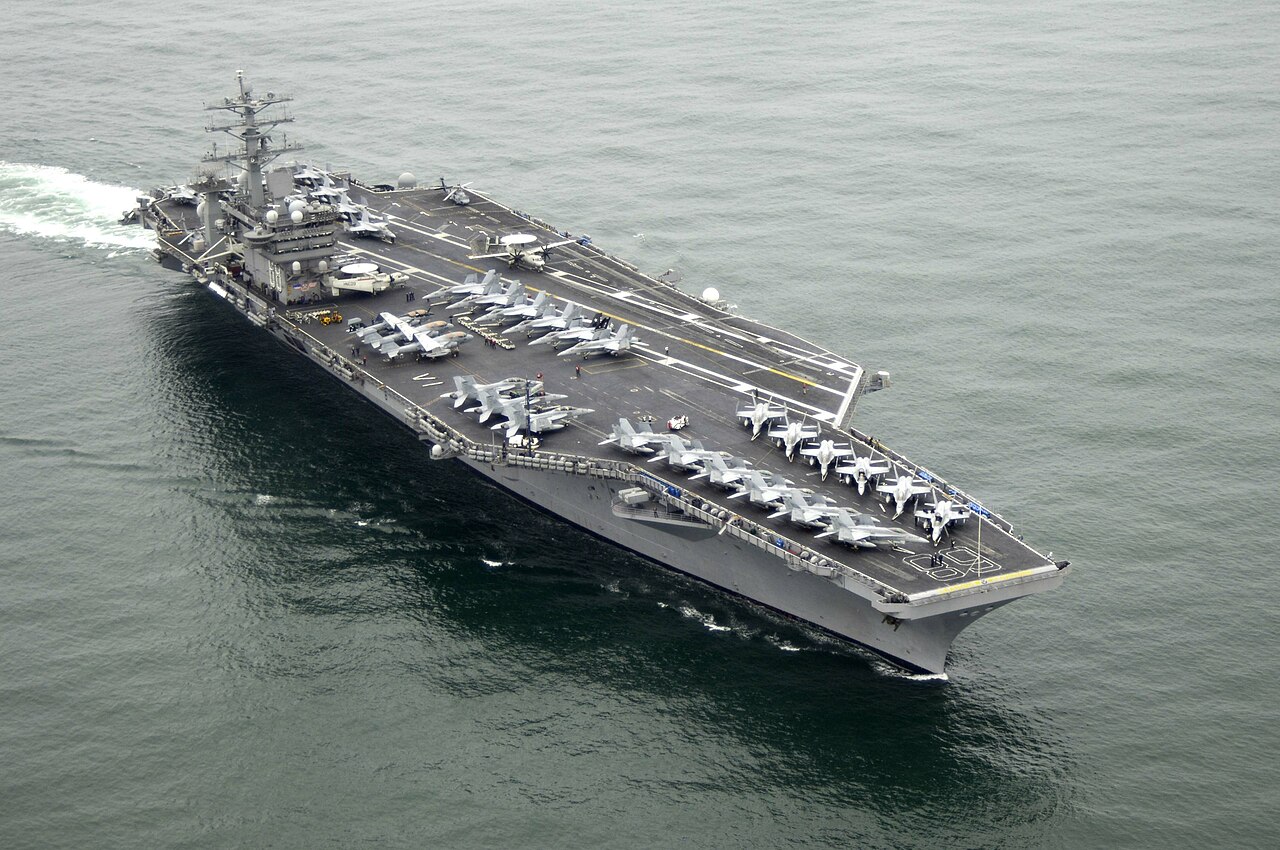


Design and characteristics
The Nimitz-class hull is one of the largest warships ever constructed. USS Nimitz measures about 1,092 feet (approximately 333 meters) overall and displaces on the order of 100,000 long tons when fully loaded. Propulsion comes from two nuclear reactors and multiple steam turbines, giving the ship effectively unlimited range between refuelings and the ability to exceed 30 knots in speed. Flight operations are conducted from an angled flight deck and use four catapults and several arresting wires to launch and recover fixed-wing aircraft and helicopters.
- Propulsion: two nuclear reactors (A4W type) and steam turbines.
- Flight deck: angled deck with four steam catapults and multiple elevators.
- Air wing: typically hosts a carrier air wing of strike fighters, electronic and early-warning aircraft, and helicopters; the exact number varies with mission.
- Endurance: long periods at sea between logistics replenishments; reactor refueling and overhaul occur at designated shipyards roughly mid-life (~20–25 years).
History and service
Commissioned in the mid-1970s, USS Nimitz has completed numerous deployments and undergone periodic overhauls and modernization programs to keep avionics, weapons, and support systems current. As a forward-deployable capital ship, she has operated in both the Atlantic and Pacific theaters. Homeporting and basing assignments have changed over time to meet strategic needs; at times she has been based on the U.S. West Coast to support Pacific operations. The ship has taken part in training exercises, combat operations, and multinational operations as required.
Role and operations
Aircraft carriers like USS Nimitz project air power far from national shores, enabling strike, air superiority, reconnaissance, command-and-control, and search-and-rescue missions. The carrier strike group includes escorts and support vessels that extend defensive and logistical reach. In peacetime the ship supports presence missions, deterrence, and cooperative exercises with allied navies; in crises she can provide rapid-response air assets and humanitarian assistance.
Notable features and distinctions
As the lead ship of her class, USS Nimitz helped establish design standards used across subsequent carriers of the same family. Her nuclear propulsion provides endurance and speeds that are distinctive compared with conventionally powered carriers. The ship’s complexity requires a large crew and specialized maintenance cycles; major overhauls, including reactor refueling and modernization, are scheduled events conducted at major naval shipyards.
For further technical details and historical timelines, consult official naval resources and class summaries, including the ship class overview available from authoritative sources such as the ship class page and public Navy fact files. Information about past and present homeports can be found through regional naval installation pages like Naval Station Everett, which have hosted carrier units during specific periods.
Because specific complements, deployment lengths, and modernization schedules change over time, contemporary references should be checked for the latest status and configuration.
Related articles
Author
AlegsaOnline.com USS Nimitz (CVN-68) aircraft carrier Leandro Alegsa
URL: https://en.alegsaonline.com/art/103694