
Urea (carbamide): chemistry, biological role, uses and history
Urea (CO(NH2)2), also called carbamide, is a simple nitrogenous organic compound produced by animals and manufactured for fertilizers, resins, cosmetics, automotive emissions and clinical testing.
Overview
Urea is a small nitrogen‑containing organic compound with the formula CO(NH2)2. It is a colourless, crystalline solid that dissolves readily in water and is notable for its high nitrogen content relative to mass. Urea occurs naturally in the tissues and fluids of many organisms and is a principal product of nitrogen metabolism in mammals, where it provides a safe means to transport and excrete excess nitrogen in urine.
Image gallery
7 Images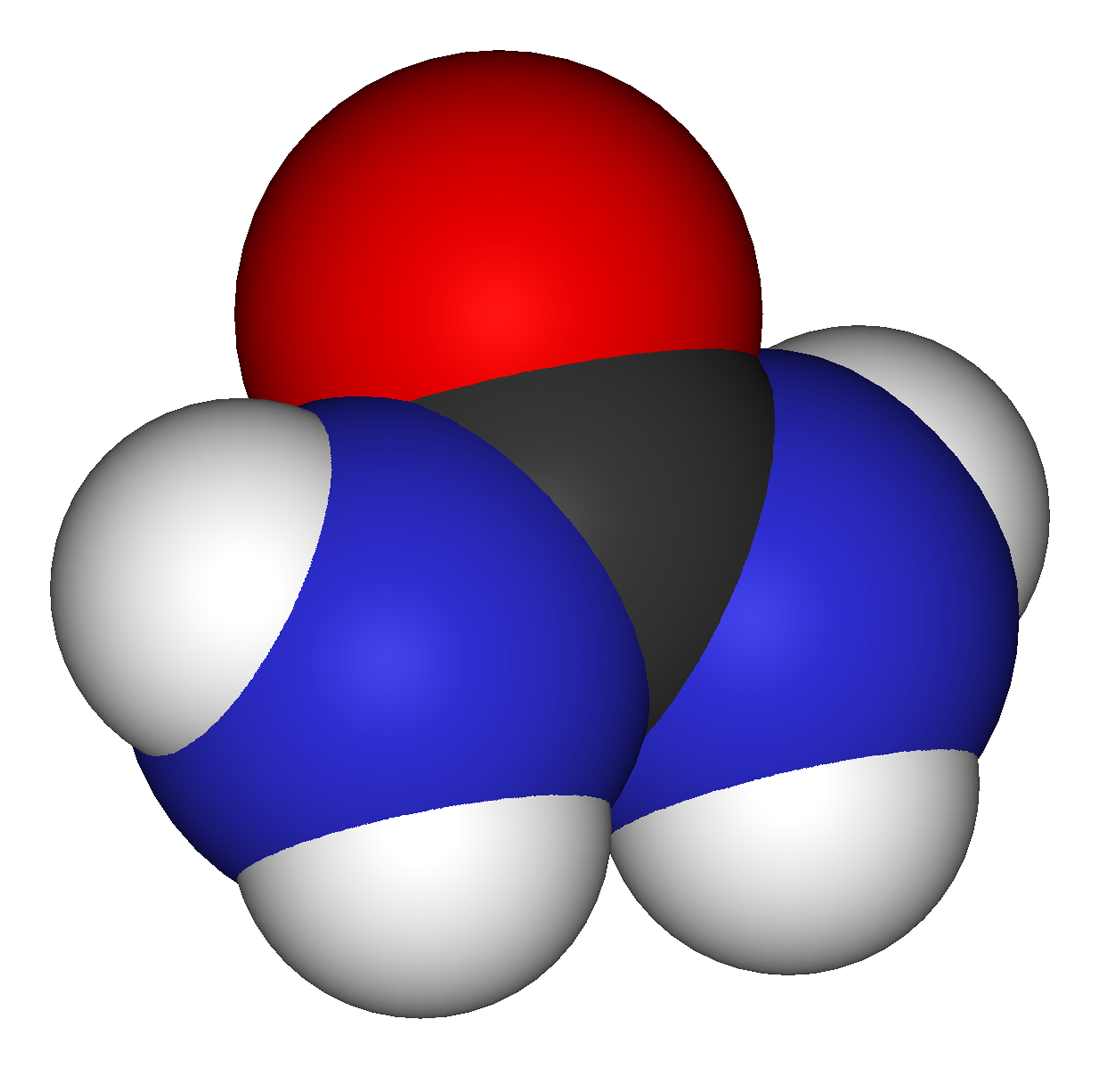


Structure and chemical properties
Chemically, urea has a carbonyl group bonded to two amine groups. The molecule is polar and forms extensive hydrogen bonds, which explain its high solubility and its ability to disrupt hydrogen‑bonded structures such as protein folding at high concentrations. Urea is commonly named carbamide or carbonyl diamide in various contexts. It is relatively stable under normal conditions but decomposes on heating, and can form by‑products such as biuret if heated or mishandled.
Biological role and metabolism
In mammals the liver carries out the conversion of ammonia, a toxic product of amino acid breakdown, into urea via the urea cycle. The liver exports urea into the bloodstream and the kidneys filter it into urine for elimination. Blood and urinary urea measurements are widely used in clinical medicine to assess renal function and protein metabolism; for example, blood urea nitrogen (BUN) is a common laboratory value reflecting urea concentration in blood.
Medical and laboratory significance
Urea concentrations in blood and urine are interpreted alongside other clinical data when evaluating hydration, kidney function and catabolic state. Urea is also used in laboratory practice as a protein denaturant and in diagnostic reagents. Medically, topical formulations containing modest concentrations of urea are applied as humectants or keratolytic agents in dermatology.
Industrial production
Industrial urea is manufactured by reacting ammonia with carbon dioxide under pressure; the process is integrated with large ammonia synthesis facilities and global fertilizer production networks. The material is produced in solid prills or granules and as concentrated aqueous solutions for specialty uses.
Major applications
- Agriculture: urea is the world’s most widely used solid nitrogen fertilizer and is applied to soils to supply plant‑available nitrogen (fertilizer use).
- Chemical industry: feedstock for urea‑formaldehyde resins, adhesives and other nitrogenous chemicals.
- Automotive: aqueous urea solutions are used in selective catalytic reduction (SCR) systems to reduce NOx emissions from diesel engines.
- Personal care and pharmaceuticals: used as a moisturizer and to soften keratin in topical products.
Environmental and safety considerations
Although urea has relatively low acute toxicity, its use and storage require care. When applied to soil, urea can be hydrolysed to ammonia and may be lost to the atmosphere or converted to nitrate and leached into waterways, contributing to eutrophication. Agricultural application can also lead to emissions of nitrous oxide (a greenhouse gas) if nitrogen is not managed properly. Industrial handling guidelines and appropriate stabilization or incorporation into soil reduce these risks.
History and scientific importance
Urea was first identified in urine by chemists in the 18th century, and the artificial synthesis of urea from inorganic precursors by Friedrich Wöhler in 1828 is widely regarded as a foundational event in organic chemistry because it showed that an organic compound could be prepared from inorganic material without a presumed "vital force". References to early investigators and historic experiments can be found in historic chemistry accounts; notable names associated with the compound’s early study include Hilaire Rouelle and Wöhler (discoverer and synthetic milestone respectively).
For further reading about physiological processes, consult liver and metabolic resources (liver references), standard chemical property compendia (compound entries) and agricultural guides on fertilizer management (fertilizer). Practical safety and handling information is available in industrial guidance and material safety sheets maintained by producers and regulators.
Related articles
Author
AlegsaOnline.com Urea (carbamide): chemistry, biological role, uses and history Leandro Alegsa
URL: https://en.alegsaonline.com/art/103584
Sources
- webmineral.com : Urea Mineral Data