
Universal Esperanto Association (UEA)
UEA is the principal international organization for Esperanto speakers, coordinating national groups, publishing resources, organising the World Congress and maintaining offices in Rotterdam and at the UN in New York.
Overview
The Universal Esperanto Association (often abbreviated UEA) is the leading international organization for speakers and promoters of Esperanto. It acts as a coordinating body for national Esperanto societies, a publisher and an advocate for the language as an international auxiliary means of communication. UEA operates from a headquarters in Rotterdam in the Netherlands and maintains a presence at the United Nations building in New York through an office and representative activity linked to the United Nations.
Image gallery
9 Images


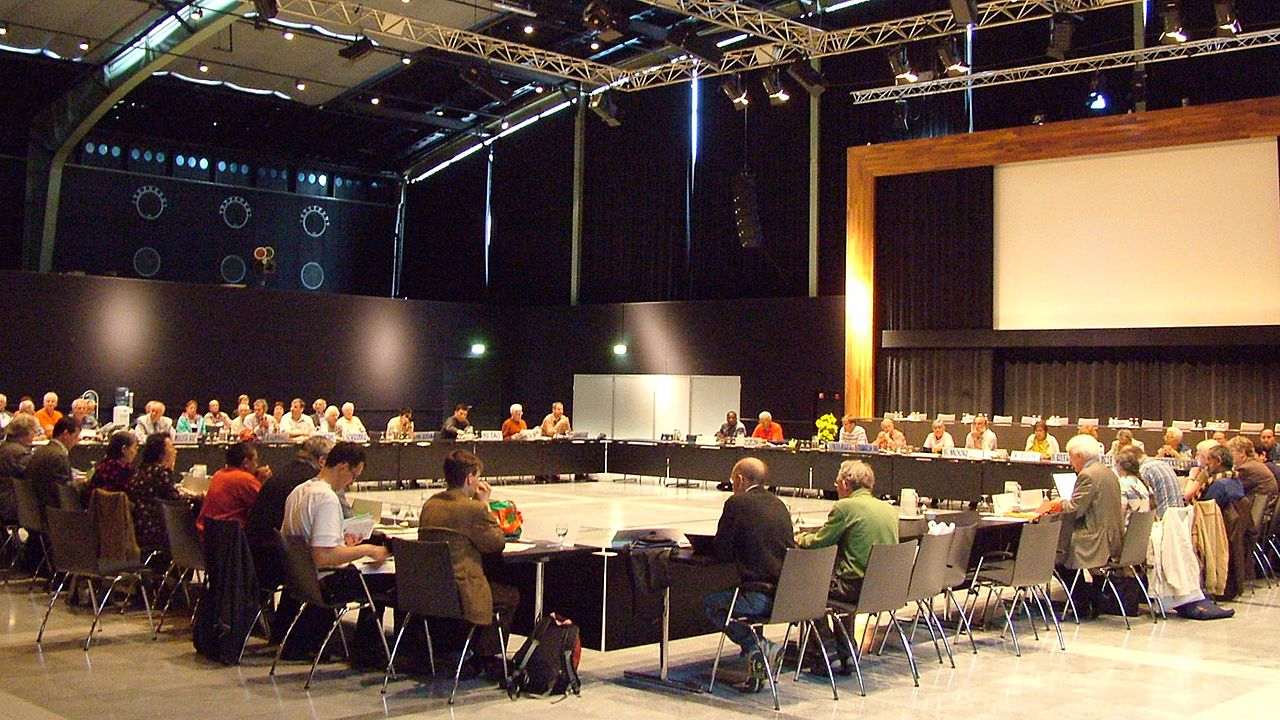


History and foundation
UEA was founded on 28 April 1908 by a group of Esperanto supporters led by Swiss journalist Hector Hodler. The association grew from early twentieth-century efforts to give organized structure to the international Esperanto movement, providing a forum for coordination between national federations and individual members across many countries.
Activities and services
UEA carries out a range of activities aimed at promoting Esperanto and supporting its community. Major functions include:
- Organising and sponsoring the annual World Esperanto Congress (Universala Kongreso), which brings together speakers from many countries.
- Publishing periodicals and reference materials in and about Esperanto to serve learners and fluent speakers.
- Cooperating with national associations and the World Esperanto Youth Organization (TEJO) on education, cultural exchange and events.
- Maintaining archives, libraries and information services that document the history and use of the language.
Organization, membership and presence
Membership is composed of both individual subscribers and national or regional organizations. Historically UEA has represented several thousand individual members together with scores of national federations. Its offices and representatives enable participation in international forums and facilitate contacts with other non-governmental organizations and institutions.
Notable facts and distinctions
UEA is widely regarded as the principal institutional embodiment of the Esperanto movement, not only for its size but for its role in organising major events, publishing materials and preserving historical records. Its long history, international scope and ongoing outreach make it a central reference point for anyone studying or using Esperanto for cultural exchange, diplomacy, education or travel.
For further information about Esperanto, UEA activities, events and membership, follow the association and its national partners via the organization’s published channels and affiliated youth and educational programmes.
Related articles
Author
AlegsaOnline.com Universal Esperanto Association (UEA) Leandro Alegsa
URL: https://en.alegsaonline.com/art/103160