
University of Birmingham
A public research university in Edgbaston, Birmingham, founded by royal charter in 1900; a founding Russell Group member with broad research, teaching and civic roles.
Overview
The University of Birmingham is a major public research university located in the Edgbaston district of the city of Birmingham, England. It is traditionally classed among the United Kingdom's "red brick" civic universities and is notable for having received a royal charter in 1900 that established it as one of the country's first civic universities. The institution combines a long local history with an international research profile and a large, diverse student body.
Image gallery
10 Images


History and origins
The university emerged from earlier educational foundations in Birmingham, notably the Birmingham Medical School (established in the early 19th century) and Mason Science College, which opened in the later 19th century. These constituent colleges and local civic support led to the granting of a royal charter at the turn of the 20th century, which formalised the university's status. Over the 20th century the university expanded its teaching and research activities, adding professional schools and research institutes and growing links with local industry and public services.
Campus, faculties and facilities
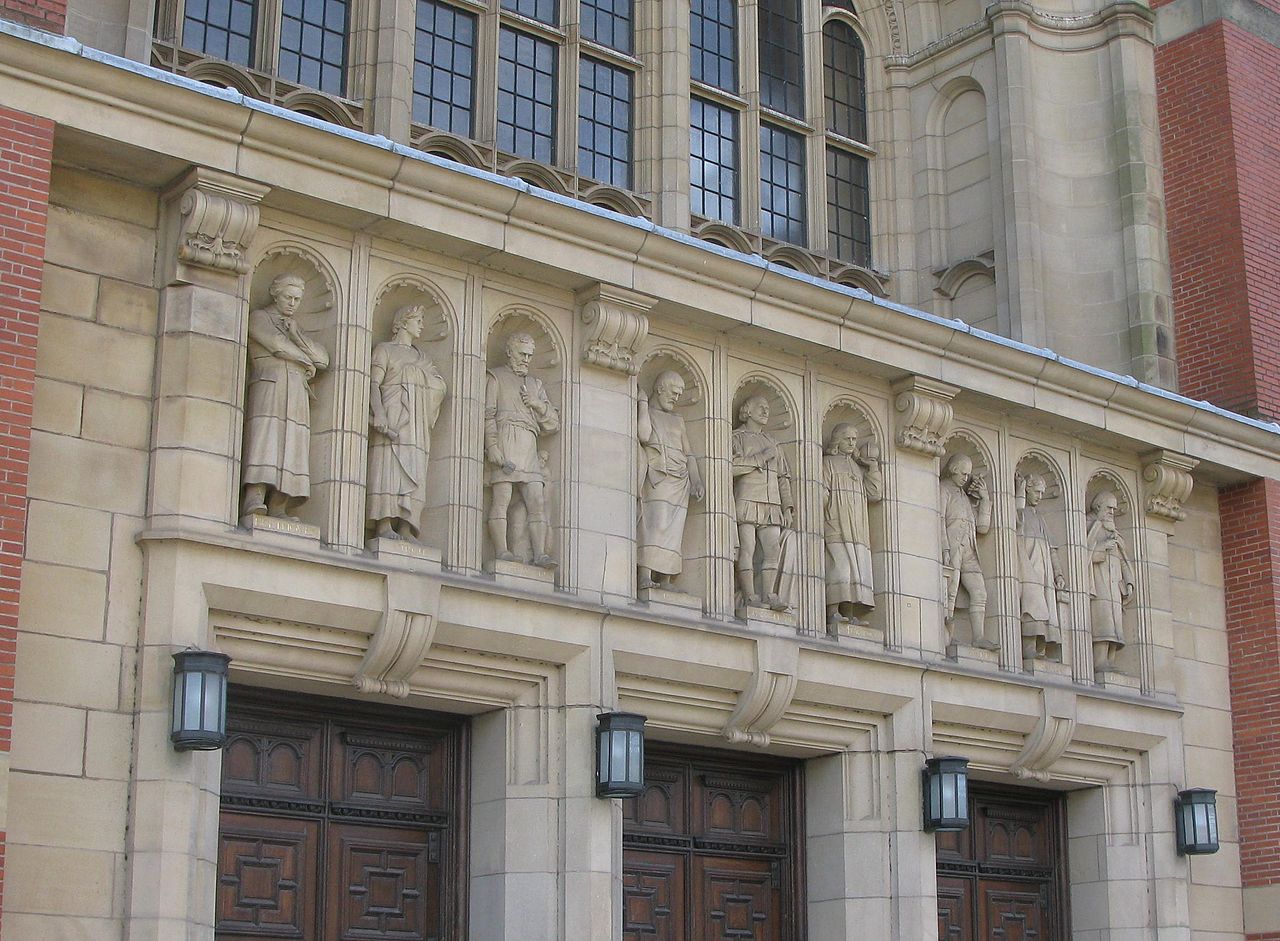
The main campus is set in suburban Edgbaston and mixes historic red-brick and stone architecture with modern laboratories and teaching buildings. Facilities typical of a research university include major libraries, specialised research centres, performance and exhibition spaces, and clinical teaching links with nearby hospitals. Academic provision is organised across a range of schools and faculties covering arts and humanities, social sciences, engineering, physical and life sciences, medicine and dentistry, and business studies.
Academics, research and students
Birmingham is a research-intensive university and a member of the UK's Russell Group, a collective of large research-led institutions. It teaches undergraduate and postgraduate programmes across many disciplines and hosts considerable doctoral and postdoctoral activity. The student population is substantial, with tens of thousands of undergraduates and postgraduates drawn from the UK and overseas, and the university offers a wide range of taught and research degrees together with professional and continuing education.
Reputation, partnerships and outcomes
The university is regarded as one of the United Kingdom's leading civic universities. It is a founding member of international networks such as Universitas 21 and maintains partnerships with industry, cultural organisations and public services. Admissions standards are competitive for many courses, and graduates pursue careers across public, private and non-profit sectors. Prospective students and employers frequently consult national and international rankings and subject tables when assessing the institution.
Finances, distinctions and notable facts
The university operates with an annual budget measured in the hundreds of millions of pounds and maintains an institutional endowment and asset base to support teaching, research and capital development. Historical public figures have recorded annual income and expenditure in the early 2010s and an endowment reported in the late 2000s; these serve as a reminder of the scale of operation but should be treated as time-specific snapshots rather than current statements. Distinctive points include its status as one of the first civic "red brick" universities, membership of the Russell Group, and its historic links to local medical and scientific education.
- Red-brick heritage: red brick universities
- Location: city of Birmingham and central Edgbaston campus: Edgbaston
- Foundation by royal charter in 1900: royal charter
- Published financial and institutional reports: annual financial information
Questions and answers
Q: What is the University of Birmingham?
A: The University of Birmingham, also known as Birmingham University, is a red brick university located in the city of Birmingham, England.
Q: When did the university receive its royal charter?
A: The university received its royal charter in 1900.
Q: What were the two schools that were included when the university got its royal charter?
A: The Birmingham Medical School, founded in 1825, and Mason Science College, founded in 1875, were included when the university got its royal charter.
Q: What is the Russell Group?
A: The Russell Group is a group of research universities in the United Kingdom, of which Birmingham University is a member.
Q: How many students attend the University of Birmingham?
A: The student population includes around 19,000 undergraduate and 9,000 postgraduate students, making it the 11th largest in the UK.
Q: What is the annual income and expenditure of the University of Birmingham?
A: The annual income of the institution for 2010-11 was £470.7 million, with an expenditure of £443.7 million.
Q: What is the university's ranking domestically and internationally?
A: Birmingham University is ranked nationally between 10th and 23rd, internationally it is 99th in the 2010 rankings, and 67th in the 2011 rankings.
Related articles
Author
AlegsaOnline.com University of Birmingham Leandro Alegsa
URL: https://en.alegsaonline.com/art/103209
Sources
- intranet.birmingham.ac.uk : "index"
- about.bham.ac.uk : "Students"
- birmingham.gov.uk : "Birmingham University student wins engineering award"
- bbc.co.uk : "Student Life – Meeting the President"
- guardian.co.uk : "Birmingham University houses tornado victims"
- guardian.co.uk : "Muslim students threaten to sue Birmingham University"
- medicine.bham.ac.uk : "University of Birmingham: The Medical School"
- guardian.co.uk : guardian.co.uk/education/2009/may/10/universityguide-uni-birmingham
- telegraph.co.uk : "Top students concentrated in just 12 elite universities"
- hesa.ac.uk : "HESA Statistics – Higher Education numbers 2008/2009"
- ucas.com : "Choose your future"
- intranet.birmingham.ac.uk : intranet.birmingham.ac.uk
- topuniversities.com : "University of Birmingham – Top Universities"
- thecompleteuniversityguide.co.uk : "University League Table 2010"
- arwu.org : "ARWU 2010"