
United States National Security Council
The National Security Council (NSC) is the President's principal forum for national security and foreign policy coordination, housed in the Executive Office and shaped by each administration.
The National Security Council is the principal forum the White House uses to consider national security and foreign policy issues with senior advisers and Cabinet officials. Established in the aftermath of World War II under Harry S. Truman, the NSC sits inside the President's Executive Office and serves to integrate diplomatic, military, intelligence and other government inputs for the President of the United States.
Image gallery
4 Images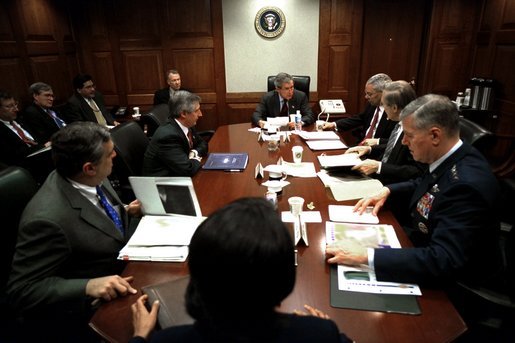


Role and functions
The NSC's core functions include advising the President, coordinating interagency policy development, and managing responses to crises. It helps translate presidential decisions into coherent plans across departments and agencies, monitors implementation of major security initiatives, and organizes White House-level deliberations when national security is at stake. Its remit often spans defense, intelligence, diplomacy, homeland security, energy and economic measures when these affect national safety.
Composition and structure
The Council's exact composition and internal organization vary by presidency and by directive, but common elements are:
- Senior policymakers, including the President and the Vice President when present.
- The National Security Advisor and a dedicated NSC staff that supports daily operations.
- Cabinet-level officials and agency principals who participate as needed.
- Formal subgroups such as the Principals Committee and Deputies Committee to prepare and review policy options.
In practice, attendance and influence depend on issues at hand and the President's management style; the NSC functions as both a planning body and a coordination mechanism for national security advisors across the government.
History and evolution
Created by postwar legislation and shaped by subsequent executive directives, the NSC has evolved through many administrations. Presidents adjust its structure and rules of engagement to reflect changing threats, technology, interagency relationships and their own governance preferences. Over time, the Council's staff and processes have expanded to handle complex, cross-cutting problems from intelligence integration to cyber and transnational challenges.
Importance and notable considerations
The NSC plays a central role in translating high-level strategy into coordinated action across the federal government. Its influence depends on statutory authorities, the quality of staff, interdepartmental cooperation, and the President's reliance on its recommendations. Observers note that the Council's effectiveness can be enhanced by clear procedures, experienced personnel and strong but impartial analysis; conversely, it may be criticized when perceived to be politicized or when interagency friction impedes timely decisions.
For further institutional context and official descriptions, consult primary references maintained by the Executive Office and historical summaries prepared by government archives and scholarly sources.
Related articles
Author
AlegsaOnline.com United States National Security Council Leandro Alegsa
URL: https://en.alegsaonline.com/art/103082