
Unionist Party (Punjab)
A secular agrarian political party in British India's Punjab, founded in 1923 to represent rural landlords across religious communities. It led Punjab government in the late 1930s and negotiated the Jinnah–Sikandar agreement.
The Unionist Party (Punjab) was a provincial political organization in Punjab during British India. Established in 1923, it brought together large landowners and rural elites from Muslim, Hindu and Sikh communities. The party emphasized agrarian interests, provincial autonomy and cross‑communal cooperation rather than narrow communal politics, aiming to manage the province's farming economy and maintain social stability.
Image gallery
2 Images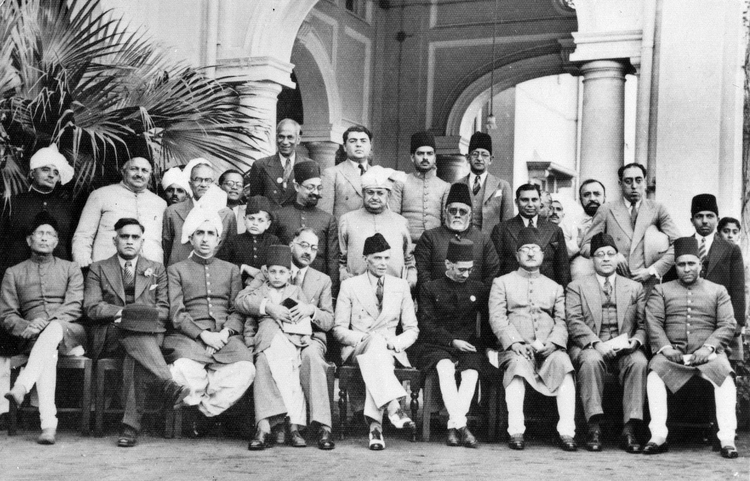

Origins and leadership
The party was formed by prominent provincial leaders, including Sir Fazli Husain, Sir Chhotu Ram and Sir Sikandar Hayat Khan, who sought a political vehicle for the zamindar class and rural agrarian concerns. Organizationally, the Unionist movement relied on local notable networks in villages and tehsils, drawing strength from landed rentiers, irrigation interests and peasant notables who could mobilize votes in the countryside. Its language and appeals frequently stressed practical economic issues over communal identity.
Platform and policies
- Representation of agrarian interests: tenancy, irrigation and rural credit were central concerns.
- Secular, cross‑community leadership: the party included Muslim, Hindu and Sikh landlords and officeholders.
- Provincialism: the Unionists favored strong provincial administration and practical cooperation with local institutions.
- Pragmatic alliances: they often sought broad coalitions to maintain stability in a diverse province.
These features made the party distinct from organizations that mobilized primarily on communal lines, and it functioned as a dominant provincial force for more than a decade.
Electoral success and the 1930s politics
Under the leadership of Sir Sikandar Hayat Khan the Unionists won control of the provincial legislature in the mid‑1930s and formed a coalition administration from 1937 that included cooperation with the Indian National Congress and the Sikh Akali groups. Facing the growing influence of all‑India parties, Sikandar negotiated an arrangement with Muhammad Ali Jinnah in Lucknow that allowed Muslim members of the Unionist organization to associate with the All‑India Muslim League while retaining their provincial identity — a settlement commonly referred to as the Jinnah–Sikandar Pact concluded at Lucknow.
The pact reflected the delicate balancing act the Unionists attempted: preserving a secular, provincial coalition while responding to rising communal and national pressures across the subcontinent.
After the death of Sir Sikandar in the early 1940s the party lost much of its cohesion. Intensifying communal politics and the mass mobilization campaigns of nationalist organizations eroded the Unionists' cross‑communal base. By the time of the 1940s constitutional crises and the partition of India, the party's influence had diminished and its leaders and supporters were absorbed into the competing political streams that shaped the subcontinent's division.
Legacy and notable facts
- The Unionist Party is remembered for its rural, landlord‑centered constituency and insistence on cross‑communal provincial governance.
- Its ability to govern a diverse province through pragmatism and local power structures stands out in the politics of late colonial India.
- The Jinnah–Sikandar agreement remains a notable episode illustrating how provincial and all‑India politics interacted in the 1930s.
Related articles
Author
AlegsaOnline.com Unionist Party (Punjab) Leandro Alegsa
URL: https://en.alegsaonline.com/art/102920