
United States presidential primary
An explanation of how U.S. presidential primaries and caucuses select party nominees, their forms, timeline, role in delegate allocation and national conventions, and common criticisms and reforms.
The United States presidential primary is the series of state-level contests—both elections and caucuses—that political parties use to select their nominee for the national presidential election. These contests are organized under rules set by the major parties and by state law; they were developed over time by parties rather than by the U.S. Constitution. While the goal is the same across states—choosing delegates who will support particular candidates at a party's national convention—the methods, schedules and eligibility rules vary widely.
Image gallery
5 Images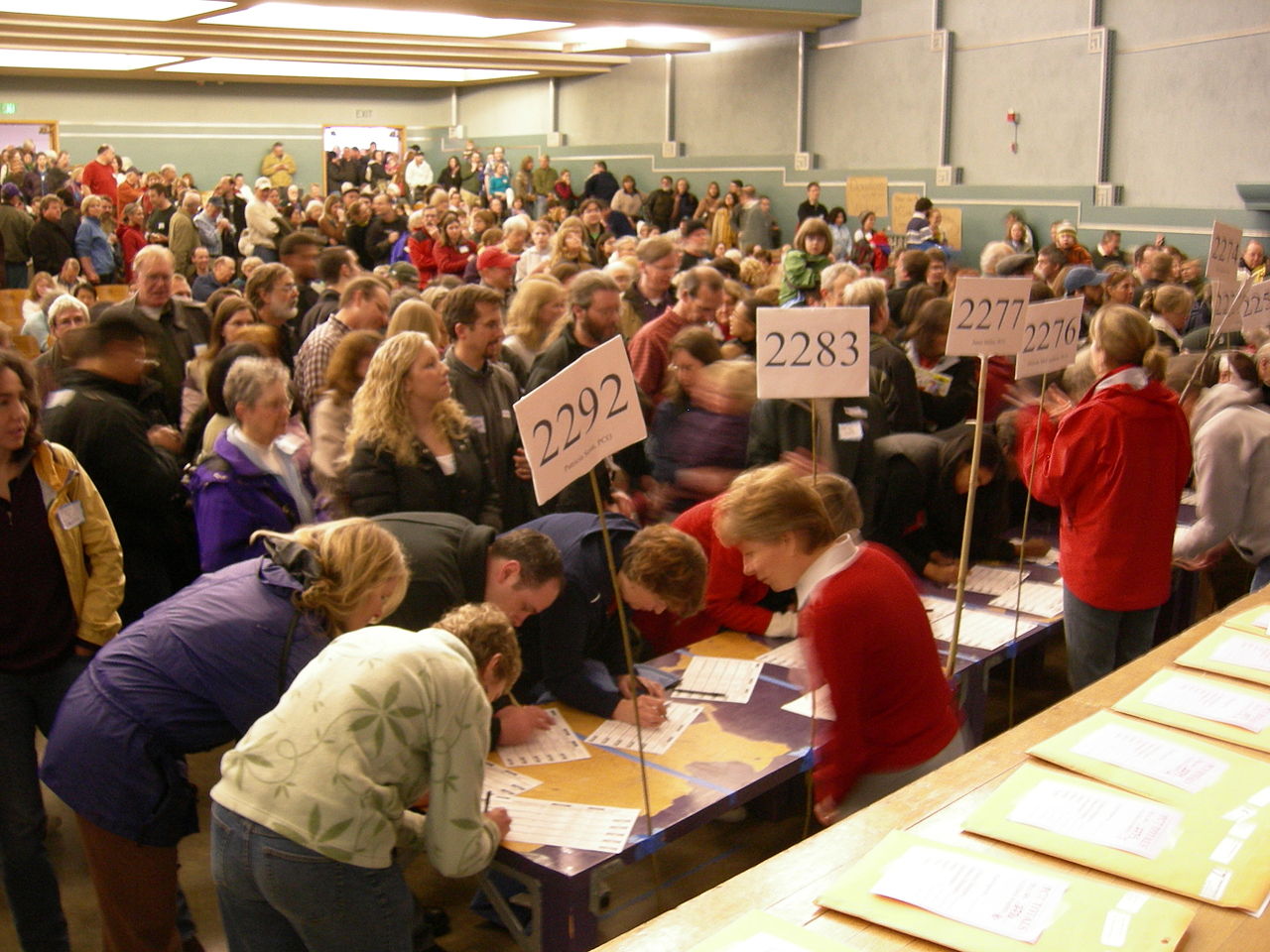


How primaries and caucuses work
There are two broad mechanisms for choosing delegates. A primary is a state-run or party-administered ballot vote in which voters cast secret ballots for a candidate. A caucus is a party-run local gathering where participants discuss and then indicate preferences, often by grouping physically or by raising hands. The main distinctions include:
- Primary types: closed (only registered party members), open (any registered voter may participate), semi-closed or mixed variations; rules differ by state and by party.
- Caucuses: tend to be time-consuming, involve discussion and persuasion, and usually have lower turnout than primaries.
- Delegate allocation: contests may allocate delegates proportionally, by congressional district, or using winner-take-all rules; parties set thresholds that candidates must meet to gain delegates.
Calendar, sequencing and the nomination
Contests occur over several months in the election year, beginning in winter and concluding by early summer. A handful of early states and territories receive disproportionate attention because their results can shape momentum. Parties and state governments negotiate the schedule; debates about "front-loading"—moving contests earlier—are common. The chosen delegates from these contests attend the party's national convention, where the official nominee is confirmed, sometimes after multiple ballots if no candidate has a majority.
History and development
Nomination methods evolved from party-run backroom decisions in the 19th century toward wider public participation. Progressive-era reforms introduced primary elections to reduce party bosses' control. Significant changes followed the 1968 Democratic convention, after which many states expanded primary use and parties created more standardized delegate rules to improve transparency and voter participation.
Why primaries matter and common critiques
Primaries and caucuses determine which candidates secure the party nomination and influence campaign strategy, fundraising and media coverage. Critics point to unequal influence by early states, low turnout in caucuses, high campaign costs, and complexity or inconsistency across states. Proposals for reform include national primary days, rotating regional primaries, and greater standardization of rules between parties and states.
Practical details and where to learn more
Because party rules differ, interested voters should check their state's procedures, registration deadlines and whether their contest is a primary or a caucus. State and party offices publish official information, and many nonpartisan guides summarize rules, schedules and delegate allocation. For additional background see resources on the United States nominating process and summaries of primary elections or caucuses for more detail. Party-specific rules and historical context are also available from organizations that track political party procedures and the broader mechanics of the primary elections system.
Related articles
Author
AlegsaOnline.com United States presidential primary Leandro Alegsa
URL: https://en.alegsaonline.com/art/103097