
United National Independence Party (UNIP)
Zambia's principal independence-era political party, led by Kenneth Kaunda, which governed from 1964–1991 and was the country's sole legal party for part of that period.
Overview
The United National Independence Party (UNIP) is a political party in Zambia founded in October 1959 to press for national independence from British colonial rule. It became the principal vehicle for the independence movement and led the newly independent state from 1964 until 1991 under the leadership of Kenneth Kaunda. UNIP's name reflects its origins as a coalition of activists and nationalists seeking a united front for self-government.
Image gallery
3 Images

Origins and early leadership
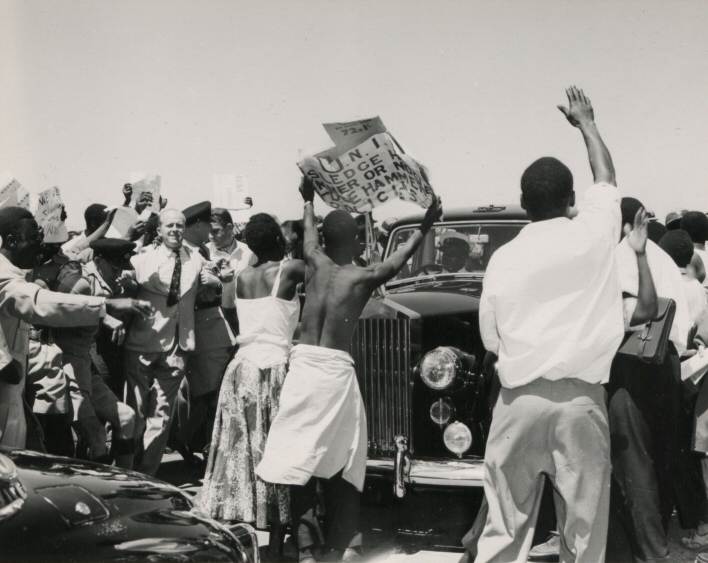
UNIP emerged after the colonial authorities banned the Zambian African National Congress (ZANC). With ZANC leader Kenneth Kaunda imprisoned at the time, Mainza Chona initially served as acting leader while the new party was organized. Kaunda assumed leadership on his release in January 1960 and quickly became the charismatic face of the independence campaign, guiding UNIP to electoral victory and the transition to sovereignty in 1964.
Party organisation, ideology and the one-party period
UNIP combined elements of African nationalism, social development policies and a philosophy often associated with Kaunda known as "Zambian humanism," which emphasized communal values, moral leadership and state-led development. In 1973 Zambia adopted a one-party constitution that made UNIP the only legally permitted party; this arrangement lasted until 1991. During that period UNIP controlled national institutions and directed economic and political policy from the presidency and parliament.
Decline and post-1991 role
Facing economic difficulties and increasing demand for political pluralism, UNIP lost power after the reintroduction of multiparty politics. In the 1991 elections the Movement for Multi-Party Democracy (MMD) defeated UNIP and its candidate, bringing an end to Kaunda's long presidency. Since then UNIP has continued as an opposition party, maintaining an organizational presence and contesting elections, though it has not returned to its former dominance.
Significance and notable facts
- UNIP was central to Zambia's independence and early state-building process and shaped the country's postcolonial institutions.
- Mainza Chona and Kenneth Kaunda are prominent founders and leaders associated with the party's founding era.
- Between 1973 and 1991 UNIP was the only legal party in Zambia, a defining feature of the country's political life for nearly two decades.
- For further background on the party's history and contemporary activities consult official sources and historical summaries (UNIP information).
UNIP's legacy remains contested: it is credited with leading the country to independence and instituting national development initiatives, while critics point to the limitations of one-party rule and economic challenges during its long tenure. The party's history illustrates the broader patterns of decolonization, postcolonial governance and the later return to multiparty democracy in southern Africa.
Related articles
Author
AlegsaOnline.com United National Independence Party (UNIP) Leandro Alegsa
URL: https://en.alegsaonline.com/art/102969
Sources
- thecommonwealth.org : Zambia : History