
United Left (Spain)
United Left (Izquierda Unida) is a Spanish left-wing coalition founded in 1986. Anchored by the Communist Party of Spain, it has pursued anti-austerity, social justice and cooperative alliances including Unidas Podemos.

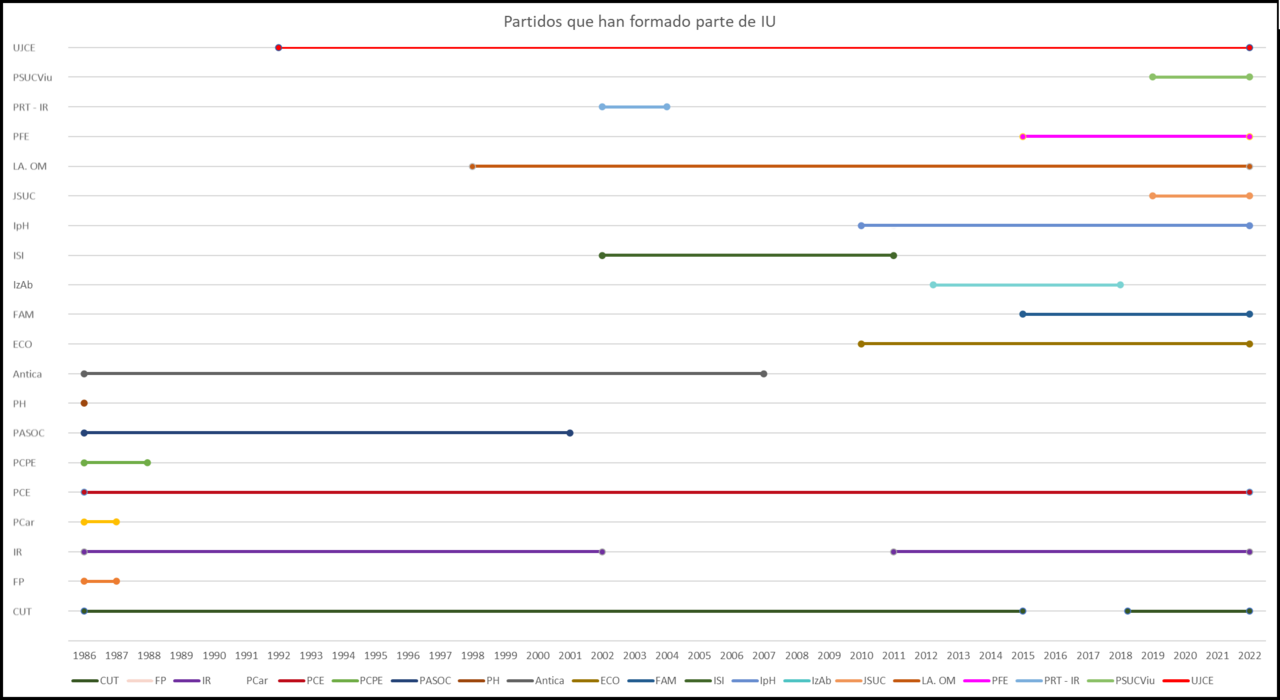
United Left (Spanish: Izquierda Unida) is a political coalition in Spain formed in 1986 to bring together multiple left-wing organizations into a common electoral platform. Created as an electoral coalition, it sought to present a unified alternative to centrist and conservative forces and to coordinate campaigns across national and regional levels. Over time the coalition has evolved, with the Communist Party of Spain (PCE) remaining its principal national member while regional partners and internal currents have shifted.
Image gallery
7 Images


Origins and development
United Left emerged in the mid-1980s amid a period of political consolidation following Spain's democratic transition. It combined several smaller parties and groups that shared socialist, communist and ecosocialist tendencies. The coalition aimed to amplify left-wing representation in parliaments and influence debates on public services, labor rights and economic policy. In the 1990s United Left gained broader public visibility under notable leadership that emphasized programmatic coherence and critique of neoliberal reforms.
Organization and composition
IU operates as a federation of regional federations and local groups, allowing distinct territorial formations to retain autonomy while coordinating nationally. Internally it contains political currents ranging from traditional communists to green and feminist activists. Decision-making is exercised through assemblies and elected collective bodies; membership and alliances at the regional level have varied, meaning the coalition's exact makeup has changed over the decades.
Political positions and activities
The coalition advances a platform centered on social justice, public ownership or strong regulation of essential services, progressive taxation, labor protections and gender equality. It is generally critical of austerity-driven economic policies and has supported measures to preserve public health, education and welfare systems. IU has also promoted environmental concerns, secularism and republican perspectives in debates about the monarchy.
Alliances and electoral strategy
Facing a fragmented left and the rise of new parties, United Left has at times pursued electoral pacts and joint lists to maximize representation. From the mid-2010s it joined forces with newer formations in broader leftist coalitions at the national level, participating in joint candidacies and shared parliamentary groups. Locally and regionally it has frequently entered coalition governments or agreements with other progressive parties where programmatic overlap exists.
Legacy and notable facts
IU has been an enduring presence on Spain's left, providing a space for the historic Communist Party and allied movements to participate in electoral politics and social movements. Its role has been both electoral and organizational: supporting trade-union activity, grassroots campaigns and municipal platforms while negotiating the challenges of coalition politics. As Spain's political landscape continues to evolve, United Left remains a reference point for those seeking a plural, programmatic left alternative.
- Founded as a multi-party left coalition in 1986.
- Federated structure with regional autonomy.
- Core themes: social welfare, labor rights, environmental and feminist policies.
- Has engaged in broad left alliances at national and local levels.
Related articles
Author
AlegsaOnline.com United Left (Spain) Leandro Alegsa
URL: https://en.alegsaonline.com/art/102965