
Uncle: definition, kinship relationships, cultural roles and honorary usage
Defines uncle and explores kinship (maternal, paternal, granduncles), cultural roles and authority across societies, plus honorary uses and non‑biological forms of address such as Uncle Sam.
An uncle is a male relative who belongs to a person's extended family. In ordinary usage, an uncle is most often the brother of one of a person's parents, but the term can also be applied more broadly (see honorary usage below).
Image gallery
3 Images

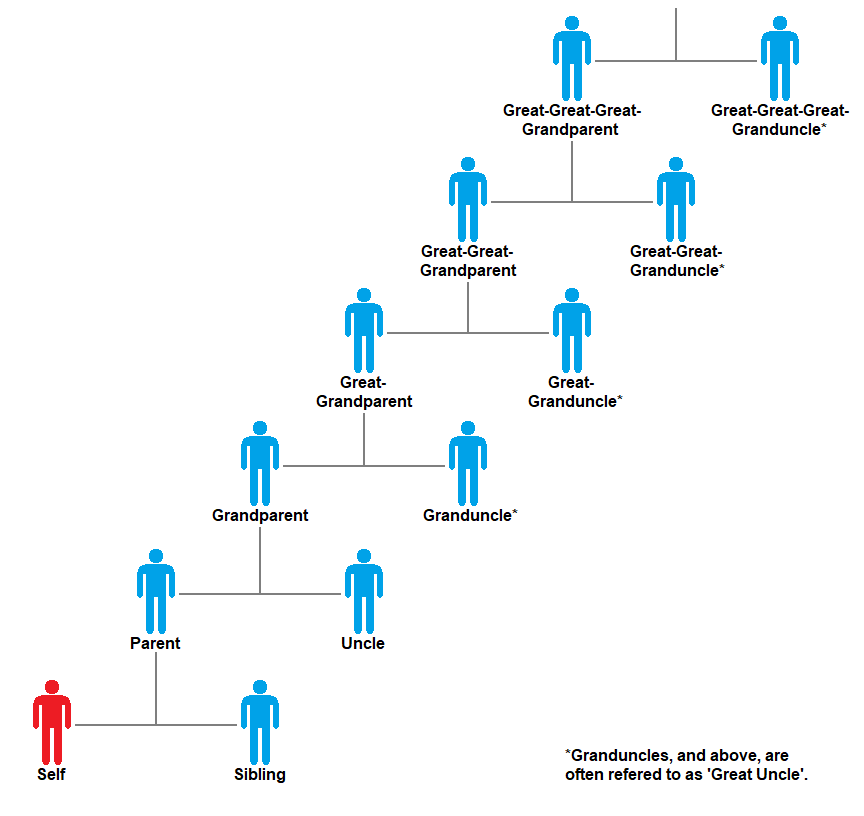
Kinship and names
When describing relationships, common English words identify the possible directions of kinship:
- A person who is the brother of a parent is called an uncle. The children of an uncle are his children and, to the person who is their relative, those children are cousins.
- The child of an uncle may be a nephew (if male) or a niece (if female).
- The sibling of a grandparent—the brother of your grandmother or grandfather—is commonly called a granduncle, great‑uncle, or grand‑uncle.
Cultural distinctions
Many languages and cultures distinguish between an uncle on the mother's side and an uncle on the father's side (often called maternal uncle and paternal uncle). In some societies these two roles carry different social expectations or forms of address.
In certain traditional settings, for example within some historical Chinese family systems, older male relatives such as uncles could exercise considerable authority in a household. The precise status of an uncle varies widely between cultures and over time.
Non‑biological use
The word uncle is also frequently used as a form of address for men who are not blood relatives — as a mark of affection, respect, or familiarity. Well‑known examples of this figurative usage include nicknames and personifications such as Uncle Sam.
Related articles
Author
AlegsaOnline.com Uncle: definition, kinship relationships, cultural roles and honorary usage Leandro Alegsa
URL: https://en.alegsaonline.com/art/102784
Sources
- genetic-genealogy.co.uk : genetic-genealogy.co.uk/Toc115570138.html