
Tuskegee Airmen
African-American military pilots and support personnel who trained at Tuskegee and served in WWII; their record and legacy helped end segregation in the U.S. armed forces.
Overview
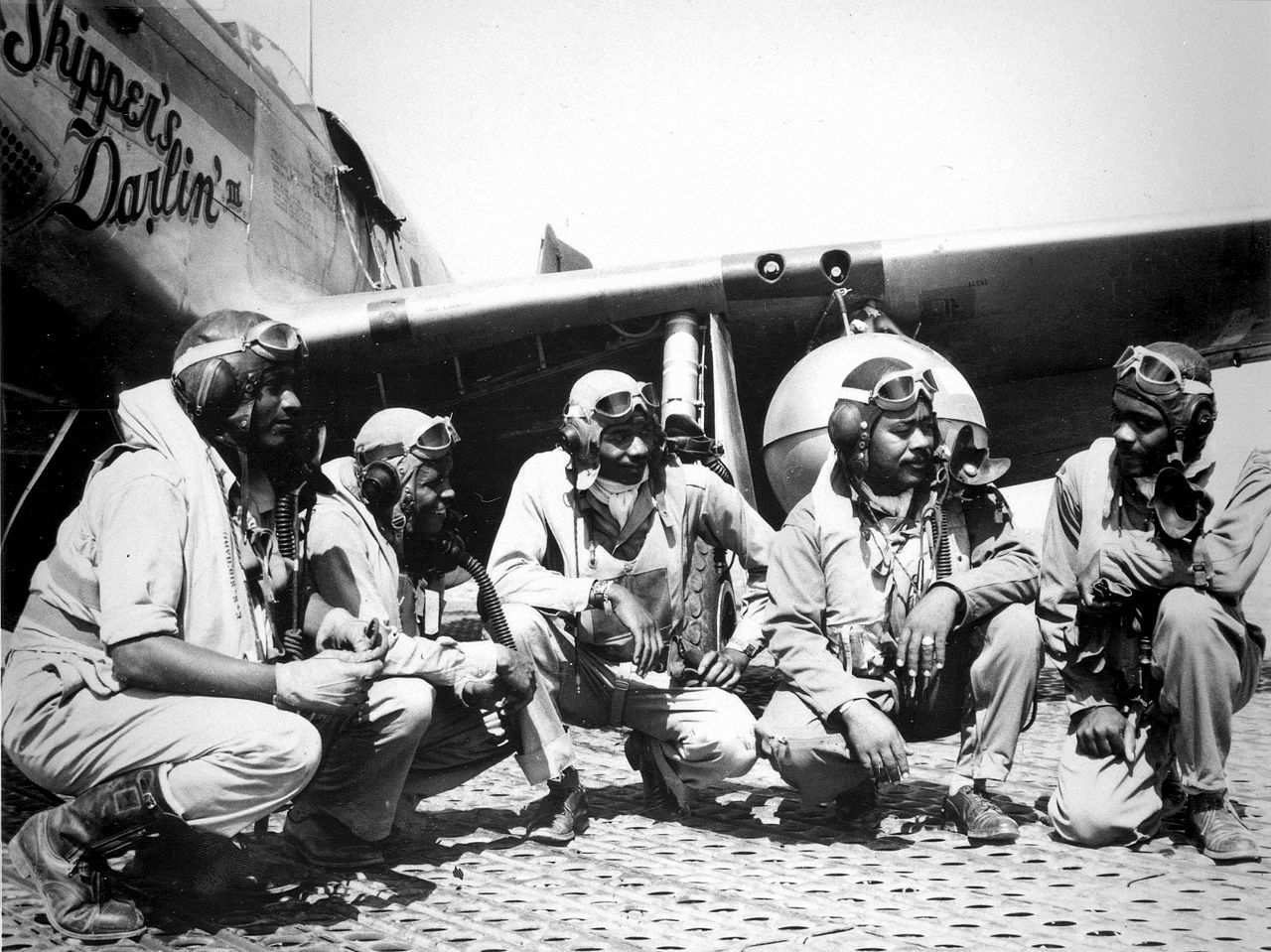
The Tuskegee Airmen were the group of African-American aviators, aircrews and support personnel who trained at Tuskegee, Alabama, and served in the United States Army Air Forces during World War II. Organized into units including the 332nd Fighter Group and the 477th Bombardment Group, these airmen became widely known for their skill, discipline and the distinctive red-painted tails of many of their fighter aircraft. Their service took place against the backdrop of segregation at home and in the military, and their performance had important consequences for later efforts to integrate the armed forces.
Image gallery
10 Images




Composition and roles
The Tuskegee program encompassed pilots, navigators, bombardiers, mechanics, instructors and other ground and support staff. Fighter pilots flew a variety of aircraft during the war, notably the P-40, the P-47 and the P-51 Mustang; bomber crews were organized into groups intended for medium and heavy bomber operations. All units were segregated by race as was common in the U.S. military at the time, but the Tuskegee personnel performed combat and non-combat roles that mirrored those of white units.
Training and operational history
Training began at facilities associated with the Tuskegee Institute and Tuskegee Army Airfield in Alabama. The program attracted hundreds of candidates and created an integrated pipeline of classroom instruction, primary flight training, and advanced tactical preparation. In combat, Tuskegee fighter groups escorted bombers over Europe, performed bomber interception and ground-attack missions, and served in defense roles. The pilots developed a reputation for effective escort tactics and for protecting bombers on missions, contributing to the allied air campaign.
Context, challenges and legacy
These airmen served during a period when Jim Crow laws and de facto segregation shaped everyday life in much of the United States. They faced discrimination in training, assignment and recognition, yet many returned with combat experience and honors. Their achievements were an important factor in President Harry S. Truman's decision to issue Executive Order 9981 in 1948, which began the process of desegregating the U.S. armed forces. In later decades surviving Tuskegee Airmen have received public recognition, including awards and commemorative honors that highlight their role in military and civil rights history.
Notable facts and distinctions
- Nickname: Many members and enthusiasts call them the Red Tails because of the red-painted tails on some of their P-51 fighters.
- Units: The most prominent operational units were the 332nd Fighter Group and the 477th Bombardment Group.
- Aircraft: Fighters assigned to Tuskegee pilots included P-40s, P-47s and later P-51 Mustangs among other types.
- Impact: Their record and public profile helped challenge military segregation and inspired later civil rights advances.
Further reading and resources
- General overview and timeline
- Biographical sketches of notable members
- History of the 332nd Fighter Group
- Fighter aircraft types flown
- Bombardment group records
- Operational theaters and missions
- Training at Tuskegee Army Airfield
- Support personnel and ground crews
- Segregation and military policy
- Contemporary newspaper and media reports
- Records of bomber escort missions
- Statistical studies and mission logs
- Tuskegee Institute and local history
- Photographs and archival materials
- Postwar recognition and honors
- Educational programs and museums
The story of the Tuskegee Airmen is both a military history and a chapter in the struggle for equal treatment. Their service demonstrated capability and courage under fire and helped change perceptions about African-Americans in combat roles. For readers seeking primary documents or curated exhibits, the links above point to collections, biographies and interpretive materials that explore training records, mission reports and the personal experiences of pilots and their support teams.
Author
AlegsaOnline.com Tuskegee Airmen Leandro Alegsa
URL: https://en.alegsaonline.com/art/102166
Sources
- commons.wikimedia.org : Tuskegee airmen