
Trough (meteorology)
A trough is an elongated area of relatively low atmospheric pressure that influences wind patterns, cloudiness, precipitation, and storm development across tropical and mid-latitude regions.
A trough in meteorology is an extended region of relatively low atmospheric pressure that typically appears as an elongated dip in pressure fields on weather charts. Troughs are important organizers of weather because they modify winds, vertical motion, and atmospheric stability, often acting as a focus for cloud development and precipitation. They occur at the surface and aloft, and their effects differ depending on latitude, altitude, and the surrounding flow pattern.
Image gallery
3 Images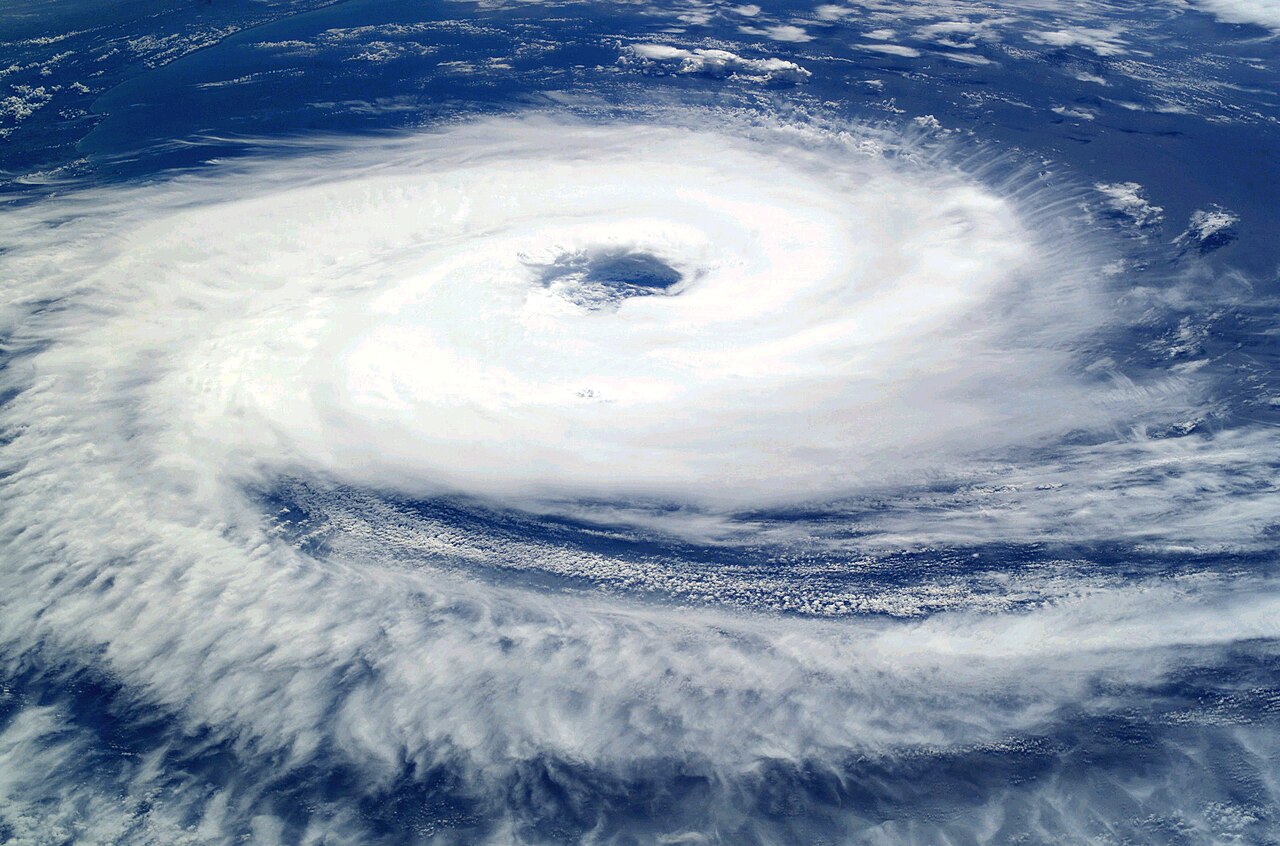


Characteristics and structure
Troughs are identified by an axis — an imaginary line along which the pressure is locally lowest — and by converging and diverging airflow patterns on either side. In the mid-latitude westerlies, the flow typically shows rising motion east of the trough axis where winds aloft diverge, and subsiding motion west of the axis where winds converge. This asymmetry helps explain why the eastern side of a trough often produces clouds and precipitation while the western side is usually drier and clearer.
- Axis: the central line of lowest pressure within the trough.
- Orientation: troughs can be north–south, northeast–southwest, or tilted according to upper-level winds.
- Vertical extent: troughs may be shallow at the surface or extend through several atmospheric layers.
Role in weather and storm development
Troughs promote vertical motion by producing low-level convergence and upper-level divergence in different configurations. That lift can trigger cloud formation and thunderstorms, and in the tropics convective clusters along a trough can sometimes consolidate into more organized systems, including tropical cyclones. In mid-latitudes, a deepening trough is often associated with surface low-pressure development and frontal systems that bring organized rain or snow.
Types and distinctions
Common categories include surface troughs, upper-level troughs, and tropical waves. Surface troughs are seen on sea-level pressure maps and may be linked to fronts. Upper-level troughs are best seen on constant-pressure charts (e.g., 500 hPa) and relate to the configuration of the jet stream and Rossby waves. Tropical waves—often called easterly waves—are trough-like disturbances in the trade wind flow and are a key precursor for many Atlantic and eastern Pacific tropical cyclones.
Forecasting significance and practical impacts
Forecasters monitor troughs because of their influence on precipitation, severe weather potential, and storm track. The presence, depth, and movement of a trough affect temperature advection, moisture transport, and the timing of frontal passages. Maps and model fields that display troughs include surface pressure charts and upper-air analyses; for technical guidance see analysis charts, and for information on tropical development related to troughs consult tropical cyclone genesis resources. Understanding trough behavior helps predict episodes of heavy rain, convective outbreaks, and changes in large-scale circulation patterns.
Related articles
Author
AlegsaOnline.com Trough (meteorology) Leandro Alegsa
URL: https://en.alegsaonline.com/art/101751