
Uniformitarianism: Principles, History, and Modern Significance
Uniformitarianism is the geological principle that Earth's features result from long-term processes consistent with present-day natural laws. This article explains its principles, history, examples, and modern context.
Overview
Uniformitarianism is the principle that the natural laws and processes observable now have operated in the same manner through geological time. It asserts that slow, continual actions — such as erosion, sedimentation, and volcanic activity — accumulate to produce large-scale changes in Earth’s surface. This approach emphasizes repeatable physical causes rather than invoking unique, unknown forces for past events. For discussion of the governing rules of nature see physical laws.
Image gallery
3 Images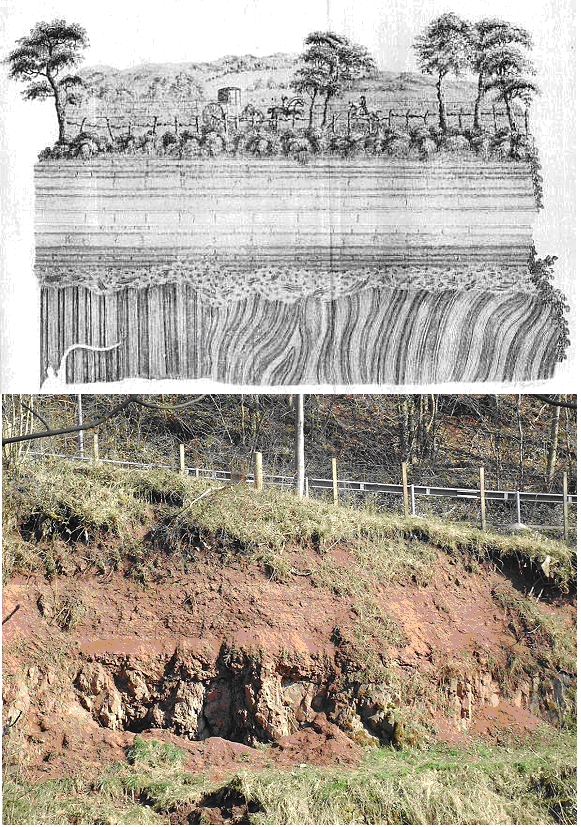


Key characteristics and concepts
Several related ideas are commonly associated with uniformitarianism:
- Actualism: the notion that modern processes can be used to interpret past events, often summarized by the phrase the present is the key to the past (Charles Lyell).
- Gradualism: many changes occur incrementally over long intervals rather than instantaneously (gradualism).
- Naturalism: explanations rely on natural causes rather than supernatural ones (philosophy of naturalism).
- Uniformity of process versus uniformity of rate: classical uniformitarianism argued for similar processes but not necessarily identical rates through time.
Historical development
The modern formulation of uniformitarian ideas began in the late 18th century. Scottish geologist James Hutton set out a comprehensive account in his 1795 work Theory of the Earth, arguing that rocks and landforms arise from processes observable today (for example, the formation and alteration of rocks). His friend and interpreter John Playfair later clarified Hutton’s arguments, and in the early 19th century Charles Lyell popularized the view in Principles of Geology. The term "uniformitarianism" itself was coined by William Whewell in 1837.
Examples and applications
Uniformitarian reasoning underlies many geological techniques. Interpreting sedimentary layers, reconstructing river and coastal histories, and estimating rates of soil formation rely on observing present-day analogues. Practical uses extend to resource exploration (mineral and hydrocarbon deposits), engineering geology, and paleoclimatology. Case studies include interpreting layered strata produced by long-term geological processes and recognizing how volcanic deposits preserve sequences of events.
Debates and modern perspective
Uniformitarianism was historically contrasted with catastrophism, which attributes major changes to rare, violent events. Today’s geoscience integrates both views: slow processes and episodic catastrophes (large floods, meteorite impacts, rapid tectonic events) are both acknowledged as important. Modern uniformitarianism is less absolutist than early versions — scientists accept that rates and conditions can vary while maintaining that the causal mechanisms are natural and testable.
Notable facts and distinctions
- Hutton’s principle emphasized observable causes shaping Earth over vast time scales, a shift from short-timescale explanations (Earth history).
- Playfair and Lyell helped popularize and adapt the idea for broader scientific and public audiences.
- Uniformitarian reasoning underpins methods in stratigraphy, paleontology, and geomorphology, and connects to broader scientific philosophies (philosophy).
For further reading and foundational texts, see works that discuss Hutton’s arguments and their development in the 19th century (geology sources) and summaries of how uniformitarianism informs current geological practice (rock studies, Playfair, laws of nature). Additional literature examines the balance between gradual processes and catastrophic events (process studies, catastrophism). For historical actors and terminology see Hutton, Whewell, and Lyell.
Questions and answers
Q: What is uniformitarianism?
A: Uniformitarianism is the idea that the same physical laws of today have always operated and the causes acting on the world today also acted in the past.
Q: Who proposed the idea of uniformitarianism?
A: James Hutton proposed the idea of uniformitarianism in his 1795 geology book Theory of the Earth.
Q: What is gradualism in relation to uniformitarianism?
A: Gradualism means that the processes which formed the rocks of the Earth were slow, but they made the world what it is today.
Q: What is the philosophy that uniformitarianism is part of?
A: Uniformitarianism is part of the wider philosophy called the philosophy of naturalism.
Q: Who coined the term "uniformitarianism"?
A: William Whewell invented the term "uniformitarianism" in 1837 to describe Hutton's basic idea.
Q: Who popularized Hutton's ideas?
A: John Playfair popularized Hutton's ideas in his 1802 work Illustrations of the Huttonian theory of the Earth, and Charles Lyell in his Principles of geology (1830 to 1833).
Q: What is catastrophism?
A: Catastrophism is the idea that major changes in the Earth take place through sudden and violent events, and it opposes uniformitarianism in geology.
Related articles
Author
AlegsaOnline.com Uniformitarianism: Principles, History, and Modern Significance Leandro Alegsa
URL: https://en.alegsaonline.com/art/102865