
Treponema: overview of the spirochete genus and related human infections
Treponema is a genus of spiral-shaped bacteria that includes species causing syphilis, yaws, bejel and pinta. This article covers features, species, diseases, diagnosis, treatment and history.
Overview
Treponema is a genus of slender, spiral-shaped bacteria classified among the spirochetes. Members are motile by means of internal axial filaments and are often described as gram-negative in structure, although they do not stain well by routine Gram methods. Some treponemes live harmlessly on mucous membranes or in the environment, while others are established human pathogens. The term genus highlights this taxonomic grouping; they are a group of bacteria distinguished by morphology and molecular features.
Image gallery
2 Images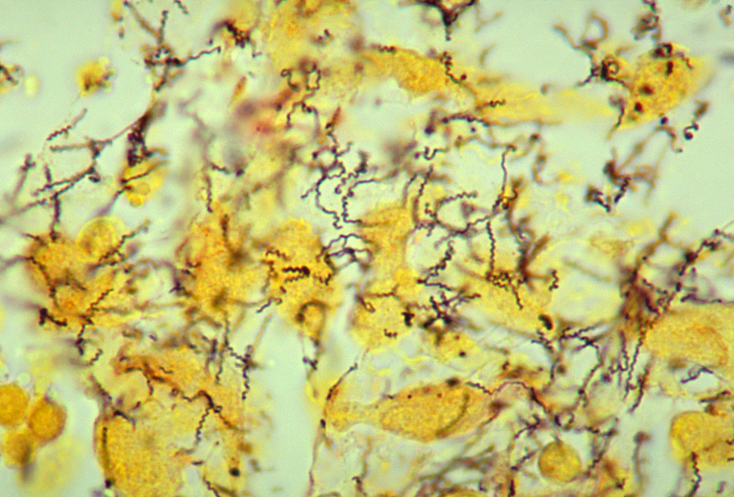

Species and notable subspecies
Several Treponema taxa are recognized; a few are especially important because of the diseases they cause. Examples include:
- Treponema pallidum subspecies pallidum — causative agent of syphilis.
- T. pallidum subspecies pertenue — causes yaws, a tropical skin and bone disease.
- T. pallidum subspecies endemicum — associated with bejel (endemic syphilis).
- T. carateum — responsible for pinta, a skin-limited treponemal infection.
Clinical manifestations
Treponemal infections produce a range of clinical pictures. The best known is syphilis, a sexually transmitted infection that can present with a painless primary ulcer, a widespread secondary rash, a latent phase, and later complications affecting the heart, nervous system and other organs if untreated. Nonvenereal treponematoses such as yaws, bejel and pinta primarily affect skin, bone and cartilage and are usually transmitted by direct skin contact in warm, rural settings. Collectively these illnesses are sometimes referred to as treponematoses or diseases caused by treponemes.
Diagnosis and laboratory features
Because treponemes are thin and fragile, microscopy for fresh lesion fluid using dark-field illumination has been a classic diagnostic tool. Serologic testing remains central: nontreponemal tests (screening) and treponemal tests (confirmatory) detect antibody responses. Molecular methods such as PCR and sequencing are increasingly used in specialized settings. Culturing many pathogenic treponemes, particularly T. pallidum, in laboratory media is challenging, which has historically limited certain types of research.
Treatment, prevention and public health
Penicillin remains the most effective and widely used therapy for syphilis and is the recommended treatment in many settings; alternative antibiotics exist for patients with allergies. Control of nonvenereal treponematoses relies on diagnosis, treatment campaigns and improved hygiene and access to care. Screening of pregnant people and early treatment are important to prevent congenital infection. No widely available vaccine exists for human treponemal diseases.
History and research notes
The etiologic role of treponemes in syphilis was established in the early 20th century, which transformed diagnosis and treatment approaches. Ongoing research focuses on improved diagnostics, understanding tissue invasion and immune response, and vaccine development. Distinguishing the subspecies genetically and clinically remains important for epidemiology and targeted public-health interventions.
Related articles
Author
AlegsaOnline.com Treponema: overview of the spirochete genus and related human infections Leandro Alegsa
URL: https://en.alegsaonline.com/art/101391