
Treaty of Troyes (1420) and its impact on the French succession
The 1420 Treaty of Troyes attempted to make Henry V and his heirs the kings of France, disinheriting the Dauphin; it failed amid dynastic deaths, civil conflict, and the revival of Charles VII's cause.
The Treaty of Troyes was a 1420 agreement during the Hundred Years' War that sought to alter the normal rules of royal succession in France. Rather than allowing the Dauphin to inherit, the treaty recognized the English king and his descendants as the legitimate rulers of France. It is remembered as a bold diplomatic move that ultimately did not secure a lasting union of the two crowns.
Image gallery
2 Images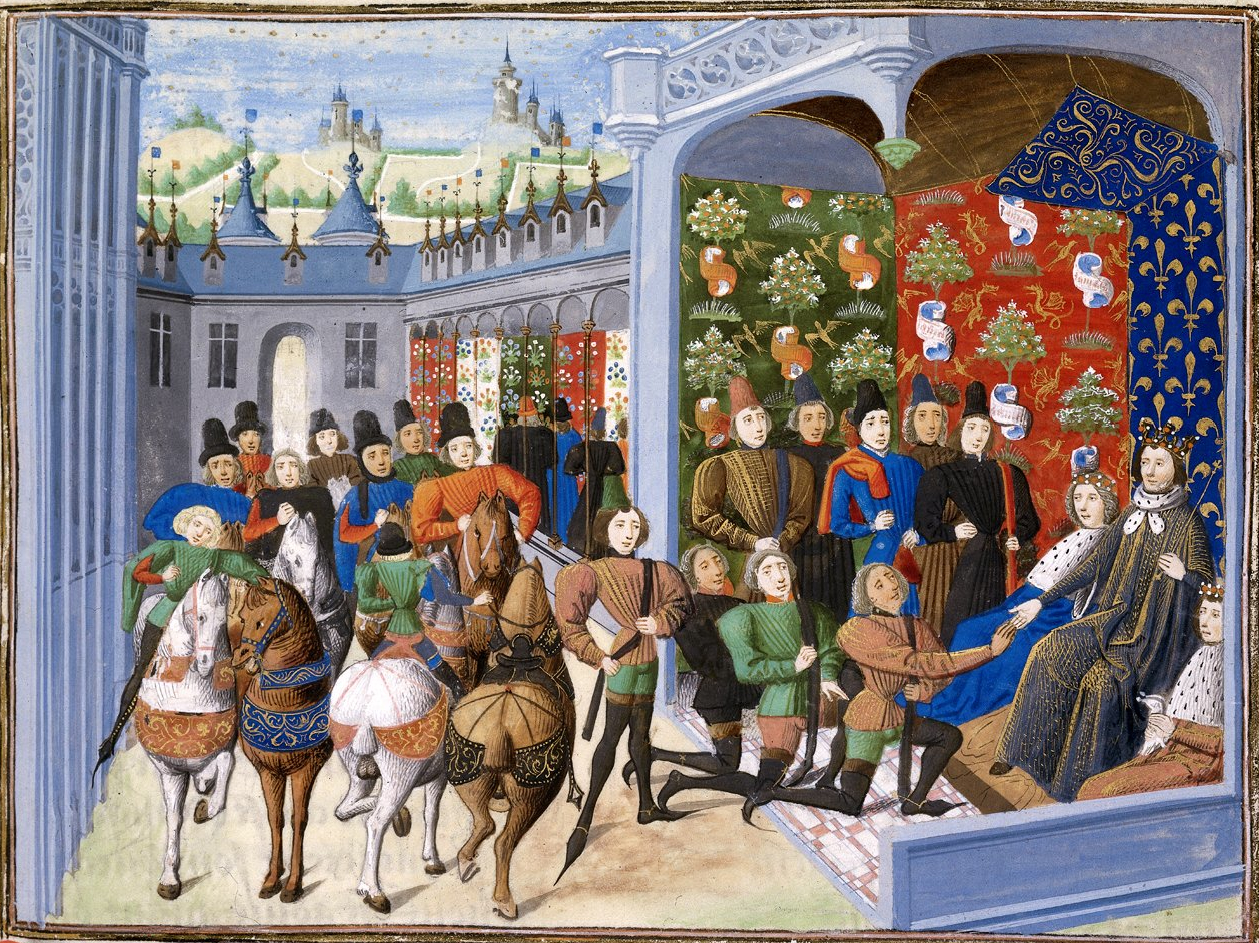

Background
By 1420 the long conflict between England and France had produced alternating advances and defeats. Military successes by Henry V of England and political divisions inside France — especially the rivalry between the Burgundian and Armagnac parties and the incapacity of Charles VI of France — set the scene for a negotiated settlement. The treaty was shaped as much by internal French factionalism as by English military pressure.
Terms and key points
- The agreement declared that Henry V and his heirs would succeed to the French throne instead of the Dauphin, attempting to change the established inheritance line.
- It arranged a dynastic marriage between Henry V and the French king's daughter, strengthening the claim through family ties.
- The treaty aimed to settle contested territories and confirm English authority in parts of northern France, while legitimizing a dual monarchy in theory.
The treaty therefore attempted a legal and dynastic solution to a military problem, using marriage and recognition to override the regular succession of the French crown.
Aftermath and why it failed
The settlement unraveled after both principal monarchs died within months of one another in 1422. The English and Burgundian factions pressed the infant Henry as claimant, but the Dauphin continued to resist. Support for the dispossessed French heir grew, and pivotal military and political reversals followed. The emergence of Joan of Arc and her campaigns helped restore territory and momentum to the cause of Charles VII, who was eventually recognized and crowned by French supporters.
Though it temporarily advanced English interests, the Treaty of Troyes did not produce a stable, lasting union of the crowns. It remains a prominent example of a treaty that sought to alter royal succession and of how military events and internal politics can overturn formal agreements.
Notable facts:
- The treaty reflected deep French division rather than an uncontested English victory.
- Its failure helped shape the later course of the Hundred Years' War and the consolidation of a French state under Charles VII.
- It is often cited in discussions of medieval diplomacy, legitimacy, and the limits of treaties to change dynastic law.
For further reading on the personalities and legal claims involved, see entries on the English and French monarchs and contemporary chronicles: kings of France, Treaty of Troyes, and biographical notices of Henry V and Charles VI.
Related articles
Author
AlegsaOnline.com Treaty of Troyes (1420) and its impact on the French succession Leandro Alegsa
URL: https://en.alegsaonline.com/art/101317