
Joan of Arc: Maid of Orléans, Soldier and Saint
Joan of Arc (c.1412–1431) was a peasant girl who led French forces in the Hundred Years' War, was captured and executed, later rehabilitated and canonized; a lasting cultural and national symbol.
Overview
Joan of Arc, often called the Maid of Orléans, was born around 1412 into a rural, peasant family in northeastern France. Claiming to receive visions and messages from God, she asserted that she was meant to support Charles VII and drive the English from French territory during the Hundred Years' War. Her life has been interpreted in many ways: as a devotional calling, a political turning point, and a national emblem. Many later writers and artists treated her story as a rich source of inspiration, contributing to her status as a national heroine and eventual Catholic saint.
Image gallery
10 Images



Military role and trial
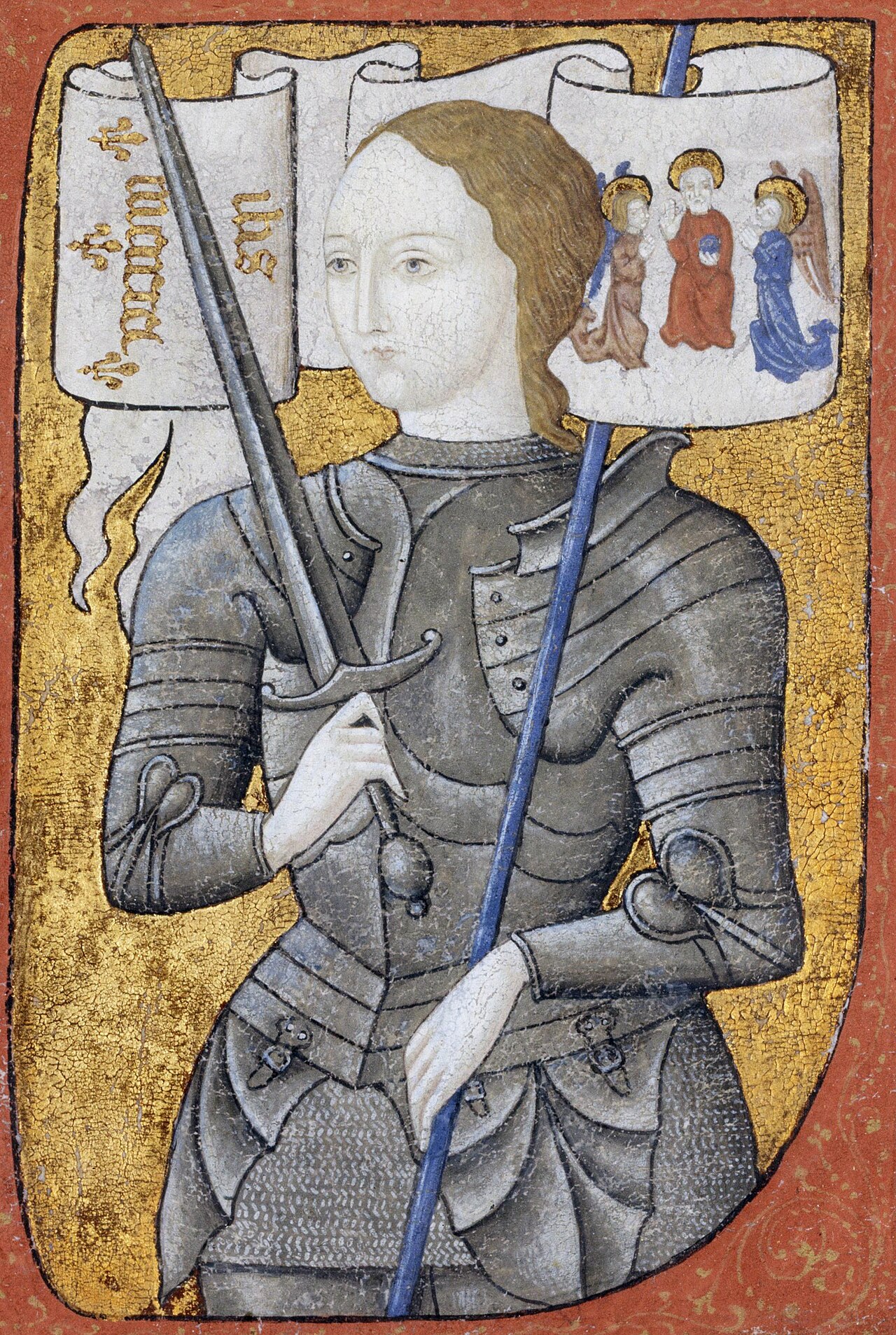
Joan rose from local obscurity to prominence by persuading local and royal officials to support her. She played a decisive role in lifting the siege of Orléans and in subsequent operations that helped secure the coronation of Charles VII. Her presence galvanized troops and supporters, and she often wore male armor and carried a banner. In 1430 she was captured by forces allied with the Duke of Burgundy, sold to the English, and put on trial in Rouen. Accused of heresy and of violating social and religious norms, she was found guilty by an ecclesiastical court and executed by burning in 1431, at about nineteen years of age.
Rehabilitation and sainthood
After the war, questions about the legitimacy of Joan's trial prompted a posthumous appeal. In 1456 a church commission reviewed the case and declared the earlier verdict null and void, effectively rehabilitating her name. Centuries later, the Roman Catholic Church canonized Joan in 1920. Her story thus traverses painful controversy, legal inquiry, and religious commemoration—shifting from condemned heretic to honored saint, and a symbol of French resilience.
Legacy and cultural impact
Joan of Arc has had a long afterlife in literature, music, and popular media. She appears in plays, poems, and histories; composers and novelists have retold aspects of her life. Her figure has been adapted in many forms: from stage and orchestral works to modern entertainment such as video games, television dramas, and movies. Writers and thinkers including Mark Twain and Voltaire engaged with her image, and she appears frequently in songs and dances. Her life has become an enduring part of Western civilization and global cultural memory.
Key characteristics and notable facts
- Origins: born to a farming family, little formal education but strong local piety.
- Claims: reported hearing divine voices that guided her actions and mission.
- Role in war: boosted French morale, associated with key military successes and the coronation of Charles VII.
- Trial and death: convicted on charges including heresy and cross-dressing; executed in 1431.
- Rehabilitation: 1456 retrial overturned the conviction; canonized in 1920.
Joan's story remains a subject of historical research and popular fascination. Scholars debate the precise nature of her visions, the extent of her strategic influence, and how contemporary politics shaped her prosecution. Regardless of those discussions, she continues to be remembered as an unusual figure who crossed social boundaries—peasant, soldier, martyr, and saint—and as a potent symbol in national and religious narratives.
Questions and answers
Q: Who is Saint Joan of Arc?
A: Saint Joan of Arc, also known as The Maid of Orléans, is a national heroine of France and a Catholic saint.
Q: Where was Saint Joan of Arc born?
A: Saint Joan of Arc was born in the east of France.
Q: What did Saint Joan of Arc claim to have?
A: Saint Joan of Arc claimed to have visions from God.
Q: What did Saint Joan of Arc claim God told her to do?
A: Saint Joan of Arc claimed that God told her to take back her home, which was then under English rule late in the Hundred Years' War.
Q: How did Saint Joan of Arc become famous?
A: Saint Joan of Arc became famous due to many quick military victories.
Q: How did Saint Joan of Arc's story impact Western civilization?
A: Saint Joan of Arc has remained an important figure in Western civilization, inspiring famous writers and appearing in various media such as video games, television, movies, songs, and dances.
Q: What happened to Saint Joan of Arc after she was captured by soldiers of Burgundy?
A: After being captured by soldiers of Burgundy, Saint Joan of Arc was given to her English enemies.
Related articles
Author
AlegsaOnline.com Joan of Arc: Maid of Orléans, Soldier and Saint Leandro Alegsa
URL: https://en.alegsaonline.com/art/122142
Sources
- smu.edu : The First Biography of Joan of Arc with the Chronicle Record of a Contemporary Account