
Toyota Sienna — overview of Toyota’s family minivan
The Toyota Sienna is a family-size minivan produced by Toyota for the North American market. This article summarizes its design, generations, powertrains, uses, safety record and distinguishing features.
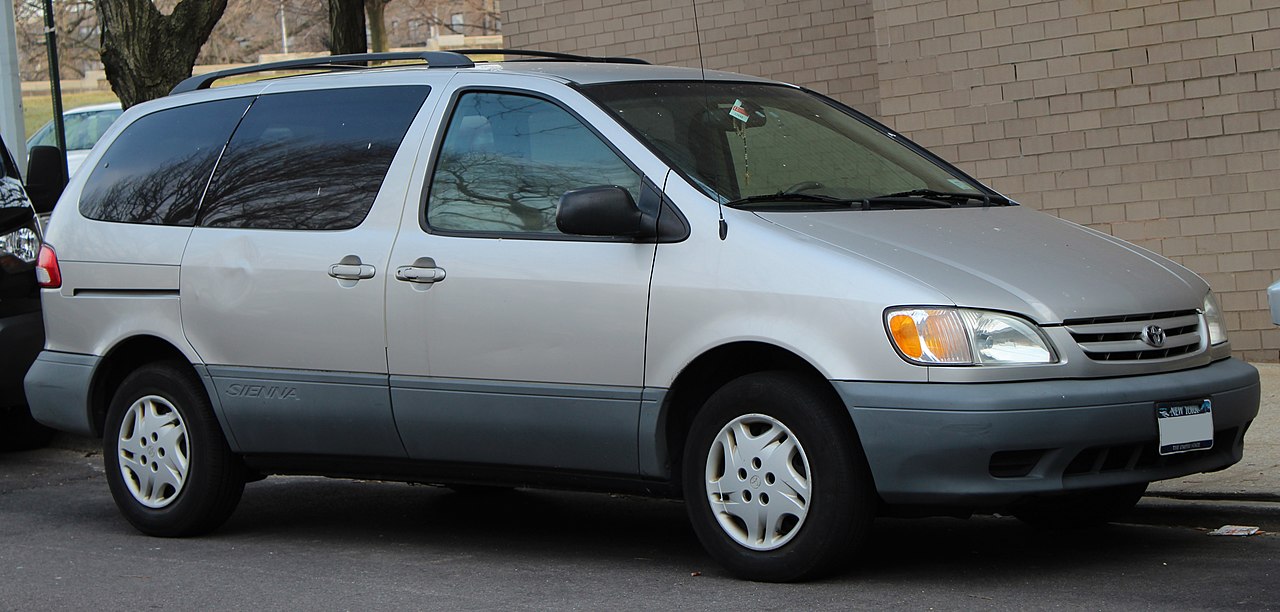
The Toyota Sienna is a purpose-built family minivan sold primarily in North America and manufactured by Toyota at facilities that include a U.S. assembly plant in Princeton, Indiana. Introduced in the late 1990s, the Sienna has been offered in multiple generations and configurations intended to carry families, groups and cargo while emphasizing interior space, comfort and practical features.
Image gallery
10 Images




Design and typical characteristics
The Sienna is characterized by a boxy, high-roof layout optimized for passenger space, sliding side doors for rear-seat access, and flexible seating that usually accommodates seven or eight occupants depending on trim and seat arrangement. Across generations the model has emphasized ease of use: wide-opening doors, configurable rear seating, multiple storage bins and accessible controls for drivers and passengers. Higher trims often include comfort and convenience features such as power sliding doors, multi-zone climate control, rear-seat entertainment and modern infotainment with smartphone integration.
Powertrains, drivetrains and notable equipment
Powertrains have evolved with market demands. Early Siennas were powered by V6 engines sized and tuned for passenger carrying and towing. Later generations continued with V6 units before Toyota transitioned the model to a fuel-saving hybrid system in the most recent generation. The fourth-generation Sienna introduced a 2.5-liter four-cylinder hybrid system that pairs the gasoline engine with electric motors to produce combined output suitable for everyday driving while improving fuel economy; Toyota has also offered an all-wheel-drive variant of the newer hybrid system. Depending on year and equipment, the Sienna has included safety technology and driver aids such as forward-collision mitigation, lane-keeping assistance, adaptive cruise control and comprehensive airbag systems.
Generations and development
Since its introduction the Sienna has undergone several full redesigns. The model entered the market in the late 1990s and established Toyota’s presence in the minivan segment. The second generation, sold in the early 2000s, used V6 powerplants (initially a 3.3L V6 before a later switch to a 3.5L) and typically seated seven passengers. The third generation, launched around 2011, continued with a 3.5L V6 and produced roughly mid-200s horsepower in many trims while offering seven- and eight-passenger layouts. The fourth-generation Sienna, introduced for the 2021 model year, moved to a hybrid-only approach using a 2.5L four-cylinder hybrid system with combined system output commonly cited in the mid-200s horsepower range, and added modernized cabin and safety technology.
Uses, competitors and market role
Sienna is most commonly used as a family hauler, for carpooling, group travel and as a practical vehicle for long-distance trips. It is often selected where passenger comfort, cargo flexibility and daily usability take priority over sportiness. Typical competitors in the same segment include other mid-size minivans and family-oriented people-movers that emphasize interior space and convenience. The Sienna has also been adapted in aftermarket and upfitter markets for shuttle and accessibility conversions, where modified floors, ramps and seating arrangements create wheelchair-accessible vehicles.
Safety, reputation and notable distinctions
The Sienna has generally performed well in safety assessments: several recent generations earned favorable ratings from independent test organizations. For example, the second and third generations received "Good" overall ratings from the Insurance Institute for Highway Safety (IIHS) and received four-star ratings from U.S. government crash testing for certain impact categories. Over its lifespan the model has developed a reputation for practicality and dependable ownership typical of Toyota passenger vehicles, which influences resale value and long-term ownership considerations. Buyers should note that specific features, fuel economy and towing capability vary substantially by generation and trim, so reviewing the detailed specifications for a particular model year is recommended when comparing examples or making a purchase decision.
- Typical seating: seven or eight passengers
- Common features: sliding doors, configurable seating, modern driver aids
- Powertrain evolution: V6 engines historically; hybrid-only from the fourth generation
Related articles
Author
AlegsaOnline.com Toyota Sienna — overview of Toyota’s family minivan Leandro Alegsa
URL: https://en.alegsaonline.com/art/100982
Sources
- roadtests.com : "2011 Toyota Sienna Safety Ratings"
- roadtests.com : "2010 Toyota Sienna Review & Pictures"
- roadtests.com : "2011 Toyota Sienna Review & Pictures"