
Torrent salamander (genus Rhyacotriton) — stream-adapted amphibians of the Pacific Northwest
Small, secretive salamanders of the genus Rhyacotriton found in cool, fast streams of the Pacific Northwest; four recognized species, specialized habitat needs, and conservation concerns.
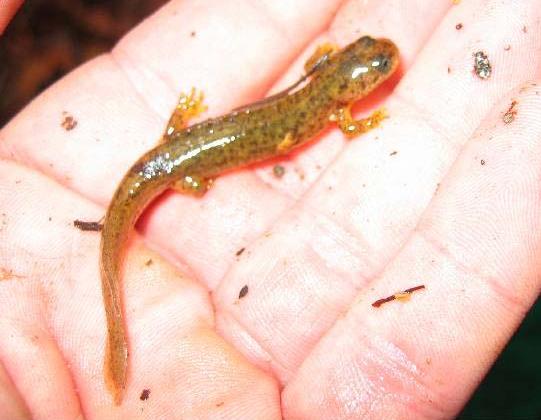
The term "torrent salamander" refers to the small, stream‑associated amphibians of the genus Rhyacotriton. These animals are often called Cascade salamanders in older literature and are native to the temperate rainforests and mountain ranges of the Pacific Northwest. They are notable for their association with cold, clear, fast‑flowing headwater streams and seeps.
Image gallery
6 Images



Characteristics and ecology
Torrent salamanders are compact, slender amphibians with smooth skin and coloration that helps them blend with wet rocks and streamside debris. They are primarily secretive and are most active at night or during wet weather; individuals take shelter beneath stones, moss, and logs. Their life cycle includes an aquatic larval stage followed by metamorphosis to a more terrestrial juvenile and adult life, though adults remain closely tied to stream habitats for foraging and breeding.
Taxonomy and diversity
The group is placed in the family Rhyacotritonidae and has been split by herpetologists into several geographically distinct species. Today four species are generally recognized, each occupying a restricted portion of the coastal and montane ranges. Taxonomic work has clarified this diversity, emphasizing the importance of local populations and the rivers that separate them.
Habitat, threats and importance
Torrent salamanders depend on cool, shaded streams with stable flow and intact riparian vegetation. They are sensitive to habitat alteration such as logging, road building, stream channelization, pollution and climate‑driven changes to stream temperature and flow. Because they require high‑quality aquatic and riparian environments, they serve as indicators of watershed health and are a focus of regional conservation efforts.
Further reading
- General overview and identification: torrent salamander resources
- Regional conservation and species accounts: Pacific Northwest conservation pages
- Family and taxonomic references: Rhyacotritonidae information
Related articles
Author
AlegsaOnline.com Torrent salamander (genus Rhyacotriton) — stream-adapted amphibians of the Pacific Northwest Leandro Alegsa
URL: https://en.alegsaonline.com/art/100745