
Trapdoor spider: burrow-dwelling ambush predators
Trapdoor spiders are burrowing ambush predators known for constructing hinged silk-and-soil doors. They have stout bodies, sit-and-wait hunting tactics, and ecological roles as ground predators.
Overview
Trapdoor spiders are a group of ground-dwelling spiders that build silk-lined burrows capped with a hinged lid or "trapdoor." They belong to the spider order Araneae and have been traditionally associated with the family Ctenizidae, though modern taxonomic work has redistributed some genera among related families. These spiders are best known for their patient, sit-and-wait predatory strategy: they remain concealed in their burrow and attack passing prey that comes within reach.
Image gallery
5 Images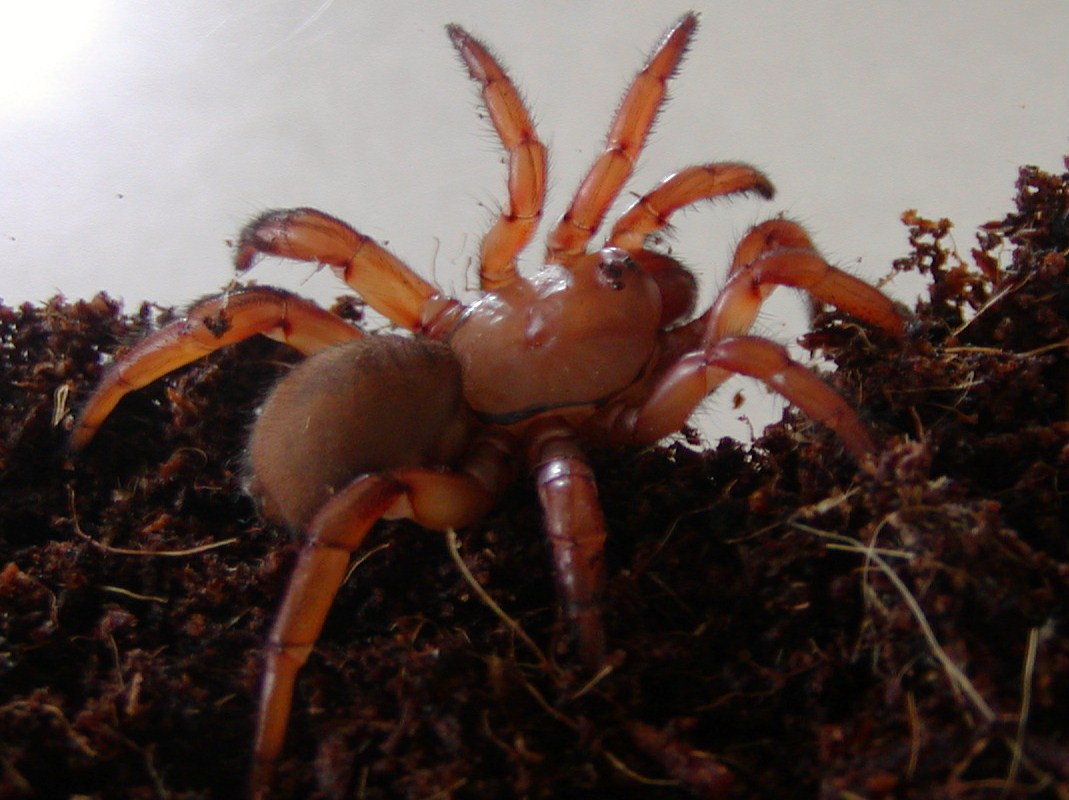


Physical characteristics and hunting style
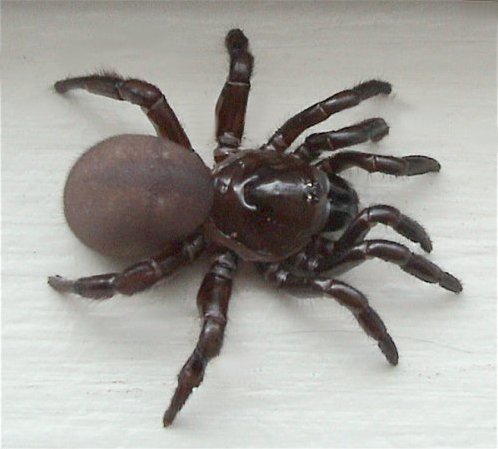
Trapdoor spiders are generally robust, with stocky bodies, powerful chelicerae for seizing and subduing prey, and relatively short legs adapted for rapid lunges from the burrow entrance. Their coloration tends to blend with soil or leaf litter. Rather than using webs to trap flying insects, they rely on a combination of vibration-sensitive hairs and the mechanical advantage of a concealed position to detect and ambush ground-dwelling prey such as insects and other small arthropods.
Burrow construction and the trapdoor
The burrow is a key structure: excavated in soil or between roots, lined with silk to stabilize the walls, and closed by a camouflaged lid made from silk, soil, and plant debris. The door is hinged with silk so it can be opened quickly by the spider and shut to conceal both predator and retreat. The design reduces desiccation, hides the entrance from predators and prey, and provides a secure site for moulting and rearing young.
Life cycle and reproduction
Females often occupy a single burrow for extended periods and may guard egg sacs inside. After eggs hatch, spiderlings typically remain nearby or disperse by short-range wandering rather than ballooning used by some other spiders. Many trapdoor spiders are relatively long-lived for spiders, with slow growth and multiple moults before maturity. Courtship is usually cautious: males search for female burrows and use vibrations or special behaviors to signal their presence.
Distribution, taxonomy and notable facts
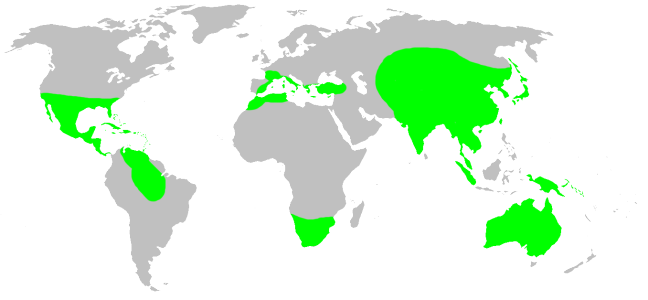
Trapdoor spiders occur in many temperate and tropical regions worldwide, favored by habitats with suitable soil for burrow digging. Taxonomically they have been the subject of revision; several groups once placed in a single family have been reassigned as researchers refine relationships using morphological and genetic data. Different species vary in door construction, ranging from thick cork-like lids to thin, silk-covered flaps.
Human interactions and ecological role
Trapdoor spiders are not considered dangerous to people and rarely bite unless handled. They play a useful ecological role controlling populations of ground arthropods and are of interest to naturalists and scientists studying behaviour, biomechanics, and soil ecology. Their secretive lifestyle and remarkable burrow architecture make them notable examples of evolutionary adaptation to a sedentary, ambush-based hunting niche.
Related articles
Author
AlegsaOnline.com Trapdoor spider: burrow-dwelling ambush predators Leandro Alegsa
URL: https://en.alegsaonline.com/art/101217