
TALISE — Titan Lake In-situ Sampling Propelled Explorer
TALISE is a proposed boat-like probe designed to sail and sample Ligeia Mare on Saturn's moon Titan, making in-situ chemical, physical and environmental measurements of an extraterrestrial hydrocarbon lake.
Overview
The Titan Lake In-situ Sampling Propelled Explorer (TALISE) is a proposed planetary probe concept intended to travel across one of Titan's northern liquid bodies to perform direct, in-water measurements. First presented at the European Planetary Science Congress in 2012, TALISE would be a mobile, buoyant vehicle able to navigate and sample the hydrocarbons that fill Titan's seas. The proposal has been discussed in scientific forums and summaries of the concept are available online via the original project brief: TALISE proposal.
Image gallery
4 Images


Target and scientific goals
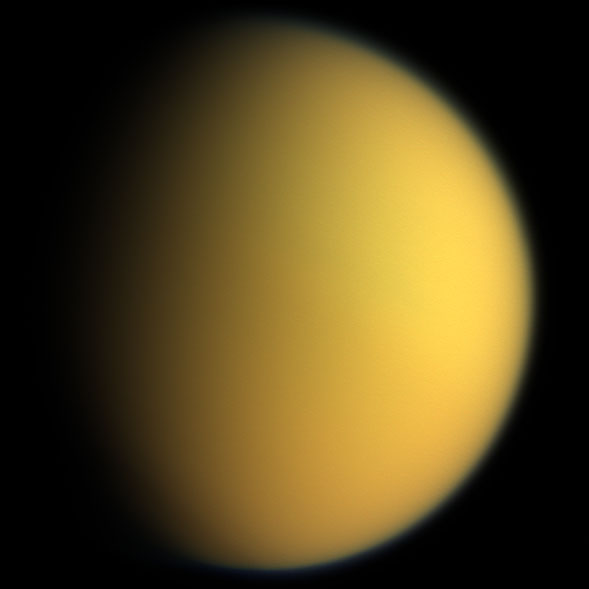
The mission concept focuses on Ligeia Mare, a large, methane- and ethane-dominated sea near Titan's north pole. TALISE would approach and land on the lake surface, then proceed under its own propulsion toward the shoreline while making measurements en route. Scientific objectives would include characterizing the composition and variability of the liquid, measuring physical properties such as temperature, density and depth, studying waves and winds at the surface, and searching for organic molecules and processes relevant to prebiotic chemistry. For context on the environment being explored, see material about Ligeia Mare and the host world, Titan.
Design features and instruments
A mobile lake probe differs from a static lander or an orbiter in that it must combine buoyancy, propulsion, and sampling capability. TALISE-style concepts typically envision a sealed buoyant hull, a propulsion system for controlled crossings, and a suite of sensors and analyzers to measure chemical composition, meteorology, and bathymetry. Instruments would likely target dissolved gases and organics, surface and subsurface temperatures, and physical wave and wind dynamics. Mobility allows the probe to sample different locations, from open water to nearshore zones, increasing scientific return compared with a single fixed landing site.
Historical and programmatic context
Titan's lakes and seas were revealed and characterized by the Cassini–Huygens mission, which mapped liquid bodies and observed seasonal and meteorological processes. Building on these discoveries, proposals like TALISE explore how to perform in-situ exploration of extraterrestrial liquids. Presentations at community meetings (such as the EPSC in 2012) are a common step in maturing a concept prior to selection by space agencies. TALISE remains a concept that would require formal selection, funding and development to become a flight mission.
Engineering challenges and significance
- Extremely low temperatures and unusual hydrocarbon chemistry demand materials and systems that operate at cryogenic conditions.
- Power and thermal management must support instruments and communications for extended surface operations.
- Communications latency and data return must be managed via relay or direct-to-Earth links, often using an orbiter as relay.
Despite these challenges, a successful TALISE-style mission would mark the first time a craft intentionally navigated and sampled a stable extraterrestrial sea, offering unique insights into planetary hydrology, organic chemistry and comparative climatology. The concept remains part of broader discussions about future Titan exploration and the scientific value of in-situ investigations.
Related articles
Author
AlegsaOnline.com TALISE — Titan Lake In-situ Sampling Propelled Explorer Leandro Alegsa
URL: https://en.alegsaonline.com/art/100107
Sources
- space.com : "Proposed Space Boat Could Explore Lakes On Saturn's Moon Titan"
- sciencedaily.com : "Navigating the seas of Titan, Saturn's largest moon"