
Time in Kazakhstan: zones, history, and practical information
Kazakhstan spans two standard time offsets (UTC+5 and UTC+6), uses the names Aqtobe Time (AQTT) and Alma‑Ata Time (ALMT), and does not observe daylight saving time.
Overview
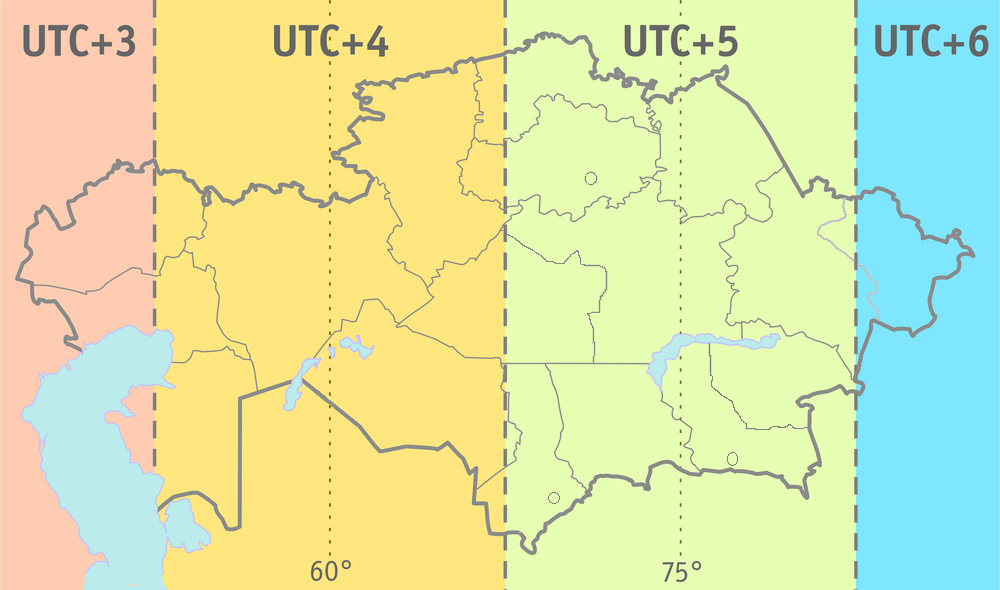
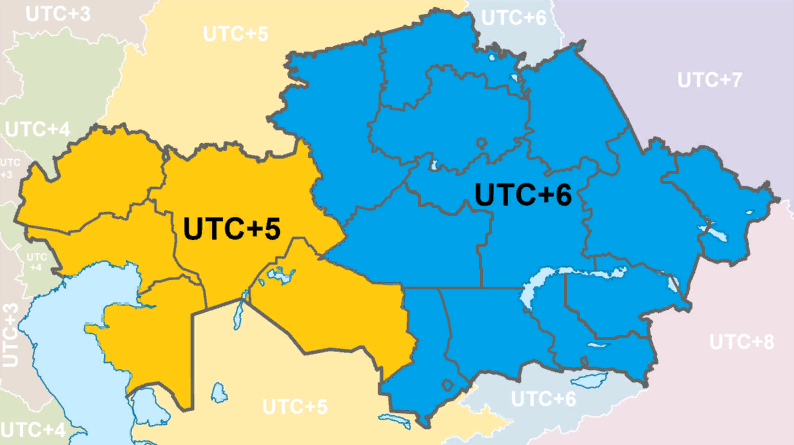
Kazakhstan covers a wide east–west span and uses two standard time offsets: UTC+05:00 and UTC+06:00. These are commonly referred to as Aqtobe Time (AQTT) for the western zone and Alma‑Ata Time (ALMT) for the eastern zone. For general reference about official time conventions see time in Kazakhstan.
Image gallery
3 Images
Regional division
The national time split follows provincial and city boundaries rather than strictly by longitude. Typical groupings include:
- UTC+05:00 (AQTT) — western provinces and cities, including those near the Caspian Sea and the far west of the country.
- UTC+06:00 (ALMT) — central and eastern regions, including the capital area and major eastern cities.
History and policy
Kazakhstan’s time arrangement reflects historical administrative adjustments carried out during and after the Soviet era. The government discontinued seasonal clock changes in the mid‑2000s; the country no longer observes daylight saving time and maintains the same standard offsets year‑round. Official explanations and policy summaries on this subject are available under daylight saving time resources.
Practical implications
The two‑zone system affects travel, broadcasting, business hours and cross‑border coordination. Transport timetables, flight schedules and television listings indicate local time for departures and arrivals. International companies and software systems typically rely on time zone identifiers tied to the country’s two offsets to schedule meetings and automated tasks.
Notable facts and advice
Abbreviations AQTT and ALMT are commonly used in timetables and technical settings. "Alma‑Ata" echoes the historical name of the city now called Almaty. Because there is no daylight saving adjustment, offsets remain constant throughout the year, simplifying seasonal planning. Travelers and organizers should check local times for specific cities when planning cross‑country activities to avoid confusion.
Related articles
Author
AlegsaOnline.com Time in Kazakhstan: zones, history, and practical information Leandro Alegsa
URL: https://en.alegsaonline.com/art/99932