
Through-hole technology (THT) for printed circuit boards
Through-hole technology mounts electronic components by inserting leads into drilled PCB holes and soldering them. THT offers strong mechanical bonds and is used for connectors, power parts, prototyping and repair.
Overview
Through-hole technology (THT) is a method of assembling electronic components to a printed circuit board by inserting component leads through holes drilled in the board and making an electrical and mechanical connection by soldering. The technique contrasts with surface-mount methods and remains important where mechanical strength, ease of prototyping, or large-package parts are required. Typical boards and manufacturing discussions refer to the board simply as a printed circuit board.
Image gallery
7 Images
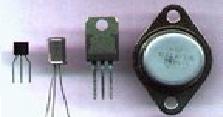


Process and characteristics
In THT the component leads pass through plated or non-plated holes and are soldered on the opposite side. Soldering can be performed manually for small runs or repair, or by automated processes such as wave soldering and selective soldering. The holes may be plated through for reliable electrical connection across layers. Through-hole components generally have larger bodies and longer leads than surface-mount parts.
Common component types
- Axial and radial resistors and capacitors
- Dual Inline Package (DIP) integrated circuits and sockets
- Power semiconductors, transformers, and large inductors
- Edge connectors, switches, and binding posts
History and development
THT was the dominant assembly style through much of the 20th century. As circuit densities increased, surface-mount technology gained favor because it supports smaller components and automated pick-and-place assembly. Nonetheless, THT persisted for parts that need greater mechanical durability or higher power handling.
Uses, advantages and limitations
THT is valued for its mechanical robustness — leads anchored through the board resist vibration and strain better than many surface-mounted parts — and for easy removal or replacement, which aids prototyping and repair. Typical applications include power supplies, connectors, ruggedized equipment, educational kits and some aerospace or military hardware. Limitations include higher board cost from drilling, lower component density, and longer automated processing time. Soldering quality is a key factor; joints are usually soldered to ensure reliable electrical contact.
Notable distinctions
Modern designs often use hybrid assemblies combining THT for heavy or through-hole-only parts and SMT for high-density logic. Designers choose THT when mechanical strength, ease of manual assembly or compatibility with legacy components outweighs the advantages of full surface-mount layouts.
Related articles
Author
AlegsaOnline.com Through-hole technology (THT) for printed circuit boards Leandro Alegsa
URL: https://en.alegsaonline.com/art/99678