
Beauty and the Beast (1991 film)
1991 animated musical fantasy by Walt Disney that adapted the French fairy tale into a landmark animated feature noted for its songs, animation, awards, and enduring cultural influence.
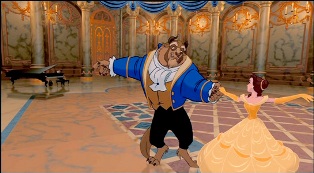
Beauty and the Beast is a 1991 animated musical fantasy feature produced by Walt Disney Feature Animation and released by Walt Disney Pictures. The film adapts the French fairy tale La Belle et la Bête, often associated with the version by Jeanne-Marie Le Prince de Beaumont, into a full-length family movie blending traditional hand-drawn animation with emerging computer-assisted techniques. The picture is widely regarded as a high point of the studio's creative revival during the late 1980s and early 1990s and occupies a place in the studio's classic sequence as the 30th major animated feature (Animated Classics series).
Image gallery
4 Images

Synopsis
The narrative follows Belle, an intelligent and bookish young woman who feels out of step with her provincial village. When her father, Maurice, becomes lost and is held captive by a mysterious castle, Belle takes his place as prisoner. The castle's inhabitants are enchanted objects who were once human; they assist Belle and the Beast as he struggles with his temper and the curse that transformed him. To break the enchantment the Beast must learn to love and be loved in return before a set deadline, a condition that drives both the emotional arc and the central conflict of the film (the requirement of love).
Principal characters and themes
Key characters include Belle, the Beast, Gaston (a rival suitor whose arrogance contrasts with Belle's values), and a supporting ensemble of enchanted servants such as a candlestick, a clock, and a teapot. Themes emphasize redemption, inner worth versus outward appearances, compassion, and personal growth. The story draws upon the traditional fairy-tale structure while expanding character psychology to suit a feature-length musical format. The original prince who becomes the Beast is a central figure in many summaries of the tale (the prince).
Music and production
Music plays a central role: songs and score were crafted to advance plot and deepen characters in a manner akin to stage musicals. The production combined classical animation craft with computer-generated camera moves for select sequences, creating sweeping visuals that were ambitious for their time. The film's theatrical approach to musical numbers and character performance helped define the era's animated family entertainment as both commercially viable and artistically ambitious.
Release and later editions
The film premiered in cinemas on November 22, 1991 (theatrical release) and became a major commercial and critical success. The picture received widespread praise for its animation, vocal performances, and songs, and it was recognized in award competitions and industry honors. In later years the film was issued in expanded and special formats, including an IMAX special edition that added a short sequence (IMAX edition) and a stereoscopic 3D re-release that made the film available to new audiences. The property also inspired a live-action adaptation released in the 2010s and remains a frequent subject of stage adaptation.
- Genres: animated, musical, fantasy
- Source material: La Belle et la Bête and related retellings
- Studio placement: 30th feature in the studio's animated classics (Animated Classics)
- Notable editions: theatrical original, IMAX special edition (IMAX), and later 3D reissue
Sequels, adaptations, and legacy
The success of the original led to direct-to-video follow-ups, including a holiday-centered sequel (Beauty and the Beast: The Enchanted Christmas) and a later compilation of episodes (Belle's Magical World). The property also moved onto stage in musical theatre productions and eventually into a live-action film that reintroduced the story to a broader contemporary audience. These adaptations have varied in scope and critical reception but collectively demonstrate the tale's adaptability and the original film's continuing cultural presence.
Critical commentary often highlights the film's role in reinvigorating mainstream animated musicals, its integration of character-driven songs into storytelling, and its technical innovations within a predominantly hand-drawn medium. For readers interested in further details, production notes, studio retrospectives, and filmographies provide deeper accounts of casting, music composition, animation crew, and technical processes. Comparative studies of the fairy tale, cinematic adaptations, and stage versions offer additional context on how a brief folktale became the basis for a major animated feature.
For reference and further exploration of the film and its contexts see studio materials and curated resources on the film's creation, the original fairy-tale sources (fairy-tale origins), analyses of principal characters (character studies), and listings of release milestones and subsequent editions (release history, home-video sequel, additional sequel).
Tags
Related articles
Author
AlegsaOnline.com Beauty and the Beast (1991 film) Leandro Alegsa
URL: https://en.alegsaonline.com/art/9943
Sources
- afi.com : "Beauty and the Beast"
- the-numbers.com : "Beauty and the Beast (1991)"
- bbfc.co.uk : "Beauty and the Beast (U)"
- boxofficemojo.com : "Beauty and the Beast"
- pitt.edu : "Containing Dialogues between a Governess and Several Young Ladies of Quality Her Scholars"
- insidemovies.ew.com : "'Beauty and the Beast', 'The Little Mermaid', 'Finding Nemo', 'Monsters, Inc.' get 3-D re-releases"