
Beauty and the Beast: origins, versions, and cultural influence
Comprehensive overview of the folktale 'Beauty and the Beast': plot, major written versions, themes of transformation and love, and notable adaptations across film, theatre and television.
Overview
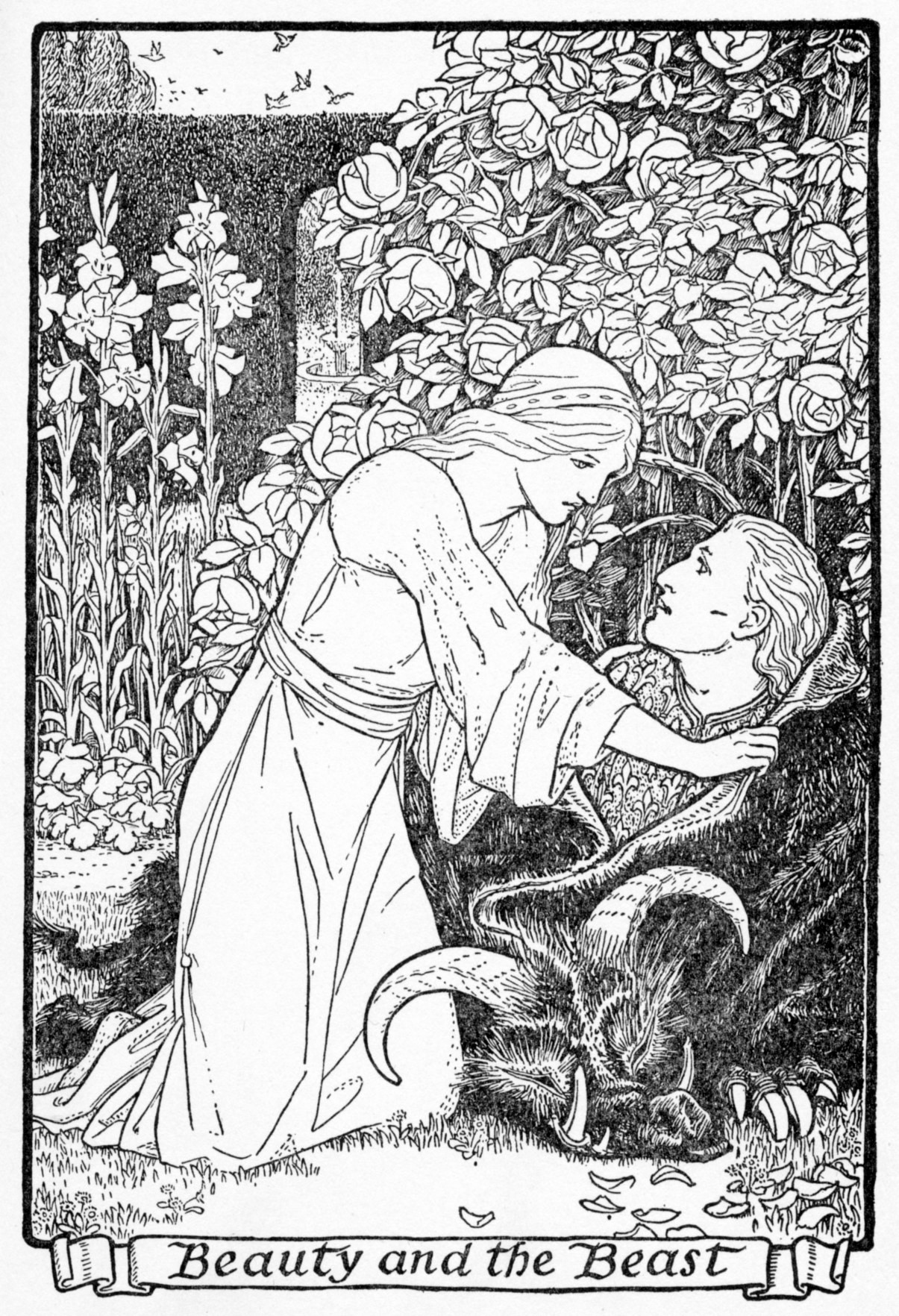
Beauty and the Beast is a traditional French folktale that explores themes of love, appearance, and transformation. At its core the narrative follows a mercantile father who, after offending or becoming lost, finds himself at the dwelling of a frightening figure and agrees to surrender a daughter to spare his life. The young woman—often called Beauty, Belle, or simply the daughter—lives in the beast's residence and over time comes to know him beyond his outward form. Their relationship develops into mutual affection and ultimately the beast is revealed to be human, restored to his former stature as a prince through an act of love or fidelity.
Image gallery
6 Images


Plot elements and characters
The tale's basic elements are consistent across many tellings: a merchant (or father) who encounters misfortune; the exchange that sends his daughter to the beast's home; the isolated castle where she resides; the gradual emotional bond between the heroine and the creature; and the final revelation of the beast as a prince. Variations change motivations, magical mechanics, and secondary characters such as jealous sisters, enchanted objects, or a benevolent fairy. In some versions the heroine's choice, compassion, or breaking of a prohibition triggers the transformation.
History and principal written versions
The story circulated in oral tradition in France before it was written down and expanded by authors in the 18th century. A prominent early literary treatment was published by Gabrielle-Suzanne Barbot de Villeneuve; this longer, ornate version provided extensive backstory and many motifs later omitted. A widely read abridgment and moralized retelling followed from Jeanne-Marie Leprince de Beaumont, whose concise 1756 rendition helped establish the familiar framework used in children's books and translations. Scholars often place the tale in folktale classifications (for reference see indexes such as ATU 425C) and trace how motifs were adapted across Europe.
Major adaptations and media
The tale's adaptability has led to numerous stage, film, television, and musical interpretations. Notable cinematic versions include Jean Cocteau's visually inventive 1946 film and the sprawling animated feature released in 1991 by Disney, an adaptation that popularized many modern details and inspired a stage musical. The story has also been translated to television: a late-20th-century dramatic series brought the concept to episodic form and starred performers such as Linda Hamilton and Ron Perlman. The narrative has appeared in ballets, operas, novels, and contemporary retellings that reposition the heroine or reimagine the beast.
- Gabrielle-Suzanne de Villeneuve (1740) — extended literary source
- Jeanne-Marie Leprince de Beaumont (1756) — concise, influential children's version
- Jean Cocteau (1946) — landmark poetic film
- 1991 animated — major modern popularization
- Broadway — stage musical adaptations that followed the Disney film
Themes, variants, and cultural impact
The tale operates on several thematic levels: moral instruction about judging by appearance, the redemptive power of love, and social expectations of duty and sacrifice. Variants emphasize different lessons—some stress filial piety or the heroine's industriousness, others foreground liberation from a curse. The story's flexibility has allowed it to serve as allegory, romance, fantasy, or social critique. It also functions as a template for later works that invert, subvert, or modernize its components, from feminist retellings that question the heroine's agency to versions that explore consent and autonomy.
Notable facts and distinctions
While often called a fairy tale, many of the best-known published texts were literary creations that synthesized oral motifs. The tale's repeated retellings in the 18th and 19th centuries helped standardize names and plot points. Over time, adaptations have shifted focus—some foreground spectacle and romance, others psychological depth. The enduring popularity of "Beauty and the Beast" stems from its archetypal conflict between outer form and inner value and its capacity to be retold in many cultural registers.
For further reading on versions, themes, and performances see editions and critical studies, and consult audiovisual adaptations such as those associated with French origins, cinematic works by Jean Cocteau, television treatments like the 1980s series, and popularized forms tied to awards and theatre including references to the animated film's recognition by the Academy Award community.
Because this tale exists in many languages and cultures, readers interested in comparative folklore will find varied plot details and local motifs that illuminate how one story can become a family of stories across time and place.
Questions and answers
Q: What is Beauty and the Beast?
A: Beauty and the Beast is a French folk story that tells the story of a merchant who is lost in the woods.
Q: What happens in the story of Beauty and the Beast?
A: The merchant finds the palace of a beast who wants to kill him, and makes a deal with the beast to have his daughter in exchange. The daughter goes to live in the Beast's castle; the two fall in love; and the beast turns into a prince.
Q: How many versions of Beauty and the Beast have been published and revised?
A: Beauty and the Beast has been published and revised in many versions, most notably Madame Gabrielle-Suzanne Barbot de Villeneuve's 1740 retelling and its revision in 1756 by Madame Jeanne-Marie Leprince de Beaumont.
Q: Has there been a TV series based on Beauty and the Beast?
A: Yes, there has been a 1980s TV series starring Linda Hamilton and Ron Pearlman based on Beauty and the Beast.
Q: What famous movie versions have been based on Beauty and the Beast?
A: Several movies have been based on Beauty and the Beast, most famously Jean Cocteau's 1946 version and the 1991 animated version by Disney.
Q: Was the 1991 animated Beauty and the Beast movie nominated for an Academy Award?
A: Yes, the 1991 animated Beauty and the Beast movie by Disney was nominated for the Best Picture Academy Award.
Q: Did the Beauty and Beast story inspire a Broadway musical?
A: Yes, the Beauty and the Beast story inspired a long-running Broadway musical.
Tags
Related articles
Author
AlegsaOnline.com Beauty and the Beast: origins, versions, and cultural influence Leandro Alegsa
URL: https://en.alegsaonline.com/art/9946