
Tiruvallur District (Tamil Nadu) — overview, history and key features
Tiruvallur district in Tamil Nadu, with Tiruvallur town as its headquarters, combines urban growth and rural traditions, notable temples, Pulicat wetlands, and diverse cultural influences from nearby Andhra regions.
Overview
Tiruvallur district is an administrative district in the southern Indian state of Tamil Nadu. Its administrative centre is the town of Tiruvallur. The district occupies a transitional zone where the expanding urban influence of Chennai meets agricultural, coastal and wetland landscapes. Parts of the eastern district have become increasingly suburban as the Chennai metropolitan area grows, while the northern and southern fringes retain rural settlements and strong cultural ties with neighbouring regions, including influences from Andhra.
Image gallery
1 Image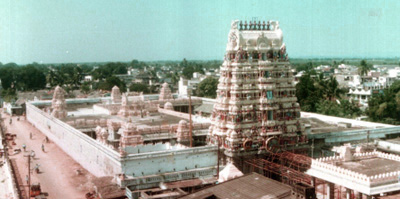
Geography and economy
Tiruvallur includes a coastal stretch, inland plains and important wetlands such as Pulicat Lake on the northern boundary. The presence of waterways and fertile soils supports paddy cultivation and other agriculture in much of the district. At the same time, industrial parks, manufacturing units and service-sector growth around the Chennai periphery create a mixed economy: agriculture, fisheries and traditional trades coexist with light manufacturing, logistics and urban employment.
History and cultural identity
The region that is now Tiruvallur has a long history within the cultural landscape of southern India. Successive South Indian dynasties shaped temples, settlement patterns and local traditions over centuries. The district is widely known for the Veeraraghava (also spelled Veeraragava) Perumal Temple at Tiruvallur, a major Vaishnavite shrine. For many residents, the temple's festivals and the new-moon observances (Amavasya) remain central public events and contribute to a distinctive local identity.
Demographics and administration
According to the 2011 national census, Thiruvallur district had a population of approximately 3.7 million people, with a sex ratio notably higher than the national average. Administratively, the district comprises a mix of urban municipalities and rural panchayats; its eastern towns are integrated economically with Chennai while more distant taluks show agrarian patterns and bilingual cultural exchange with Telugu-speaking communities across the state border.
Places of interest and notable features
- Veeraraghava Perumal Temple — a principal pilgrimage site that shapes local religious life and draws visitors during key festival days.
- Pulicat Lake — an ecologically significant brackish-water lagoon that supports migratory birds, fisheries and coastal livelihoods.
- Urban–rural interface — zones where Chennai’s suburban expansion meets traditional villages, resulting in evolving land use and transport networks.
Contemporary relevance and challenges
Tiruvallur exemplifies many dynamics found near fast-growing Indian metros: rapid urbanization and infrastructure development create economic opportunities, but also pressure on agricultural land, wetlands and local traditions. Balancing development with environmental protection (notably of Pulicat and coastal ecosystems), preserving cultural heritage, and managing resources for a mixed population are ongoing concerns for planners and communities in the district.
For further administrative details and civic information, local government portals and regional planning documents provide current updates on boundaries, services and development projects.
Questions and answers
Q: Where is Tiruvallur district located?
A: Tiruvallur district is located in the South Indian state of Tamil Nadu.
Q: What is the town of Tiruvallur known for?
A: The town of Tiruvallur is known for the Veeraragava Temple.
Q: What kind of characteristics does Tiruvallur district have?
A: Tiruvallur district has a mixture of urban and rural characteristics.
Q: Which part of Tiruvallur district is dominated by urban characteristics?
A: The Eastern part of Tiruvallur district is dominated by urban characteristics.
Q: What kind of culture does the Southern and Northern part of the district have influence of?
A: The Southern and Northern part of the district has influence of Andhra culture due to its position.
Q: What was the population of Thiruvallur district according to the 2011 census?
A: According to the 2011 census, Thiruvallur district had a population of 3,728,104.
Q: What is the sex-ratio of Thiruvallur district according to the 2011 census?
A: According to the 2011 census of India, Thiruvallur district had a sex-ratio of 987 females for every 1,000 males, much above the national average of 929.
Related articles
Author
AlegsaOnline.com Tiruvallur District (Tamil Nadu) — overview, history and key features Leandro Alegsa
URL: https://en.alegsaonline.com/art/99429
Sources
- censusindia.gov.in : "Census Info 2011 Final population totals"