
The Vicar of Wakefield
A concise encyclopedia article on Oliver Goldsmith's novel The Vicar of Wakefield (1766): its content, themes, historical context, reception, and adaptations.
Overview
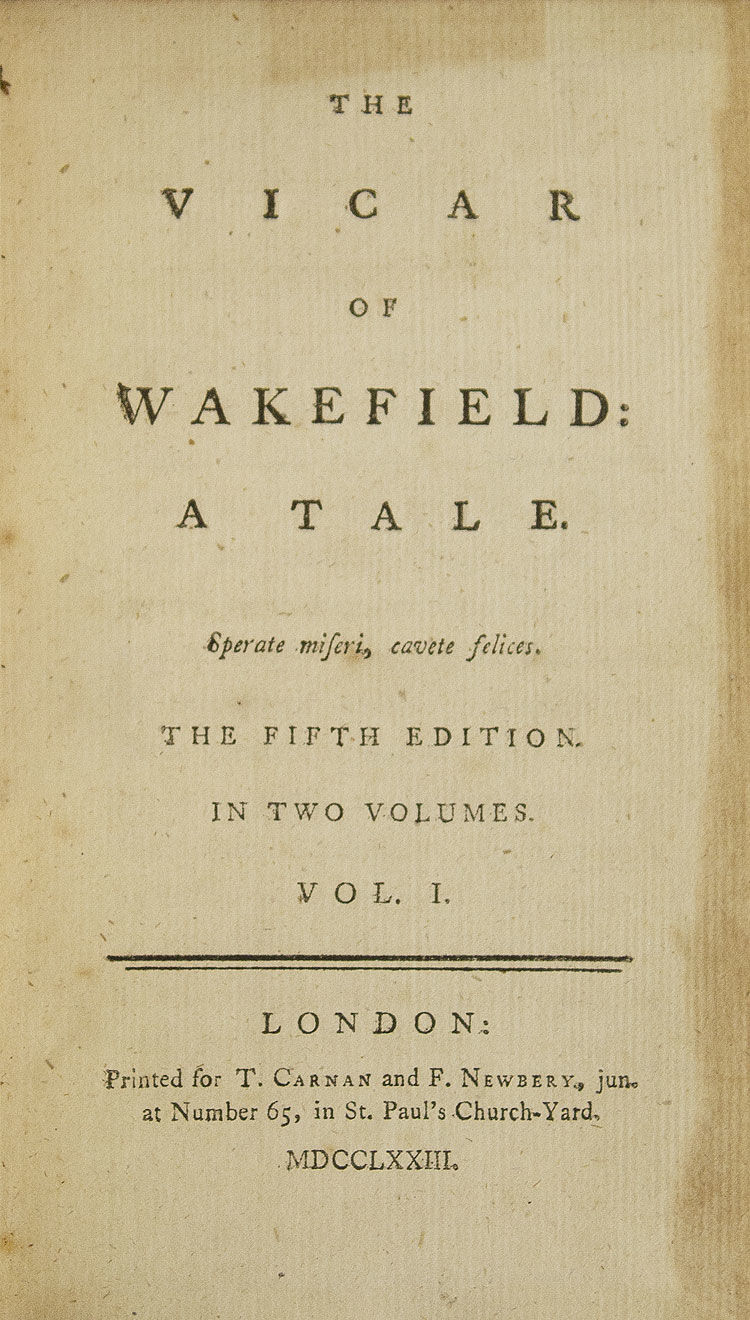
The Vicar of Wakefield is a novel by Irish writer Oliver Goldsmith, completed in the early 1760s and published in 1766. It presents the fortunes of a country clergyman and his family as they move between prosperity and hardship. The book blends comedy and sentiment, offering a moral tale about patience, integrity and the trials of domestic life.
Image gallery
5 Images



Structure and main elements
The narrative is built around a central household and a sequence of misadventures that test family bonds and character. Goldsmith uses a straightforward, anecdotal style that alternates humorous episodes with moments of pathos. The novel is often read as both a gentle social satire and a sentimental portrait of rural respectability.
Themes and techniques
Prominent themes include virtue under pressure, the contrast between appearances and reality, and a critique of social pretension. Goldsmith balances irony and sympathy: he gently mocks affectation while taking a compassionate view of honest, if sometimes foolish, humanity. The novel’s tone helped define the 18th‑century sentimental tradition.
Historical context and reception
Published at a time when the English novel was evolving, the work enjoyed immediate popularity and influenced contemporary readers and writers. It was praised for its warmth and moral clarity and became a staple of domestic reading in Britain and abroad. For further reading on the text and its editions see the full text and for information about the author consult a biography of Oliver Goldsmith.
Legacy and adaptations
The book has been adapted for the stage, translated into multiple languages and periodically reissued in modern editions. Its combination of comic episodes and ethical reflection has secured a lasting place in discussions of 18th‑century literature and the development of the novel.
Notable aspects
- Mix of satire and sentiment rather than pure parody.
- Emphasis on domestic morality and endurance in face of misfortune.
- Frequent inclusion in studies of early English fiction and social history.
Related articles
Author
AlegsaOnline.com The Vicar of Wakefield Leandro Alegsa
URL: https://en.alegsaonline.com/art/99049