
The Voyage of the Beagle: Darwin’s Journal and Field Observations
Account of Charles Darwin’s observations during the HMS Beagle survey (1831–1836), its scientific findings, publication as Journal and Remarks, and its role in shaping ideas about species and geology.
The Voyage of the Beagle is the familiar title given to the travel journal kept by Charles Darwin and first published in 1839 as Journal and Remarks. It records his experiences while serving as naturalist and companion on the second survey expedition of the ship HMS Beagle. The voyage combined coastal surveying, ethnographic observation, and natural history collecting, and the published account is valued both as an engaging travel narrative and as a scientific field record that influenced later ideas about species and Earth history.
Image gallery
4 Images


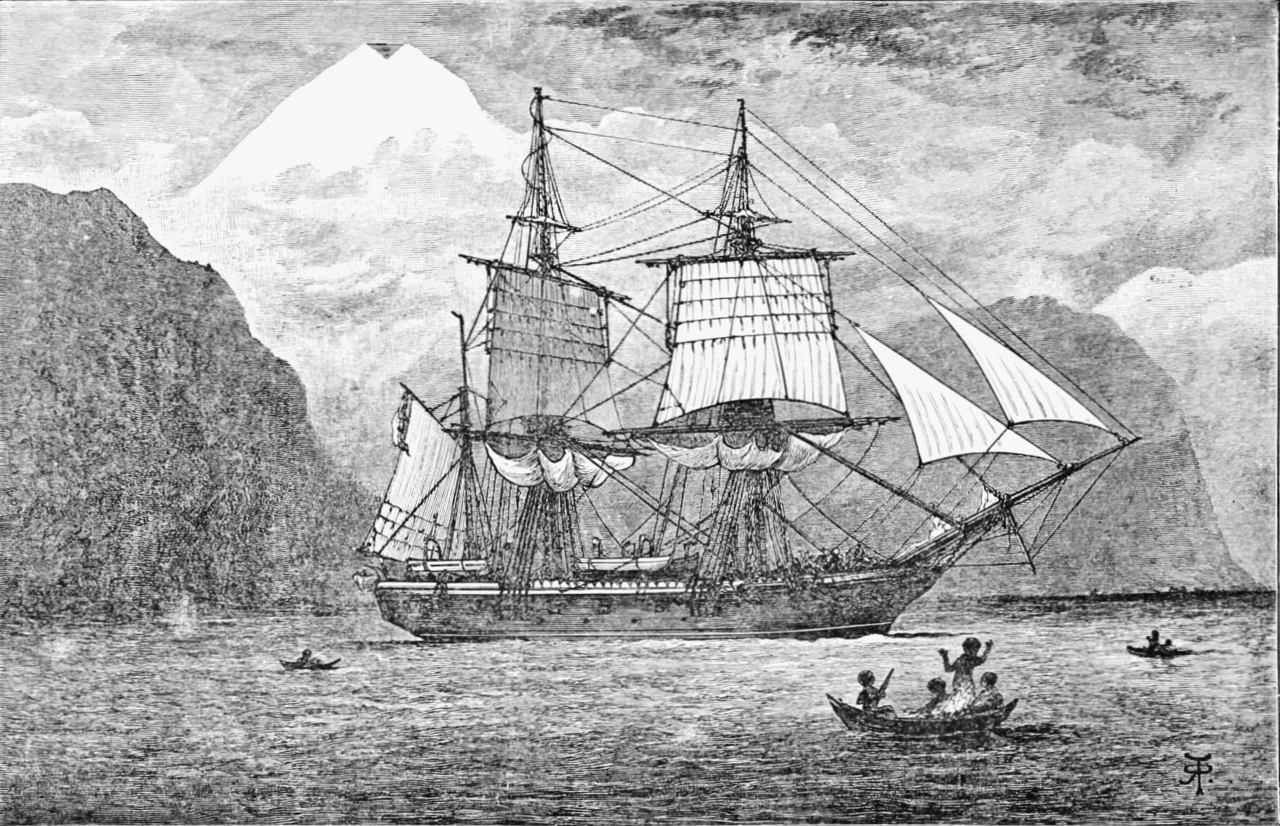
Background and course of the voyage
The Beagle sailed from Plymouth Sound on 27 December 1831 under the command of Captain Robert FitzRoy, an officer of the Royal Navy. Although the expedition was planned to last about two years, it continued for almost five; the ship returned to England on 2 October 1836. Much of Darwin’s time—roughly three years and three months—was spent ashore visiting a series of coasts, islands and settlements while the Beagle carried out hydrographic surveys. The itinerary included extended work around South America, visits to the Galápagos Islands, Pacific island stops, parts of Australasia, and return calls in the Atlantic and Indian Oceans.
Scientific work and observations
Darwin’s responsibilities on the expedition combined the duties of a gentleman naturalist with those of an observer and collector. He sent large numbers of botanical, zoological and geological specimens home and made detailed notes on living organisms, fossils and rock formations. His entries cover topics from biology and palaeontology to anthropology and coastal geology. Key themes include the discovery of fossilized giant mammals in Patagonia, observations on volcanic islands and coral atolls that later fed into his geological writings, and striking patterns of variation among island species, most famously among the Galápagos birds and tortoises.
- Major regions visited: coastal South America and the Falklands, the Galápagos Islands, various Pacific islands, Australia and New Zealand, and ports en route via the Cape of Good Hope.
- Types of work: coastal charting by the ship’s officers; collecting and describing specimens by Darwin; notes on local peoples, climates and vegetation.
- Outcomes: large specimen collections, geological hypotheses, and detailed field notes that preserved Darwin’s early reflections on variation and distribution.
Publication and evolving ideas
Published in 1839, Darwin’s Journal and Remarks was written in the readable style of a travel memoir, yet it included careful scientific description and analysis. The chapters are arranged by place for clarity rather than strictly chronologically. The second edition, issued in 1845, contained additional material that began to hint at broader biological explanations. During and after the return he continued to reflect on the implications of his observations; within a year he was recording speculative ideas about species change in his private transmutation notes (Notebook "B" opened in July 1837).
Importance, limitations and legacy
The voyage and its published account played a central role in shaping Darwin’s later thinking about evolution and the mechanism he later called natural selection. Some of Darwin’s most useful insights came from seeing how islands tended to harbour distinctive, closely related species, a pattern he compared to mountaintops with endemic forms. He also recognized the value—and regretted the limits—of his specimen documentation: he later admitted it was a significant error not to record precisely which Galápagos islands had yielded some of his bird specimens, a lapse that complicated later analysis.
Beyond its influence on biological theory, the Voyage of the Beagle remains an important historical record of nineteenth‑century exploration and scientific practice. It reflects a period when Western Europeans were mapping coastlines and collecting natural objects across the globe, and it shows how careful fieldwork and wide reading together can lead to major shifts in scientific perspective. The book continues to be read both for its vivid descriptions and for the way it documents the beginnings of one of the central ideas in modern biology.
Questions and answers
Q: What is the title of Charles Darwin's book?
A: The Voyage of the Beagle.
Q: When was it first published?
A: 1839.
Q: What type of expedition did the HMS Beagle embark on?
A: A survey expedition.
Q: How long did the expedition last for?
A: Almost five years.
Q: What topics does Darwin's book cover?
A: Biology, geology, and anthropology.
Q: What mistake did Darwin make during his voyage which he realised later on?
A: He didn't note which islands some specimens from the Galapagos Islands were found on.
Q: When did Darwin open his secret 'transmutation' notebook?
A: July 1837, less than a year after the Beagle returned to England.
Related articles
Author
AlegsaOnline.com The Voyage of the Beagle: Darwin’s Journal and Field Observations Leandro Alegsa
URL: https://en.alegsaonline.com/art/99061