
The Three Musketeers
Alexandre Dumas's historical adventure about d'Artagnan and the three musketeers, set amid 17th-century French court intrigue; published in serial form in 1844 and followed by two sequels.
Overview
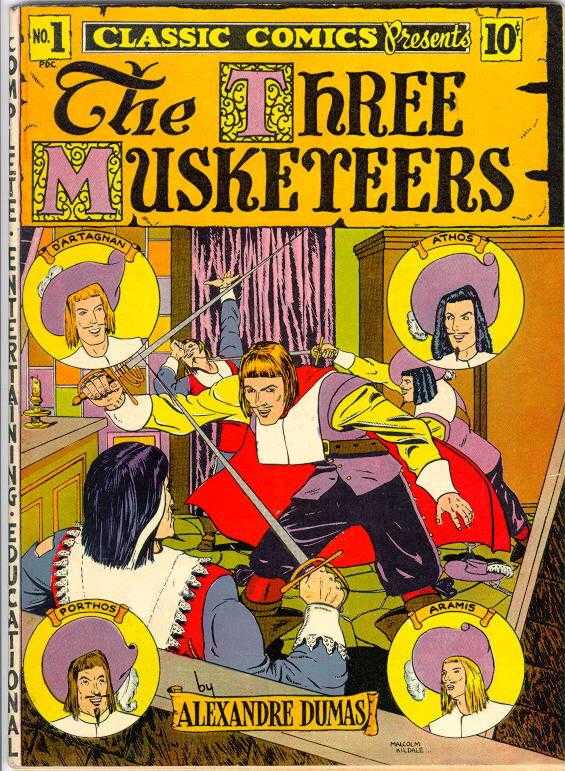
The Three Musketeers is a historical adventure novel by Alexandre Dumas, first issued in serialized form in 1844. Written in the energetic style that made Dumas famous, the novel follows a young Gascon, d'Artagnan, who goes to Paris to join the king's musketeers. He quickly becomes bound by friendship and shared purpose to three veteran soldiers, Athos, Porthos and Aramis. The book mixes swordplay, personal loyalties and high-stakes court intrigue, and its French title is often given as Les Trois Mousquetaires. The heroes rally around the celebrated motto "One for all, and all for one", which expresses the novel's central ethic of mutual support.
Image gallery
8 Images




Plot summary
The narrative opens with d'Artagnan leaving his home to seek fortune and honour in Paris. After a string of duels and narrow escapes he befriends the three musketeers and becomes involved in a series of episodes that combine romantic missions and political maneuvering. A key episode concerns a scandal that could embarrass the queen and the attempts to protect her reputation, which draws the protagonists into conflict with powerful figures at court. Much of the tension in the novel arises from secret identities, betrayals and reprisal, culminating in revelations and decisive confrontations that test the characters' loyalties.
Main characters and relationships
- d'Artagnan — the energetic, brave young protagonist whose ambition and good heart drive his actions.
- Athos — the reserved, aristocratic figure whose dignity and melancholy hint at a difficult past.
- Porthos — the boisterous, status-conscious companion, known for his strength and appetite for social display.
- Aramis — a cultivated, contemplative man who alternates between soldierly life and religious aspirations.
Other important figures include Constance Bonacieux, a loyal friend and love interest for d'Artagnan; Milady de Winter, an elegant but dangerous antagonist whose actions drive much of the plot's suspense; and prominent historical personages who appear as background or influencing characters. The book also features supporting roles such as servants, officers and court functionaries who add comic relief and practical assistance to the heroes' quests. The musketeers themselves are members of the royal household troops known as musketeers, a unit associated with close protection of the monarch.
Historical context and literary style
Dumas sets the action against the political tensions of early 17th-century France, a period dominated by the crown and strong ministers who shaped policy and court life. While the novel uses real historical figures and broadly accurate institutions as a backdrop, it freely invents episodes and motives to heighten drama. The author favours brisk pacing, vivid stage-like scenes and episodic cliffhangers that reflect the habits of periodical publication. Readers encounter a blending of history, romance and melodrama typical of 19th-century adventure fiction; these qualities helped the story appeal to a wide readership in France and abroad.
Publication, authorship and sequels
The Three Musketeers first appeared in the Paris newspaper Le Siècle between March and July 1844, and its serial release helped sustain public interest through suspenseful chapter endings. Dumas frequently worked with collaborators to produce long, fast-moving narratives; one of his better known collaborators is often cited in studies of his working methods. The novel was followed by two sequels, Twenty Years After and The Vicomte de Bragelonne, and together these three volumes are commonly called the D'Artagnan Romances. The sequels revisit the principal characters at later stages of life and place them against further historical developments.
Themes
Friendship, honour and loyalty are central themes. The book explores how personal bonds endure amid intrigue and shifting political fortunes, and how individual codes of conduct can conflict with or reinforce public duty. Other recurrent motifs include identity and disguise, the dangers of court favour, and the moral complexity of vengeance. Dumas's approach combines action with character-driven moments, allowing readers to experience both spectacle and ethical dilemma.
Adaptations and cultural legacy
The Three Musketeers has inspired a vast number of adaptations across stage, cinema, television and comics, ranging from faithful period pieces to modern reworkings and satirical versions. Its characters and episodes have been retold in many languages, and elements such as the musketeers' motto have entered popular culture as shorthand for solidarity. For readers interested in the broader genre, general discussions of adventure fiction and narrative techniques of serialized storytelling provide useful context.
Further reading and resources
To explore the novel further, consult annotated editions and scholarly introductions that discuss Dumas's craft, historical sources and translation history. Useful starting points include author studies of Dumas, period research on serialized publication such as materials about Le Siècle, and reference entries on the French title Les Trois Mousquetaires. For background on military and social roles portrayed in the story, see general articles on the musketeers. The famous motto, often quoted in discussions of cooperation and solidarity, appears in many modern references and translations — compare renditions and commentaries via sources linked to the phrase "One for all, and all for one".
Related articles
Author
AlegsaOnline.com The Three Musketeers Leandro Alegsa
URL: https://en.alegsaonline.com/art/98984