
The Tinderbox — fairy tale by Hans Christian Andersen
Summary, origins, themes, reception and adaptations of Hans Christian Andersen's fairy tale "The Tinderbox", first published in Copenhagen in 1835 and derived from older folk motifs.
Overview
"The Tinderbox" is a literary fairy tale by Hans Christian Andersen, first published in Copenhagen in May 1835 as part of the collection Fairy Tales Told for Children. Andersen transformed material from oral tradition into a compact narrative that mixes stark incidents, comic touches, and rapid shifts of tone. The story is commonly anthologized and frequently discussed in studies of how nineteenth‑century writers adapted folk material for a literary audience.
Image gallery
2 Images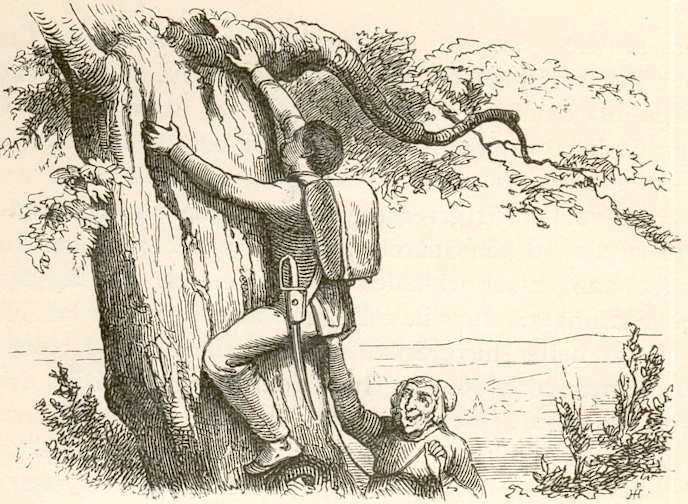

Plot summary
The tale follows a discharged soldier who, on his way home, encounters a witch who leads him to a hollow tree and a secret chamber filled with treasure. In the chamber he is tempted by a magical tinderbox; when he takes it, he discovers that striking the tinderbox summons three powerful dogs, each with eyes like moons, stars and the sun, that will obey him. Armed with the tinderbox's power, the soldier acquires wealth, pursues a sleeping princess he has seen from a window, and uses the dogs' strength to overcome obstacles. The story moves quickly from comic caprice to violent action and then to a social transformation: the soldier rises from poverty to marry the princess and claim a new station.
Origins and influences
Andersen drew on several strands of oral and literary tradition. He acknowledged knowing variants from childhood, and scholars have noted similarities to a Danish folk tale often called "The Spirit in the Candle". The central motif of a single magical object or enslaved helper that confers wealth and status recalls the well‑known tale of Aladdin and the Magic Lamp, which Andersen had also heard as a child. Rather than copying any one source directly, Andersen reshaped motifs and emphasized abrupt, matter‑of‑fact narrative shifts characteristic of his early fairy tales.
Style and themes
The tale exemplifies Andersen's ability to combine conversational narration with vivid, sometimes brutal, incidents. Themes commonly identified in discussions of the story include the tension between chance and merit, the social mobility enabled by magical aid, and the ambiguous moral status of the protagonist's actions. Andersen's soldier is resourceful but also opportunistic; the narrative does not moralize at length, leaving readers to weigh the ethics of the soldier's rise. The dogs and the tinderbox function as both liberating and threatening forces, a duality often present in fairytale magic.
Contemporary reception
When the booklet that included "The Tinderbox" appeared, several critics reacted unfavourably to Andersen's early tales, finding some episodes coarse or immoral. Despite mixed critical notices, the stories quickly found a readership and established Andersen's reputation as an original teller. Over time, critical opinion shifted and the tales have been read in many ways: as children’s stories, as satirical or social commentary, and as works that bridge oral folklore and literary invention.
Adaptations and legacy
"The Tinderbox" has been adapted in numerous formats: stage plays, radio dramatizations, films and animated versions. One of the earliest film treatments was a Danish animated adaptation that brought the tale to wider popular audiences. Different adaptors emphasize diverse aspects of the story — its comic potential for children, its darker undertones for adults, or its folkloric interest for scholars. The tale remains part of standard Andersen collections, often published alongside contemporaneous pieces such as "The Princess and the Pea", and continues to be included in studies of European folktale types and literary fairytale practice.
Further notes
- Motifs: enchanted object, summoned helpers, tests of resourcefulness, social ascent.
- Comparative reading: useful parallels include variants of "The Spirit in the Candle" and tales grouped with "Aladdin" in folktale catalogues.
- Study tips: read the tale alongside Andersen's other early stories to observe his narrative voice and attitude toward child and adult readers; consult annotated editions for textual variants and historical context.
For more on the tale and its place in Andersen's oeuvre see commentary and collections that assemble his early fairy tales and place them in the cultural and literary context of nineteenth‑century Denmark. Scholarly discussions also examine how Andersen's adaptations of folk motifs contributed to the development of the literary fairy tale as a distinct form in European letters.
Additional information and primary texts can be found through authoritative collections and resources on Andersen's work and on comparative folktale indices that trace motif and type relationships across traditions. For an introduction to the tale itself, consult editions and translations that include critical notes and historical background.
Further reading and external resources are available from major collections and studies dedicated to Andersen and to folktale scholarship; these provide deeper bibliographies and cross‑references for researchers and general readers alike. See also the general tale entry at "The Tinderbox" and biographical material on its author at Hans Christian Andersen.
Related articles
Author
AlegsaOnline.com The Tinderbox — fairy tale by Hans Christian Andersen Leandro Alegsa
URL: https://en.alegsaonline.com/art/98994