
The Swineherd — Hans Christian Andersen's fairy tale and legacy
Overview of Hans Christian Andersen's 'The Swineherd': publication, plot outline, themes of pride and materialism, relation to other tales, and later adaptations in ballet and opera.
Overview
"The Swineherd" is a literary fairy tale by Hans Christian Andersen first published in Copenhagen on 20 December 1841. It appears among the stories collected for children in Andersen's mid-19th-century volumes and is often discussed alongside his other moral tales. The piece is typically described as an original composition by Andersen, though its core situation — the humbling of an arrogant noble — echoes older folktale motifs.
Image gallery
2 Images
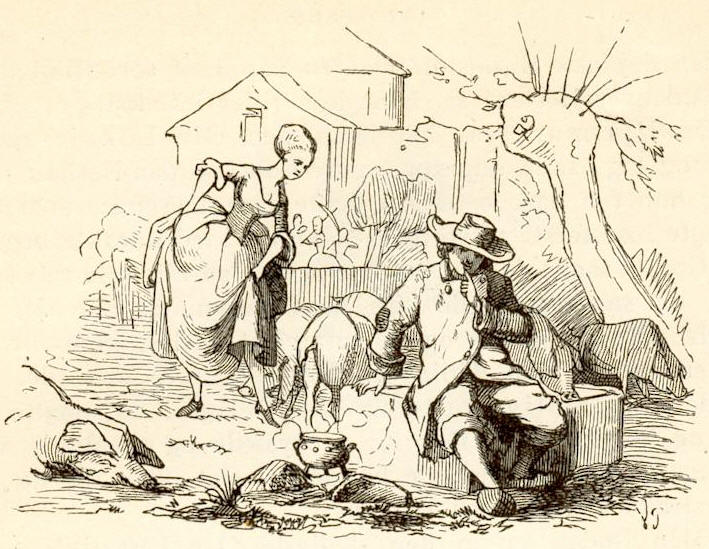
Plot sketch
The narrative follows a prince who seeks the hand of a proud princess. When straightforward courtship and sincere natural gifts fail to win her favor, he adopts a disguise and takes work as a swineherd at the palace. In this disguise he fashions clever, attractive trinkets and earns the princess's attention by offering artificial delights rather than genuine treasures. The story culminates with the prince revealing his identity and teaching the princess a harsh lesson about vanity and values.
Themes and style
Andersen's tale explores themes common in his work: pride, the contrast between superficial and sincere value, the social distance between royalty and common life, and the consequences of moral failure. The story is told in Andersen's characteristic plain, direct voice but carries satirical and didactic overtones. Critics and readers have noted how he blends humor with moral critique, using the prince's disguise to examine who deserves affection and respect.
Historical context and comparisons
Published by C. A. Reitzel in the 1840s, the tale reflects Romantic-era interest in folklore and moral instruction for children. Although Andersen's version is generally considered an original literary creation rather than a direct retelling, comparable motifs appear in older tales that feature a humbled or tricked noble, such as the Brothers Grimm story often cited in comparison. For background, see the author's biography and collections at Hans Christian Andersen resources and an entry for the work itself at story reference. A related narrative by the Grimms is noted at a comparative tale.
Adaptations and cultural legacy
"The Swineherd" has attracted adaptations across artistic media. Its vivid characters and moral conflict have been translated into stage works, including dance and music. Notable creative responses include choreographic interpretations and operatic settings that emphasize the tale's theatrical reversal and emotional stakes. Examples of such adaptations are described in program notes and catalogs for ballet and opera productions at ballet adaptations and operatic adaptations.
Notable distinctions and readings
- Literary fairy tale: Unlike anonymous folktales, Andersen's stories are authored works that borrow folk elements and shape them with individual voice.
- Moral ambiguity: Readers and scholars often debate whether the tale punishes vanity appropriately or sketches a cruel lesson, making it a subject of classroom discussion.
- Enduring appeal: The story's concise moral and theatrical setup have helped it persist in anthologies and adaptations aimed at both children and adults.
For more detailed scholarly notes and translations, consult specialized collections and critical studies that trace Andersen's published volumes and the reception history of his tales. Links above point to starting resources for readers who wish to explore primary texts and modern interpretations.
Related articles
Author
AlegsaOnline.com The Swineherd — Hans Christian Andersen's fairy tale and legacy Leandro Alegsa
URL: https://en.alegsaonline.com/art/98943