
The Raven — a poem by Edgar Allan Poe
A concise encyclopedia article on Edgar Allan Poe's narrative poem 'The Raven': its plot, form, themes, publication, and cultural influence, including the repeated refrain 'Nevermore'.
The Raven is a narrative poem by American writer Edgar Allan Poe, first published in January 1845. The poem centers on a bereaved narrator visited by a mysterious talking raven whose single, ominous refrain—"Nevermore"—drives the speaker into obsessive despair. Its memorable language and hypnotic rhythm made the poem an immediate sensation and a lasting work of American literature.
Image gallery
8 Images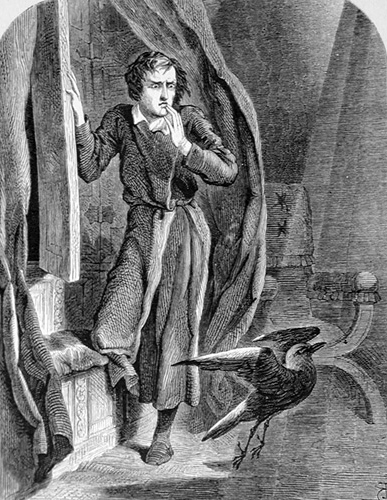



Form and content
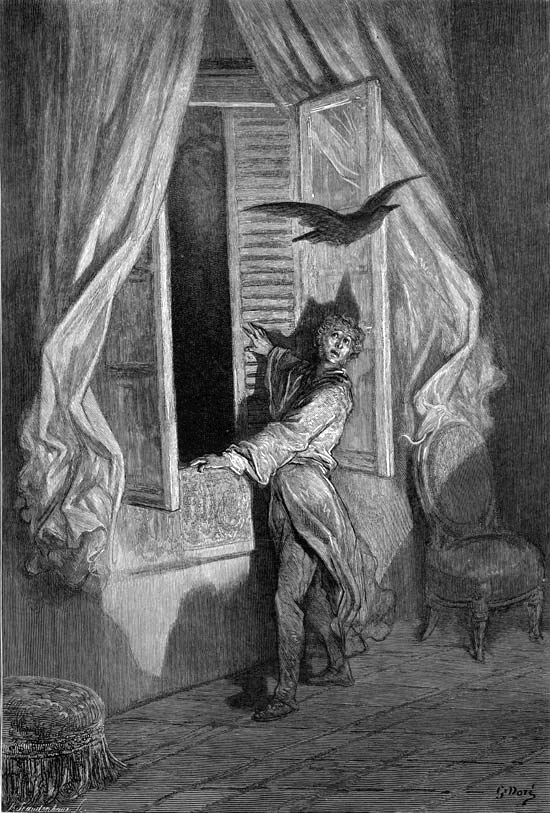
The poem is notable for its strict use of meter, internal rhyme, refrains, and alliteration. Poe fashions a chant-like voice that blends trochaic meter with repeated sounds and cadences to create an eerie musicality. The narrative unfolds in a single scene: a sorrowful speaker mourning a lost love named Lenore, interrupted by a midnight visitor, a dark bird that perches above a chamber door and replies "Nevermore" to the narrator's questions. The interplay of the bird's monosyllabic answer and the narrator's mounting interpretation forms the dramatic core of the poem.
Themes and techniques
- Grief and mourning: the poem explores how loss can warp perception and reason.
- Symbolism: the raven is commonly read as a symbol of unrelenting memory, fate, or the narrator's conscience.
- Sound and structure: Poe's use of refrain and internal rhyme lends a musical, incantatory quality.
- Gothic atmosphere: dark imagery and psychological intensity are central to the mood.
Scholars and readers have long debated precise meanings, but consensus emphasizes Poe's craftsmanship: he deliberately marries form to theme so that sound reinforces the poem's descent into obsession.
The poem first reached the public in January 1845 (initially printed in a periodical). Its success helped cement Poe's reputation during his lifetime and made "Nevermore" an enduring catchword in cultural memory. The work has been widely anthologized, adapted, parodied, and referenced across film, theater, and popular media, reflecting its broad influence on later Gothic and popular traditions.
Notable facts include the poem's role in popularizing Poe as a public figure and the way it continues to be taught and performed. The raven itself remains ambiguous—neither clearly supernatural nor wholly mundane—which contributes to the poem's power to provoke interpretation. For further reading on Poe and critical discussions of the poem, see introductions and annotated editions available through literary resources and archives.
For more background, biographies of the poet and contemporary publication history offer context: see a general biography entry for Edgar Allan Poe, a note on its first publication in January 1845, and commentary on the raven motif in literary studies at literary reference sources.
Related articles
Author
AlegsaOnline.com The Raven — a poem by Edgar Allan Poe Leandro Alegsa
URL: https://en.alegsaonline.com/art/98708