
Tintagel Castle
Ruined medieval fortress on Tintagel Head in Cornwall, linked to Arthurian legend and an earlier high-status settlement; now a popular archaeological and tourist site managed for its dramatic coastal setting.
Overview
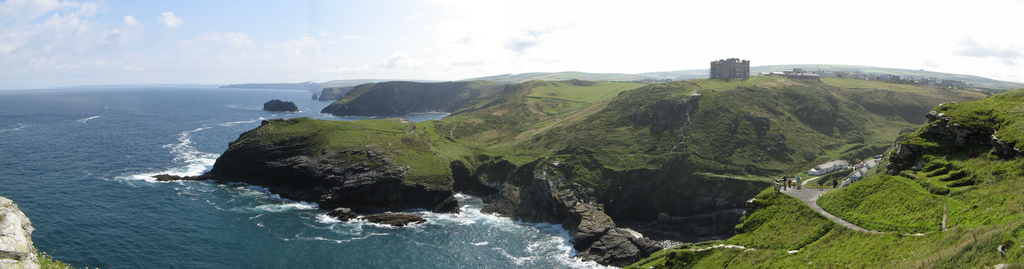
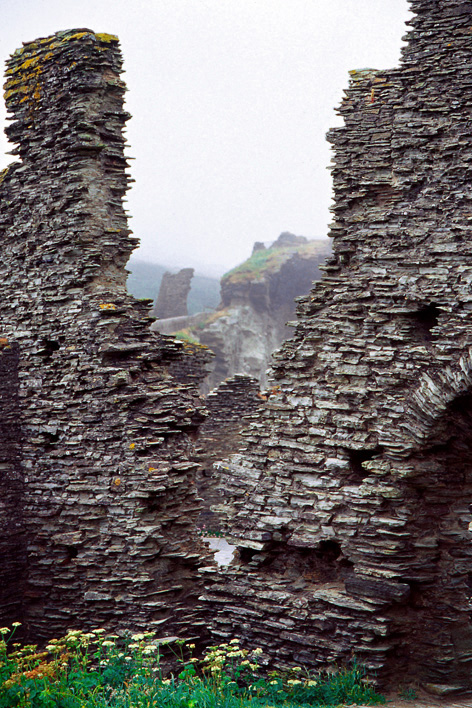
Tintagel Castle stands on a rugged headland on the north coast of Cornwall, in England. The site consists of the remains of a medieval castle built beside and across a steep cleft on Tintagel Head, a rocky promontory that forms a dramatic backdrop to the Atlantic Ocean. Much of what visitors see today are stone ruins set among sheer cliffs, with foundations and fragments of walls that mark a building intended more for display and status than for sustained military defence.
Image gallery
10 Images




History and archaeology
The castle commonly associated with the surviving ruins was established in the mid-12th century by Reginald, Earl of Cornwall (Reginald de Dunstanville), who used the site to reinforce his local prestige. Archaeological work has revealed that the headland was occupied long before the Norman-era fortification: excavations have uncovered evidence of a high-status settlement dating to the late Roman and early medieval periods, including imported pottery, glass and other goods that indicate trade and elite residence.
Later medieval structures were sited to make the most of the natural defences provided by cliffs. The position of buildings, terraces and enclosed spaces on both the mainland and the island-like headland created an architectural sequence that reflected changing social and political purposes over centuries, from habitation to symbolic assertion of authority.
Legends and cultural influence
Tintagel is inseparably linked with Arthurian tradition. In the 12th century the chronicler Geoffrey of Monmouth popularized the idea that Tintagel was the place of King Arthur’s conception, and subsequent medieval romances and later Victorian writers amplified the association. A coastal cave beneath the headland, known as Merlin’s Cave, has been woven into the legends and remains a focus for popular imagination.
Modern development and name
The settlement around the headland was historically called Trevena. In the 19th century the village and its surroundings were rebranded as Tintagel to attract visitors drawn by the Arthurian narratives. Since the 20th century the site has been preserved and managed for both its heritage and landscape value; recent conservation work included the construction of a pedestrian bridge that links the mainland to the island outcrop, improving access while protecting fragile archaeology.
Visiting and significance
Today Tintagel Castle is visited for its evocative ruins, panoramic coastal views and its layers of history that combine archaeology, medieval politics and myth. Popular features include the headland walk, access to the shoreline and caves at low tide, and interpretive displays that explain the site’s complex story. The castle remains an important example of how historical sites can carry both documented pasts and powerful cultural myths.
Notable facts
- The ruins reflect a castle built more for prestige than as a major military stronghold.
- Archaeological finds show the headland was a high-status centre before the medieval castle was erected.
- Tintagel’s Arthurian fame stems largely from medieval literature and was amplified by Victorian interest.
Related articles
Author
AlegsaOnline.com Tintagel Castle Leandro Alegsa
URL: https://en.alegsaonline.com/art/100035