
Tiananmen (Gate of Heavenly Peace) — history, architecture, and significance
Tiananmen, the Gate of Heavenly Peace in Beijing, is a 15th‑century ceremonial gate that served as the entrance to the Imperial City. It is a national symbol and a focal point for ceremonies and public memory.
Overview
Tiananmen (literally "Gate of Heavenly Peace") is a monumental gate in central Beijing, China. Constructed during the early Ming era, traditionally dated to around 1420 under the Ming dynasty, the gate formed the principal southern entrance to the Imperial City and faced the complex that contained the Forbidden City. Today it stands to the north of Tiananmen Square, separated from the plaza by Chang'an Avenue, and is widely recognized as a national emblem.
Image gallery
10 Images



Architecture and physical characteristics
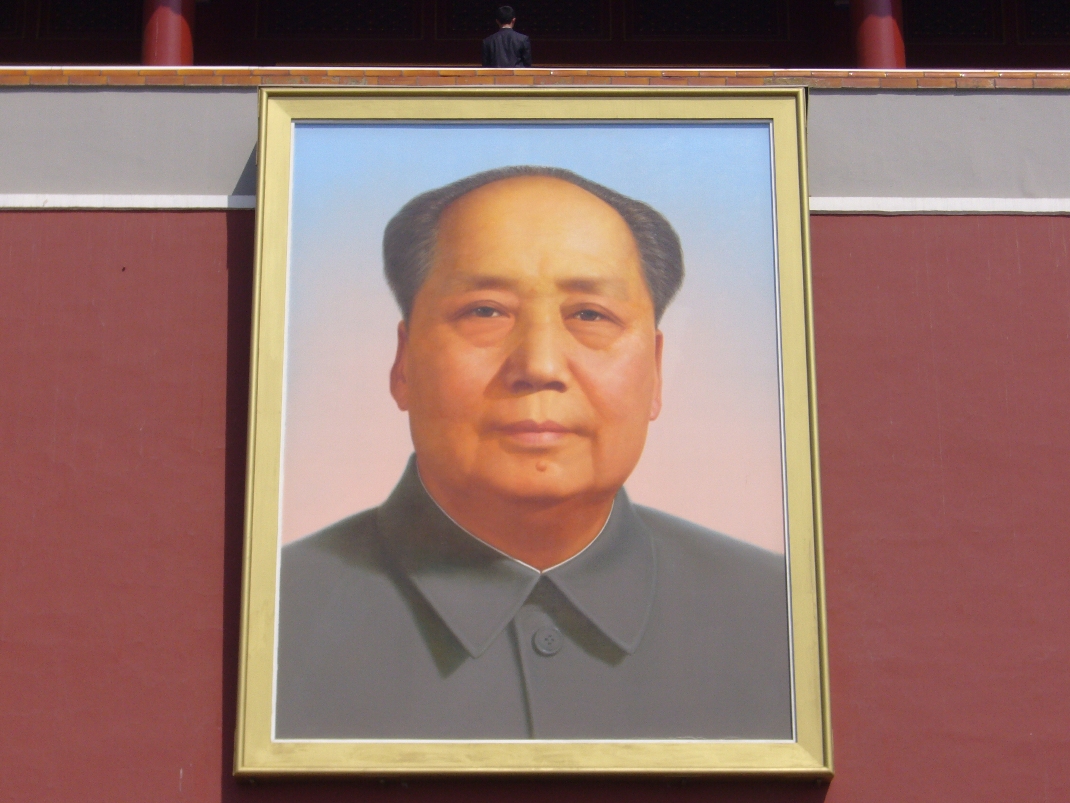
The structure combines a high masonry base with a timber pavilion-like gate tower above, painted in traditional imperial colors. Its facade is dominated by a broad central opening with additional side passages and a raised walkway on the platform. Rooflines are finished with glazed tiles and upturned eaves typical of major ceremonial buildings. A large portrait of Mao Zedong is a conspicuous modern feature on the central face of the gate.
History and evolution
Originally erected to mark the threshold between the imperial court and the outer city, Tiananmen has been repaired, rebuilt and modified several times across imperial, republican and modern periods. It became internationally prominent on 1 October 1949 when the foundation of the People's Republic of China was proclaimed from its rostrum. The gate's appearance and role have been shaped by restoration campaigns and by its use in state ceremonies.
Uses, symbolism and public life
As both an architectural monument and a political symbol, Tiananmen is used in national ceremonies, commemorations and as a backdrop for official imagery. Its likeness appears in official iconography and is frequently photographed by visitors. The adjacent Tiananmen Square hosts flag-raising and military parades; together the gate and square form a contiguous ceremonial axis in the heart of the capital.
Notable distinctions and context
Although the names "Tiananmen" and "Tiananmen Square" are often used interchangeably in popular usage, they refer to distinct places: the gate (a historic architectural monument) and the square (a large open public space). The name "Tiananmen" has also become a metonym for several modern political events and moments of public memory. It continues to be one of Beijing's most visited historic sites, both for tourists and for official functions.
Quick facts and nearby sites
- Translation: "Gate of Heavenly Peace".
- Built during the Ming dynasty and long associated with the Forbidden City.
- Located in central Beijing, north of Tiananmen Square and across Chang'an Avenue.
- Frequently appears in national imagery and public ceremonies in China.

Gallery

Commons: 天安門 - Album with pictures, videos and audio files
· 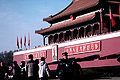
View from southeast
· 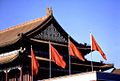
Side view from southeast
· 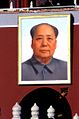
Mao portrait
· 
in the national emblem of the PR China
39.9072444444116.39140833333Coordinates: 39° 54′ 26.1″ N, 116° 23′ 29.1″ E

Nine Gates of the Inner City (Neicheng): Zhengyangmen 正阳门 | Chongwenmen 崇文门 | Xuanwumen 宣武门 | Chaoyangmen 朝阳门 | Fuchengmen 阜成门 | Dongzhimen 东直门 | Xizhimen 西直门 | Andingmen 安定门 | Deshengmen 德胜门
Seven Gates of the Outer City (Waicheng): Yongdingmen 永定门 | Zuo'anmen 左安门 | You'anmen 右安门 | Guangqumen 广渠门 | Guang'anmen 广安门 | Dongbianmen 东便门 | Xibianmen 西便门
Four Gates of the Imperial City (Huangcheng): Tian'anmen 天安门 | Di'anmen 地安门 | Dong'anmen 东安门 | Xi'anmen 西安门
Other gates of the imperial city: Duanmen 端门 | Dongsanzuomen 东三座门 | Xisantuomen 西三座门 | Chang'anzuomen 长安左门 | Zhonghuamen 中华门
Four Gates of the Imperial Palace (Gongcheng): Wumen 午门 | Shenwumen 神武门 | Donghuamen 东华门 | Xihuamen 西华门
Recent goals: Hepingmen 和平门 | Fuxingmen 复兴门 | Jianguomen 建国门 | Shuiguanmen 水关门
Related articles
Author
AlegsaOnline.com Tiananmen (Gate of Heavenly Peace) — history, architecture, and significance Leandro Alegsa
URL: https://en.alegsaonline.com/art/99756