
Tokyo Skytree
A 634 m broadcasting, observation and restaurant tower in Sumida, Tokyo, opened in 2012. Noted for its height, seismic design, two panoramic decks, broadcasting role and nightly illumination.
Overview
Tokyo Skytree is a landmark broadcasting, restaurant and observation tower located in Sumida ward in Tokyo. Completed in 2012, it rises to 634 metres and serves as a major digital broadcasting hub, a tourist destination and a local landmark. The tower combines modern engineering with references to traditional Japanese structural concepts, and its public spaces include observation decks, dining and retail facilities. For official and visitor details see the official tower site or general information about Tokyo and Japan.
Image gallery
10 Images



Design and structure
The design, prepared by architects at Nikken Sekkei, uses a three-part approach: a stiff central column, an outer steel lattice and tuned features to reduce vibration. The concept draws on the shinbashira, a central wooden pillar used in traditional pagodas, adapting that idea for modern steel and concrete construction to improve seismic resilience. Engineers combined a rigid inner shaft with a somewhat flexible outer frame so the structure can dissipate earthquake energy and reduce perceptible sway. The official height, 634 m, was chosen in part because the digits 6-3-4 can be read as “Musashi,” the historical name of the region where the tower stands; see Musashi reference for background.
Observation decks and visitor features
There are two principal public viewing areas. The lower deck (commonly called the Tembo Deck) is located around 350 m and provides tiered viewing levels with wide windows, souvenir shops and cafés. The higher area (commonly called the Tembo Galleria) reaches close to 450 m and includes a long, gently sloping corridor that offers sweeping, near-360-degree panoramas. On clear days both decks afford views across greater Tokyo, and timed-entry or reservation systems are often used during busy periods. The complex also houses dining options and retail spaces near the base, making the tower a mixed visitor venue as well as a broadcast facility.
Broadcasting, lighting and public use
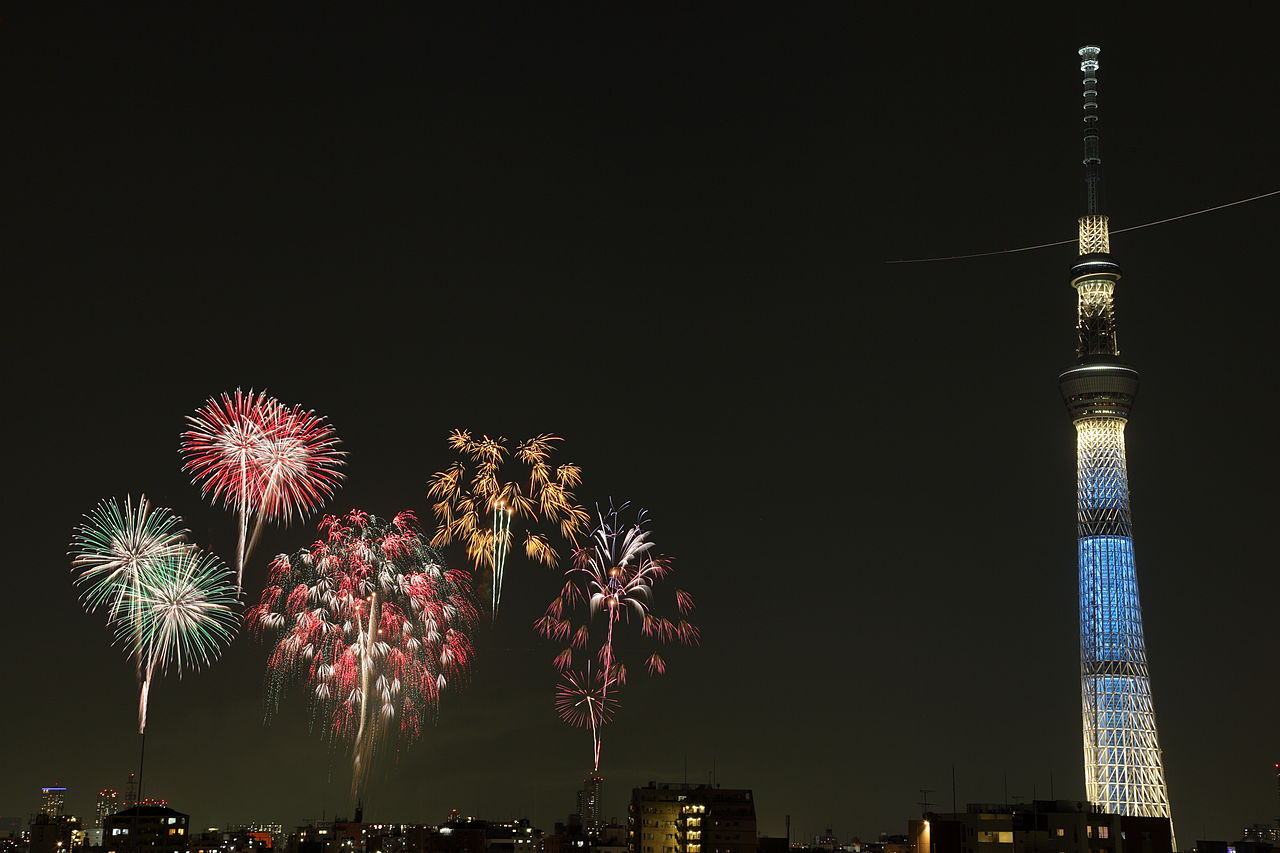
Tokyo Skytree functions as a principal digital transmitter for terrestrial television and other communications in the Tokyo region, consolidating antennas that had been distributed on older towers. In the evenings the tower is illuminated with changing color schemes and seasonal lighting programs intended to complement local festivals and events; municipal authorities and the tower operator periodically announce special illuminations through official channels such as Sumida Ward pages. The lighting is designed both for visual effect and to reflect cultural or commemorative occasions.
History and construction
Planning and preparatory work began in the 2000s to meet evolving broadcasting needs and to create a new urban attraction. Construction started in 2008 and the main structure was completed in early 2012; the tower was finished on 29 February 2012 and officially opened in May 2012 after inspections and ceremonial visits. The tower stands near the Sumida River, an area long associated with cultural and commercial activity in eastern Tokyo; more about the local geography is available at Sumida River references.
Access, surroundings and significance
The tower is adjacent to Oshiage station, which provides connections on multiple lines and operators; for transit and access see guides to Oshiage station and services such as the Toei Asakusa Line. As the tallest structure in Japan, Tokyo Skytree is frequently cited in global rankings: while it is shorter than some habitable skyscrapers, it is recognised as the tallest tower-type structure by certain organisations that distinguish towers from fully habitable mixed-use buildings. Comparative listings and rankings can be found in global tall-building resources such as tall-structure lists; for contrast, the Burj Khalifa in Dubai is taller overall (Burj Khalifa references).
- Height: 634 m (symbolic reference to Musashi)
- Main uses: broadcasting, observation, dining and retail
- Observation levels: Tembo Deck (~350 m) and Tembo Galleria (~450 m)
- Design inspiration: shinbashira-like central shaft adapted for seismic resilience
- Nearest major station: Oshiage (details)
Practical visitor information, ticketing and event announcements are maintained by the tower operators and local tourism organizations. For official visitor pages, reservations and technical summaries consult the tower’s site and operator materials at official tower information, local tourism guides for Tokyo, national guides for Japan, and architectural or engineering summaries from Nikken Sekkei. Additional context on urban planning, transport access and municipal programs can be found via Sumida Ward, transport operator pages such as the Asakusa Line and station guides at Oshiage Station. For wider comparisons among tall structures consult consolidated rankings at tall-structure lists or profiles of notable examples such as the Burj Khalifa in Dubai.
Related articles
Author
AlegsaOnline.com Tokyo Skytree Leandro Alegsa
URL: https://en.alegsaonline.com/art/100320
Sources
- mmtimes.com : "Japan finishes Tokyo Sky Tree" · web.archive.org
- skyscraperpage.com : "Tokyo Sky Tree"
- bangkokpost.com : "Japan finishes world's tallest communications tower,"
- news.xinhuanet.com : "Japanese Emperor visits Tokyo Sky Tree ahead of opening,"
- japantimes.co.jp : "Tokyo Sky Tree opener looms large,"
- nytimes.com : "What 'Lost Decade'?"
- ctbuh.org : "Japan Finishes World's Tallest Communications Tower,"
- jnto.go.jp : "A new famous Tokyo spot linking information and the soul of Japan to the next generation"
- ctbuh.org : "History of Measuring Tall Buildings"
- 10mosttoday.com : "10 Tallest Towers In The World - 10 Most Today"