
Tiruchirappalli Rock Fort (Rockfort Temple Complex)
A historic fort and temple complex built on an ancient monolithic rock in Tiruchirappalli, Tamil Nadu, notable for its temples, military history, panoramic views and cultural significance.
Overview
Tiruchirappalli Rock Fort, commonly called Rockfort, is a fortified temple complex built atop a massive monolithic outcrop in the city of Tiruchirappalli in Tamil Nadu. The rock itself is geologically ancient and is often described as one of the oldest formations in the region; geologists estimate its origins may date back many hundreds of millions to over a billion years. The complex combines religious, military and civic functions and remains the most prominent landmark of the city, visible from many parts of the urban area and the surrounding plains.
Image gallery
1 Image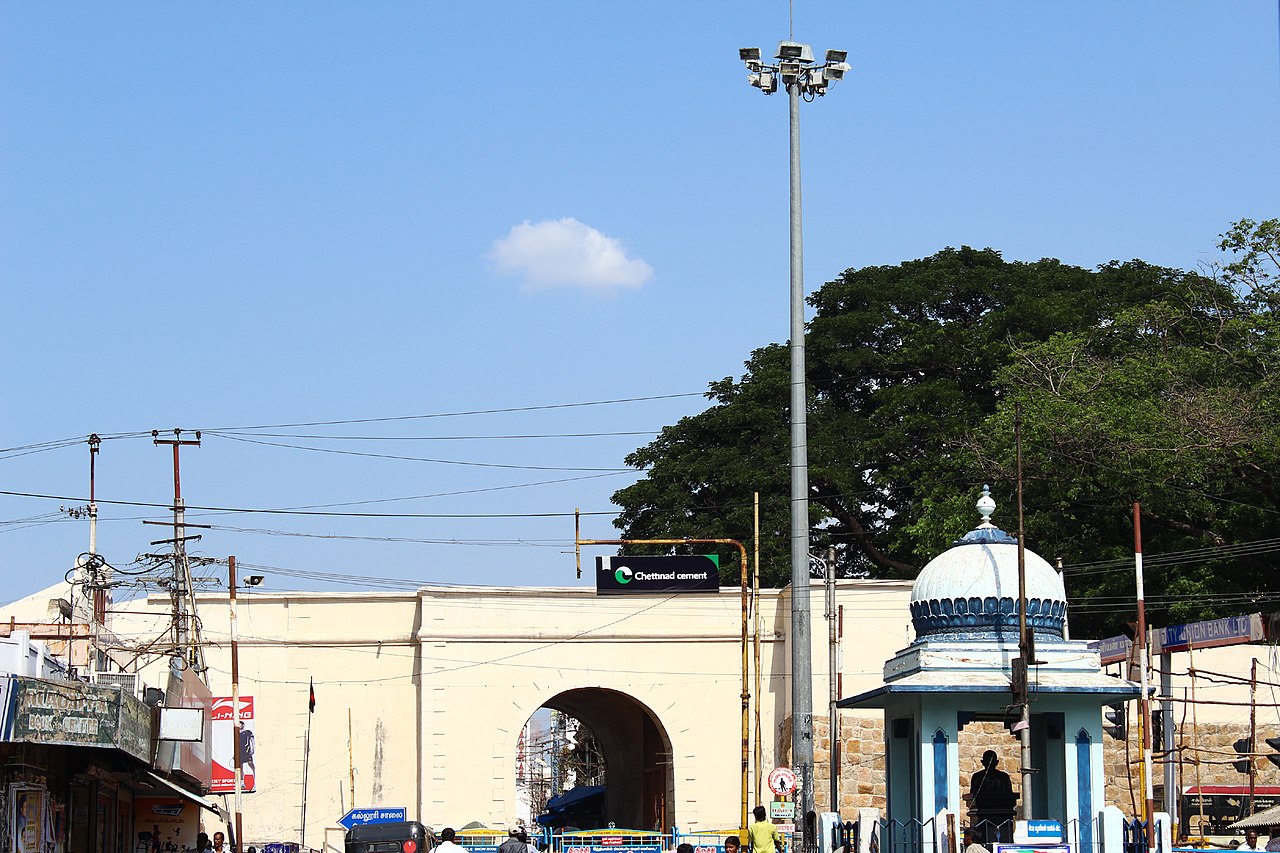
Components and architecture
The site contains two principal Hindu shrines: the Ucchi Pillayar Temple, dedicated to Ganesha, perched near the summit, and the Thayumanaswami Temple, dedicated to Shiva, located on a lower terrace of the rock. Both shrines show layers of workmanship and patronage from successive South Indian dynasties. Visitors reach the upper temple by climbing a long flight of steps carved around and into the rock, which provide recurring views of the Kaveri river and the city below.
- Ucchi Pillayar Temple: the hilltop Ganesha shrine reputed for its vista and mythic associations; see the temple complex entry here.
- Thayumanaswami Temple: an older Shiva sanctuary associated with local legends and frequent worship, mentioned at this reference.
- Fortifications and rock features: remnants of walls, bastions and stairways reflect the site's use as a stronghold; local descriptions can be found at fort details.
History and development
The site has been occupied and embellished over many centuries. Early temple activity is associated with medieval South Indian dynasties and Pallava-era patronage; the name and links to a Pallava Ganesha shrine are often noted in local histories (Pallava and Ganesha). In the early modern period the rock and its fortifications became strategically important: it witnessed confrontations involving the Madurai Nayakas, the Adil Shahi rulers of Bijapur and later regional powers such as Maratha forces. During the 18th century the complex figured in military campaigns in the Carnatic region (Carnatic), and those events contributed indirectly to the expansion of European powers, including the British in India (British Empire).
Significance and visitor information
Today Rockfort is valued both as a place of worship and as a cultural-historical attraction. Pilgrims come to the temples, while tourists climb the rock for its views and to study its layered architecture. The site illustrates how sacred landscapes and defensive needs were combined in South Indian urban centers. Practical visitor notes and conservation efforts are managed locally; for city context see the Tiruchirappalli entry Tiruchirappalli.
Notable facts and distinctions
Rockfort stands out for being a temple-fort built on a single monolith, integrating religious shrines with fortifications that played a role in regional politics. It is frequently referenced in guides to the city and in regional studies of architecture and military history. For comparative reading on nearby sites and fort-temple complexes, consult regional listings and tourism resources (temple complex and fort overview).
Questions and answers
Q: What is Tiruchirappalli Rockfort?
A: Tiruchirappalli Rockfort is a historic fortification and temple complex located in the city of Tiruchirappalli, Tamil Nadu, India.
Q: What is Tiruchirappalli Rockfort made of?
A: Tiruchirappalli Rockfort is constructed on a 83 metres (272 ft) high rock that may date to over one billion years ago.
Q: What are the two Hindu temples inside Tiruchirappalli Rockfort?
A: The two Hindu temples inside Tiruchirappalli Rockfort are the Ucchi Pillayar Temple, Rockfort and the Thayumanaswami Temple, Rockfort.
Q: What are other local tourist attractions near Tiruchirappalli Rockfort?
A: Other local tourist attractions near Tiruchirappalli Rockfort include the famous Pallava-era Ganesha temple and the Madurai Nayak-era fort.
Q: Did Tiruchirappalli Rockfort witness any battles in history?
A: Yes, Tiruchirappalli Rockfort witnessed fierce battles between the Madurai Nayakas and Adil Shahi dynasty of Bijapur, Carnatic region and Maratha Imperial forces.
Q: What role did Tiruchirappalli Rockfort play during the Carnatic Wars?
A: Tiruchirappalli Rockfort played an important part during the Carnatic Wars, helping lay the foundations of the British Empire in India.
Q: What is the significance of Tiruchirappalli Rockfort?
A: Tiruchirappalli Rockfort is the most prominent landmark of the city and has a rich history, witnessing battles and playing a role in the Carnatic Wars that helped shape the British Empire in India.
Related articles
Author
AlegsaOnline.com Tiruchirappalli Rock Fort (Rockfort Temple Complex) Leandro Alegsa
URL: https://en.alegsaonline.com/art/100078